
Why you should know this
Patterns help people see recurring forms in market structure. That is useful—but human vision is extremely good at finding shapes, even when boundaries are vague.
The survival skill is to define pivots, completion and invalidation before the move. Pattern recognition without rules is often hindsight wearing a ruler.
Triangles
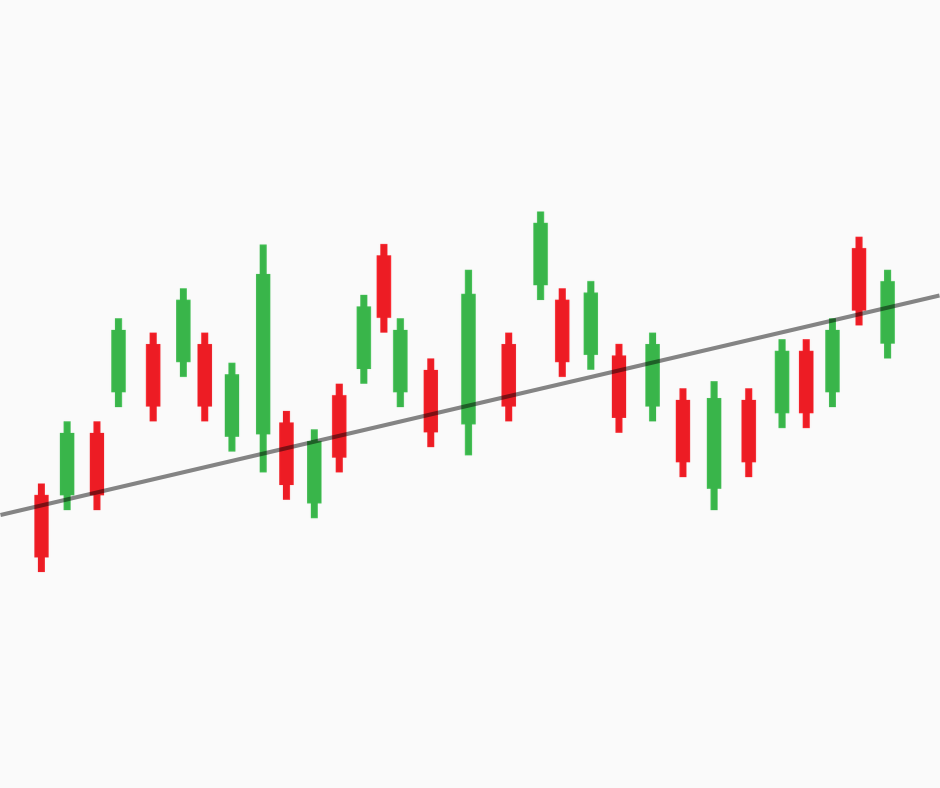
A triangle is a contracting structure bounded by converging zones or lines.
- Symmetrical: lower highs and higher lows.
- Ascending: roughly repeated highs with higher lows.
- Descending: roughly repeated lows with lower highs.
Real charts are imperfect. Define minimum pivot count, maximum boundary tolerance and completion rule. A move beyond the line can fail immediately.
Flags and pennants

A flag is a short consolidation after a strong directional move, often bounded by roughly parallel lines. A pennant is a small contracting structure. The preceding move is called the pole.
Calling any rectangle a flag erases the definition. Specify:
- size and speed of the preceding move;
- maximum consolidation duration;
- retracement limit;
- breakout and invalidation rule.
Traditional theory treats them as continuation patterns, but continuation is not guaranteed.
Head and shoulders
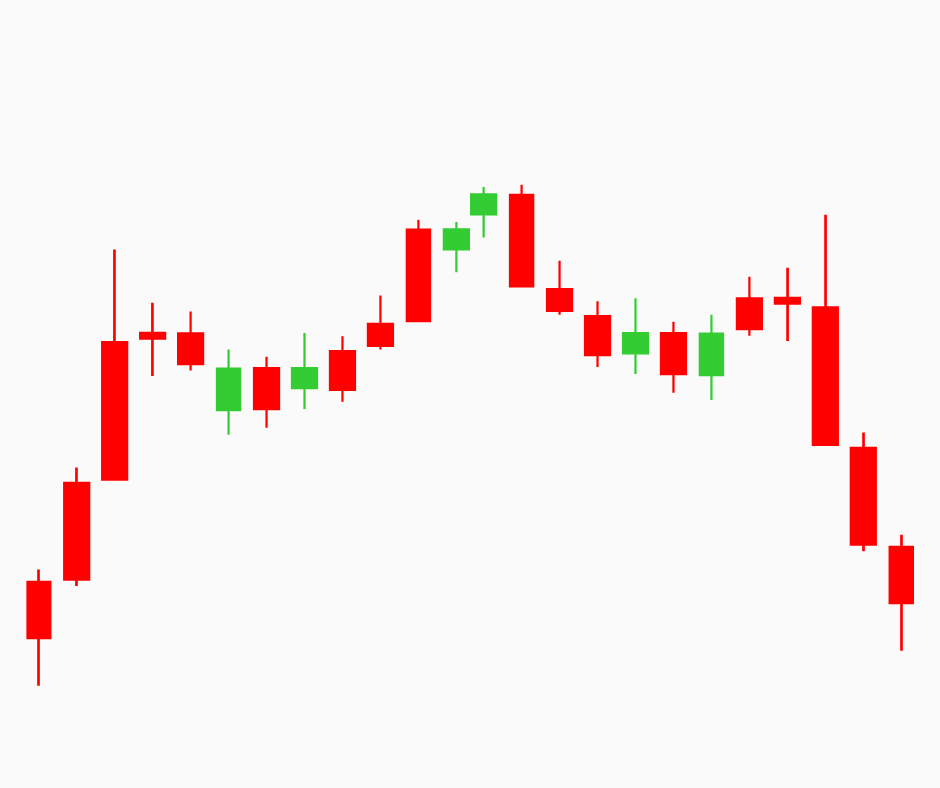
A head-and-shoulders top commonly consists of:
- left shoulder high;
- higher head;
- right shoulder that fails to exceed the head;
- neckline connecting intervening lows.
An inverse formation flips the geometry. Many analysts consider the pattern incomplete until the neckline breaks under a stated rule. Before completion, it may simply be a range or complex pullback.
Symmetry is approximate. Excessive flexibility can make almost any chart fit.
Pattern targets
Traditional measurement may project pattern height from the breakout. For example, a triangle’s widest height or head-to-neckline distance may be projected.
This is a convention, not a promise. Targets ignore changing liquidity, volatility, news and nearby structure. Treat them as scenario references and test exact rules with costs.
Volume and context
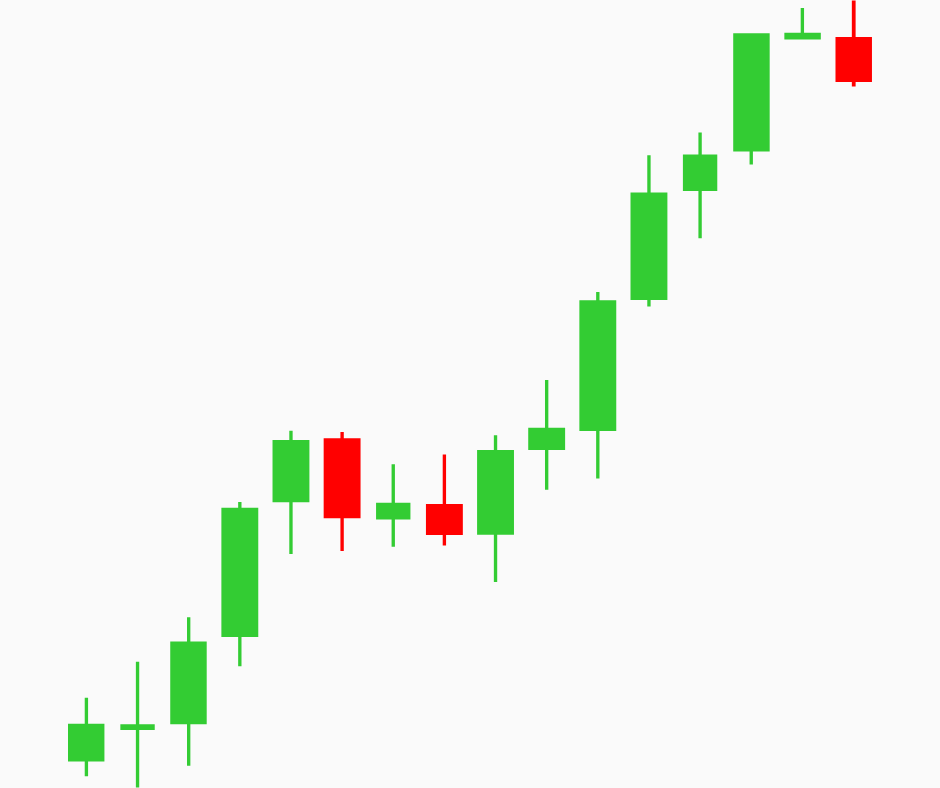
Analysts often look for contracting volume during consolidation and expansion on breakout. Crypto volume quality varies, and not every successful pattern follows that sequence.
Also check:
- higher-timeframe regime;
- distance to major zones;
- volatility state;
- spread and depth;
- event calendar;
- relative strength.
Context can weaken a beautiful shape.
Define a pattern card
| Field | Example question |
|---|---|
| Pair/timeframe | What exact chart owns the pattern? |
| Pivots | Which confirmed points define it? |
| Tolerance | How much boundary deviation is allowed? |
| Completion | Wick, close, buffer or retest? |
| Invalidation | Which movement destroys the geometry? |
| Target | Is it a measured convention or structure-based scenario? |
| Alternative | Range, trend pullback or random consolidation? |
Save the card before completion.
False precision and automation
Two people can draw different necklines. Automated detectors require thresholds and can label more patterns than a human. Neither is automatically correct.
If publishing historical success rates, disclose detection rules, universe, sample, overlapping signals, execution assumptions and all variants tested. Otherwise the percentage is not reproducible.
Philippine and Asian context

Pattern geometry can differ across BTC/USD, stablecoin and PHP pairs. Thin local books may create wicks that do not appear on global benchmarks. Use the execution pair for risk and a liquid reference only with explicit translation.
Common mistakes
- Naming a pattern before enough pivots exist.
- Redrawing boundaries after the breakout.
- Treating a measured target as guaranteed.
- Ignoring the alternative “range” interpretation.
- Calling every consolidation a flag.
- Publishing success rates without detection methodology.
- Forgetting pair, volume quality and liquidity.
A no-money pattern lab
Choose five frozen historical charts. Before revealing future candles, complete a pattern card for each or write “no valid pattern.” Reveal a fixed horizon and score:
- rule consistency;
- false completions;
- target calculation;
- alternative quality;
- hindsight edits—target zero.
The option to find no pattern is essential.
How this connects to market mastery
Patterns combine candles, swings, zones, volume and volatility. Their value comes from compressing a thesis into conditions; their danger comes from flexible storytelling. Mastery prefers a plain, testable pattern card over a dramatic shape with no invalidation.
Key takeaways
- Patterns need objective pivot and tolerance rules.
- A formation may remain incomplete until a defined break.
- Traditional targets are scenarios, not promises.
- Volume and context can support or weaken the pattern.
- “No pattern” is a valid and often disciplined conclusion.
Completion check: Complete frozen-history pattern cards and retain every rejected and failed example.