
Why you should know this
A breakout on expanding activity can deserve more attention than one occurring in an empty market. Yet “high volume” is not enough. Crypto volume is fragmented across venues, pairs, spot and derivatives, and reporting methods.
The basic question—how much traded?—connects to execution, market integrity, patterns, sentiment and on-chain analysis. Mastery adds data-quality humility.
What volume counts

Trading volume is the amount exchanged over a period. It may be reported as:
- base units, such as BTC;
- quote value, such as USDT or PHP;
- contracts in derivatives;
- estimated USD notional;
- aggregated venue volume.
Never compare 10,000 tokens with USD 10,000 as if the units match.
Volume is not buyers minus sellers
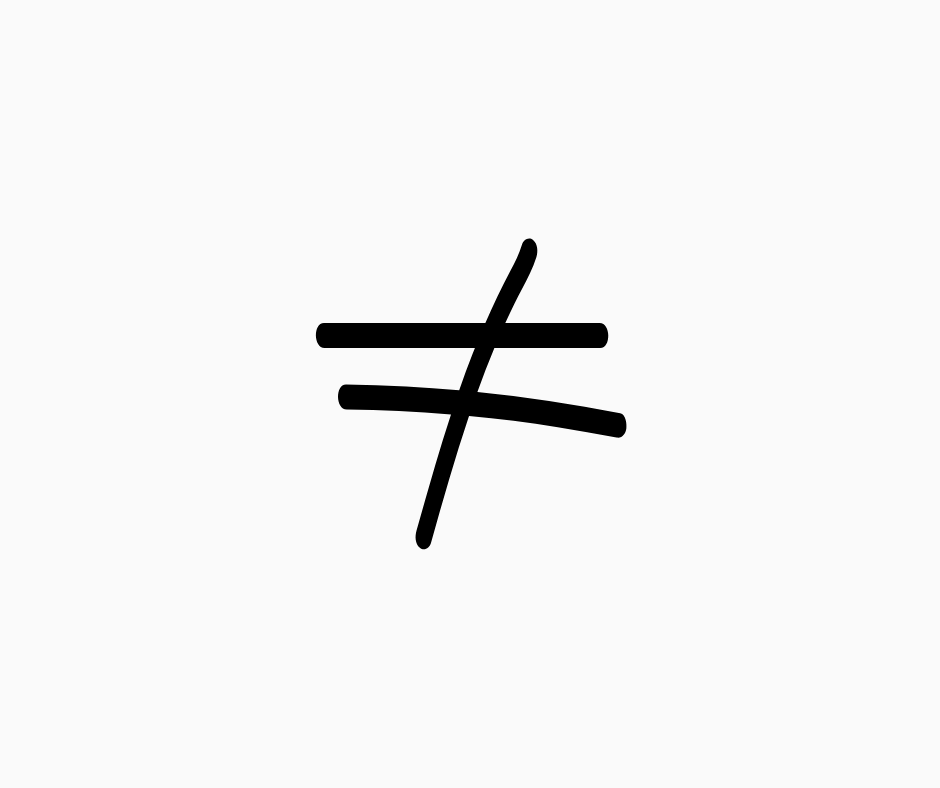
Every completed trade has a buyer and seller. A green candle with high volume means many units traded while close finished above open. It does not prove that buyers “outnumbered” sellers.
Analysts may classify aggressive buys and sells according to which quote was hit, but this requires detailed trade and order-book data. Classification can be imperfect during fast updates.
Relative volume
Volume becomes more useful relative to a baseline. For example:
Relative volume = Current volume ÷ Median volume for comparable prior intervals
If current one-hour volume is 1,200 BTC and the median of the prior 20 comparable hours is 600 BTC, relative volume is 2.0.
Why median? It is less influenced by a few extreme spikes than the mean. Either can be used if documented. Compare the same timeframe and, when intraday patterns matter, similar hours.
Common interpretations—and their limits
| Observation | Possible reading | Important alternative |
|---|---|---|
| Price rises, volume expands | Participation supports move | Short covering or one-off liquidation |
| Price rises, volume contracts | Narrow participation | Supply may simply be scarce |
| Price falls, volume spikes | Urgent selling/stress | Capitulation and two-way turnover |
| Price flat, volume high | Balance/absorption | Market-making or reported-volume distortion |
Use “possible,” then seek structure, liquidity and event evidence.
Spot, derivatives and on-chain activity

Spot volume records asset exchange on a venue. Derivatives volume records contracts and can be large without equivalent spot ownership changing. Open interest measures outstanding contracts, not total traded volume. On-chain transfers can include exchange reshuffling, internal operations or non-trade activity.
Keep each dataset in its lane. Combining them can be useful only with clear definitions.
Data-quality risk

IOSCO has highlighted conflicts, fragmentation and market-abuse risks in crypto markets. Reported activity may include wash trading, incentives or internal methodology differences. Do not accuse a named venue from an unusual bar alone.
For aggregated data, document:
- included venues and pairs;
- stablecoin conversion method;
- duplicate or anomalous filtering;
- timezone and cutoff;
- spot/derivatives separation;
- revisions and missing data.
Volume and liquidity are not the same
Yesterday’s high volume does not guarantee a deep book now. Volume is flow over time; liquidity concerns the ability to transact near an expected price. A liquidation cascade can create enormous volume and terrible execution.
Always inspect spread, depth and slippage when execution matters.
Philippine and Asian context

Local PHP pairs may show lower raw volume than global stablecoin pairs while still serving local conversion. The relevant question is whether depth supports the intended size and route. Asian holidays and business hours can affect fiat participation even when crypto continues.
Normalize PHP and USD values carefully. FX moves can change notional volume without changing token units.
Common mistakes
- Comparing different volume units.
- Saying high volume means more buyers than sellers.
- Mixing spot, derivatives and on-chain transfers.
- Treating reported volume as guaranteed liquidity.
- Using an average polluted by one extreme event.
- Making wash-trading allegations without evidence.
- Ignoring venue coverage and stablecoin conversion.
A no-money volume lab
Create a fictional 20-hour volume series with one extreme spike. Calculate mean, median and current relative volume under each baseline. Explain why the answers differ.
Then write one confirmation statement and one alternative explanation for a price breakout. Add three data limitations. No trading decision is required.
How this connects to market mastery
Volume helps test whether price structure is attracting participation, but the analyst must understand the dataset’s construction. Later, breakouts, patterns, sentiment and on-chain flows will all use “activity.” Mastery is knowing that similar-looking bars can represent different mechanisms.
Key takeaways
- Volume needs a unit, market, period and source.
- Every trade includes a buyer and seller.
- Relative volume depends on the chosen baseline.
- Spot, derivatives and on-chain activity are different.
- Volume can support a thesis but cannot guarantee it.
Completion check: Normalize a fictional volume comparison and write a fact, interpretation, alternative and data-quality note.


