Why you should know this
Breakouts create excitement because price is entering new territory. That excitement can lead to market orders in widening spreads, oversized risk and a refusal to exit when price returns to the range.
The advanced lesson is built on a basic one: define the boundary and failure before the trigger.
Define the breakout area
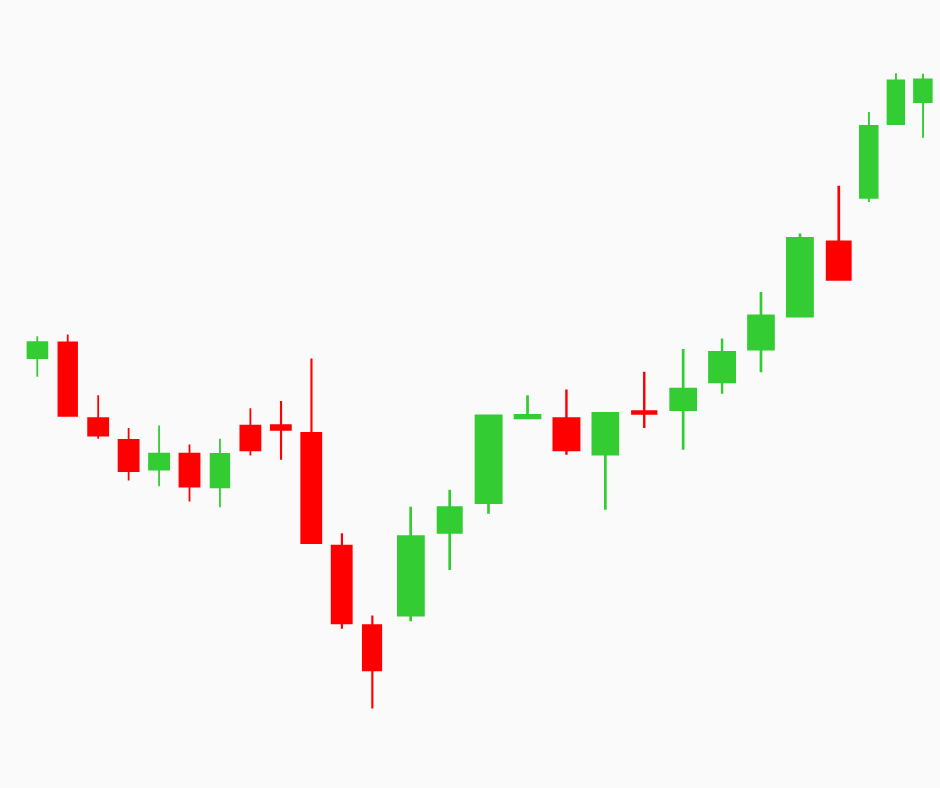
Use a zone supported by prior structure, not a line drawn after the move. Record pair, venue, timeframe, width and why the area matters.
Then define what counts as a break:
- any trade beyond the zone;
- a candle close beyond it;
- a close plus percentage/ATR buffer;
- a second close;
- a break followed by retest.
Stricter confirmation usually enters later and may miss moves. Earlier entry gets better potential price but more false signals.
Three entry styles

- Anticipation: position before completion. Earliest price, weakest confirmation.
- Close confirmation: wait for the decision candle to close beyond the rule. More evidence, possible worse price.
- Retest: wait for price to revisit the broken area and hold. Clearer structure if it occurs, but some moves never retest.
No style is universally best. Test the exact rule and match it to risk capacity.
Confirmation evidence
Possible supporting observations:
- relative volume expansion under a trusted dataset;
- range/volatility expansion;
- healthy spread and available depth;
- broader market or relative-strength agreement;
- absence of immediate rejection;
- catalyst verified from a primary source.
These reduce uncertainty only under a tested framework. Several indicators derived from the same price data are not independent votes.
Define the failure

A false breakout may mean:
- close back inside the range;
- movement through the opposite side;
- no follow-through within N candles;
- stop or thesis invalidation;
- liquidity disappears and execution assumptions fail.
Choose one. Without a failure rule, every failed trade can be reclassified as a long-term idea.
Entry, stop, target and size
For an educational plan:
- entry condition comes from the chosen style;
- stop or invalidation belongs beyond a structural/volatility rule;
- target may use next zone or measured scenario;
- size comes from affordable risk divided by stop distance, adjusted for slippage and fees.
A tight stop permits larger calculated size but may sit inside normal noise. A wider stop needs smaller size. The stop does not guarantee fill price.
Liquidity and slippage
At a visible breakout, many orders can trigger together. Thin books may produce fast slippage. A stop-market order prioritizes exit, not price; a stop-limit protects price but may not fill.
Review order type, size and event conditions before the trigger. A correct chart view can still produce poor execution.
The breakout checklist

- Boundary and timeframe fixed?
- Trigger objective?
- Candle complete?
- Volume source reliable?
- Spread/depth acceptable for hypothetical size?
- Event calendar checked?
- Invalidation and maximum affordable loss fixed?
- Alternative “failed breakout” response written?
- No-trade condition present?
Philippine and Asian context
A breakout on a global USD venue may not appear the same on a PHP pair. FX and local depth can change execution. Late-night US events can create sharp movement during Manila hours; no one must participate while tired or unable to monitor risk.
For remittance users, a deadline-based conversion should not become a breakout speculation.
Common mistakes
- Entering before defining the boundary.
- Calling a wick a confirmed close.
- Chasing after spread widens.
- Moving invalidation back inside the range.
- Adding leverage because the pattern looks clear.
- Assuming volume or retest removes failure risk.
- Ignoring local pair and currency effects.
A no-money breakout lab
Choose 20 frozen historical ranges. Before revealing future data, record the same trigger, failure and cost assumptions. Compare anticipation, close and retest styles.
Measure signal count, false-break definition, adverse excursion, missed trades and hypothetical slippage. Do not optimize until an untouched sample is reserved.
How this connects to market mastery
Breakout planning joins structure, volume, volatility, execution and risk. Mastery is not avoiding every false break—it is ensuring a routine failure remains affordable, recorded and emotionally ordinary.
Key takeaways
- A breakout rule needs a zone, timeframe and completion condition.
- Earlier and later entries trade price for confirmation.
- False breakouts cannot be eliminated.
- Execution quality can overwhelm chart quality.
- Failure and no-trade conditions belong in the original plan.
Completion check: Write a full fictional breakout plan and compare three entry styles without choosing the winner from hindsight.