
A stop begins with the reason for the trade
Imagine a trader buys because price has broken above a well-tested range and the thesis is that the old resistance should now hold as support. A useful invalidation question is: what market behaviour would show that this idea is no longer behaving as expected?
If price falls back through the level, remains below it and the breakout structure fails, the thesis may be invalid. The stop should be related to that logic. Placing a stop exactly 2% below entry merely because “2% sounds small” may have no connection to the reason the trade exists.
Invalidation level, trigger price and fill price are different
Suppose the analytical invalidation is around PHP 95 and the trader enters at PHP 100. The trader may choose an order trigger near the invalidation level, but the actual fill can be lower if the market moves quickly.
Think of three separate layers:
- Thesis invalidation: the market condition that says the original idea has failed.
- Order trigger: the condition sent to the venue to begin the exit process.
- Actual fill: the price or prices at which the position is really closed.
Confusing these three creates false precision. A stop order can control the decision to exit without guaranteeing the price of exit.
Volatility matters because normal noise can cross a badly chosen stop
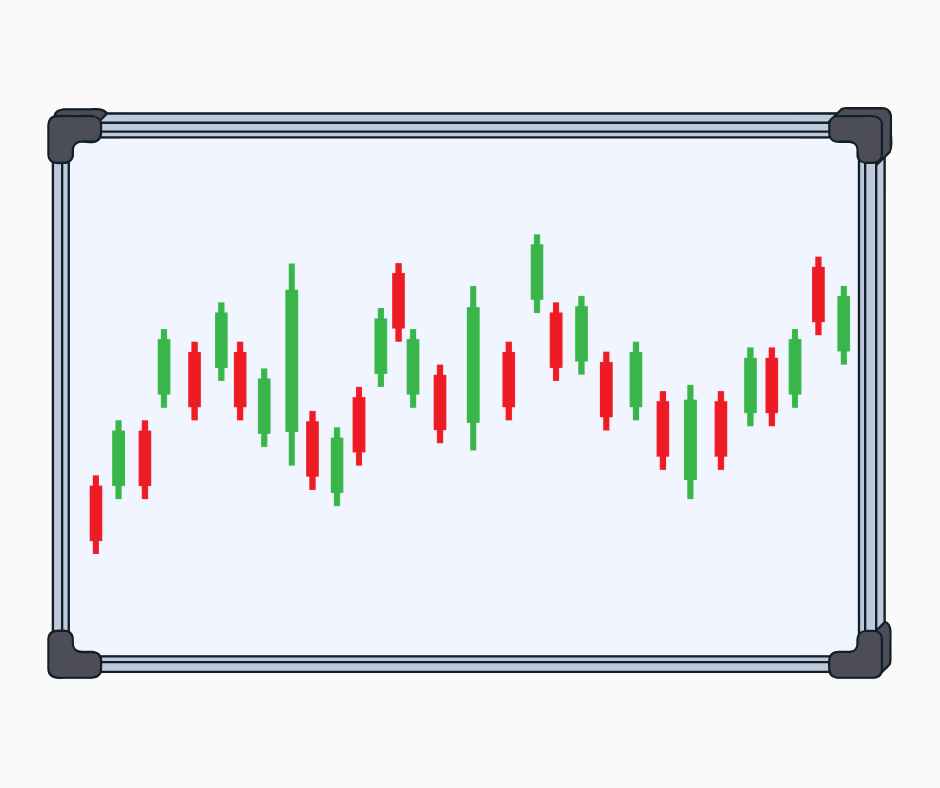
A technically sensible invalidation still needs context. If an asset routinely moves 3% in a short interval, a stop only 0.5% away may be hit by ordinary noise before the thesis has truly failed. Conversely, placing the stop extremely far away to avoid being touched can make the account-level loss too large.
The solution is not to “give the trade more room” without consequence. Wider invalidation requires smaller position size if the risk budget is to remain unchanged.
Gap and liquidity risk can defeat the neat plan

Assume an entry at PHP 100, invalidation at PHP 95 and a size of 200 units. The planned price loss is PHP 1,000.
If the market gaps and the average fill is PHP 93, the realised price loss becomes:
(PHP 100 - PHP 93) × 200 = PHP 1,400
The stop did not promise PHP 95. It expressed an instruction to exit once the condition was reached. The extra PHP 400 is gap/slippage risk.
No-money practice
Take three historical or fictional setups and write the thesis in one sentence before choosing any stop. Then write the exact market condition that would make the thesis invalid. Only after that should you calculate the distance from entry and adjust position size to fit the risk budget.
If you find yourself moving the invalidation simply because the resulting position size is too small, you are changing analysis to suit desired exposure. That is a warning sign.