Recovery starts from the smaller number
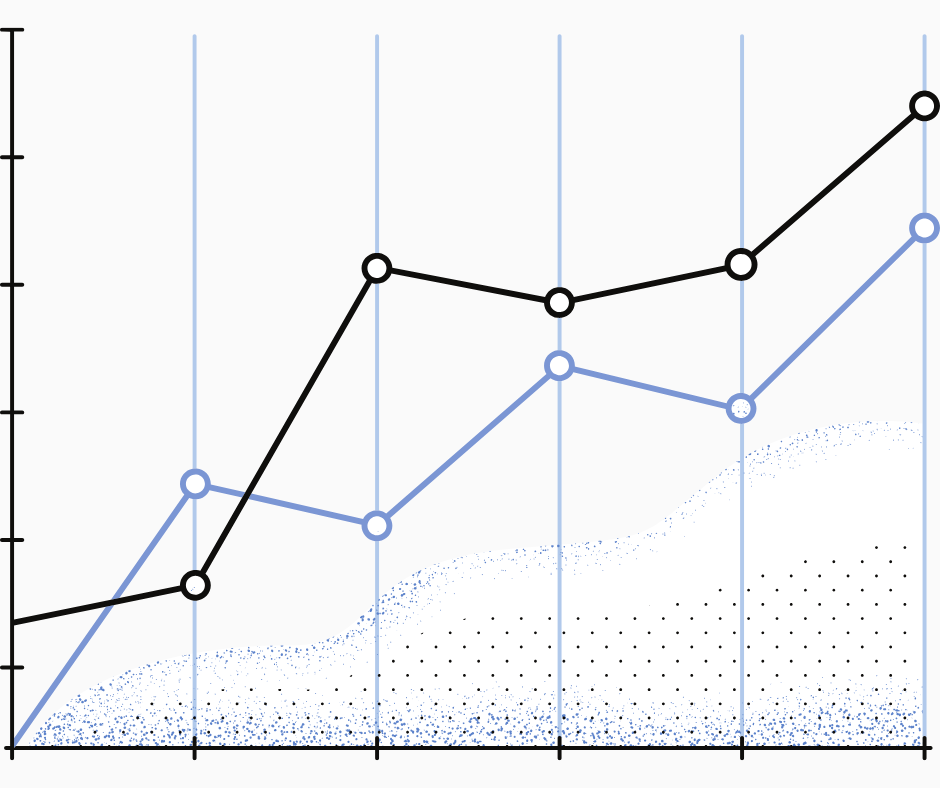
A PHP 100,000 account that loses 10% falls to PHP 90,000. To return to PHP 100,000 it must gain PHP 10,000 on a PHP 90,000 base:
PHP 10,000 ÷ PHP 90,000 ≈ 11.11%
After a 20% drawdown, the account is PHP 80,000 and needs a 25% gain to recover. After a 50% drawdown, the account is PHP 50,000 and needs a 100% gain.
The general relationship is:
Required recovery gain = 1 ÷ (1 - drawdown) - 1
where drawdown is written as a decimal.
A recovery table makes the asymmetry visible
| Drawdown | Remaining capital from PHP 100,000 | Gain needed to recover |
|---|---|---|
| 10% | PHP 90,000 | 11.11% |
| 20% | PHP 80,000 | 25% |
| 30% | PHP 70,000 | 42.86% |
| 50% | PHP 50,000 | 100% |
The curve becomes increasingly punishing. This is why risk management focuses so heavily on preventing very large losses rather than assuming they can simply be “made back.”
Increasing size after a drawdown can deepen the problem
A trader who feels urgency after losing 20% may double risk in an attempt to recover faster. If the next trades also lose, the drawdown accelerates and the required recovery becomes even larger. This is a mathematical reason to separate recovery planning from emotion.
No-money practice
Calculate the recovery gain required after 5%, 15%, 25%, 40% and 60% drawdowns. Then imagine a rule that halves risk per trade after a 20% drawdown. Explain how the slower risk pace changes survival even though it does not guarantee recovery.