Why you should know this
Crypto trades around the clock on many venues, currencies and networks. Prices can differ. Arbitrageurs react, buying where value is cheaper and selling where it is dearer.
That story sounds like free money. It is not. The two prices may be stale, the cheap asset may be impossible to withdraw, the expensive venue may not accept deposits, or the first leg may fill while the second moves away.
Understanding arbitrageurs helps us see why markets become aligned and why local premiums can persist.
What is arbitrage?
Arbitrage seeks to capture a price relationship that should converge. A textbook risk-free arbitrage locks all legs simultaneously with no meaningful uncertainty. Many crypto opportunities are better called relative-value trades because execution, funding, transfer and counterparty risk remain.
Use the stricter word carefully. “Buy here, sell there” is an idea, not a completed arbitrage.
Cross-exchange arbitrage
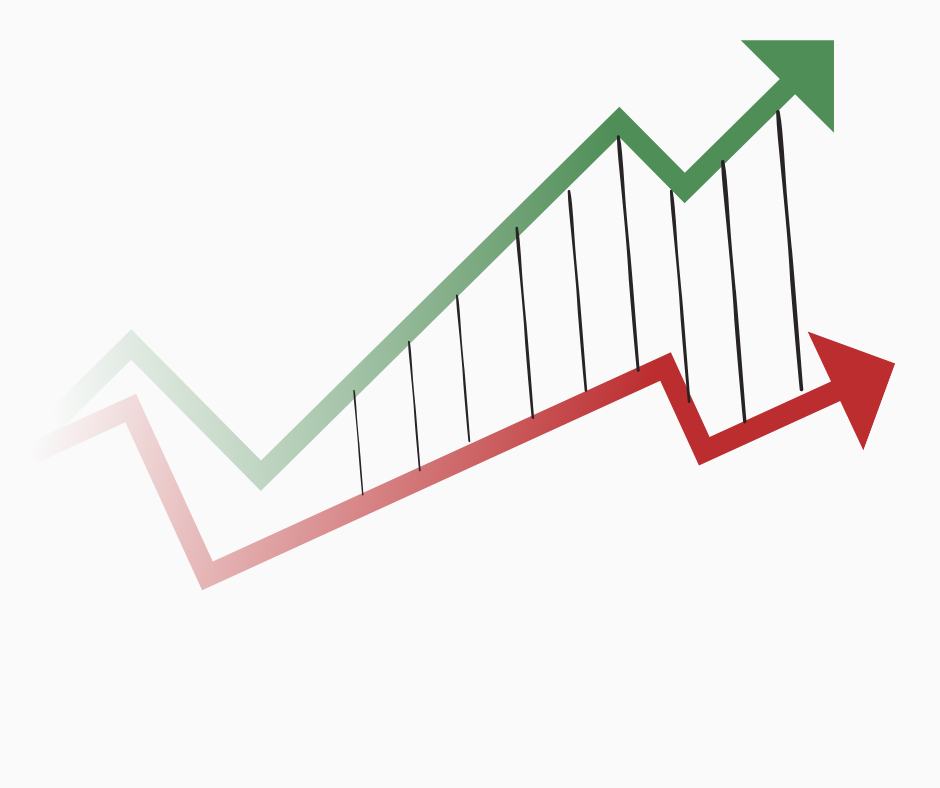
Asset X bids at PHP 101 on Venue B while asks are PHP 100 on Venue A. A trader might buy at 100 and sell at 101.
Gross spread: PHP 1.
Net result must subtract:
- trading fees on both venues;
- spread and slippage;
- fiat or stablecoin conversion;
- deposit and Withdrawal fees;
- network cost;
- borrowing or capital cost;
- hedging cost;
- failed-order and transfer risk.
If total cost is PHP 1.20, the “opportunity” loses PHP 0.20 before operational surprises.
Pre-positioned inventory
Fast arbitrageurs often keep capital on both venues. They buy on the cheap venue and sell existing inventory on the expensive venue at nearly the same time, then rebalance later.
This reduces transfer delay between the execution legs but creates:
- venue counterparty exposure;
- idle capital;
- inventory imbalance;
- stablecoin or fiat risk;
- rebalancing cost;
- Withdrawal uncertainty.
The edge partly compensates for maintaining this infrastructure.
Triangular arbitrage

Within one venue, three pairs may imply inconsistent rates. A theoretical route might exchange PHP to Asset A, Asset A to Asset B and Asset B back to PHP.
All three legs need executable depth. Fees and rounding apply three times. The opportunity can vanish after the first leg. A learner should simulate with order-book data and no money before considering any automated execution.
Spot–derivative basis
A trader can compare spot with futures or perpetual contracts. A premium may reflect funding, leverage demand, custody, capital and settlement.
Holding spot and an offsetting derivative can reduce directional exposure but introduces liquidation, margin, funding-rate, basis, venue and contract risk. “Market neutral” is not “risk absent.”
Regional arbitrage
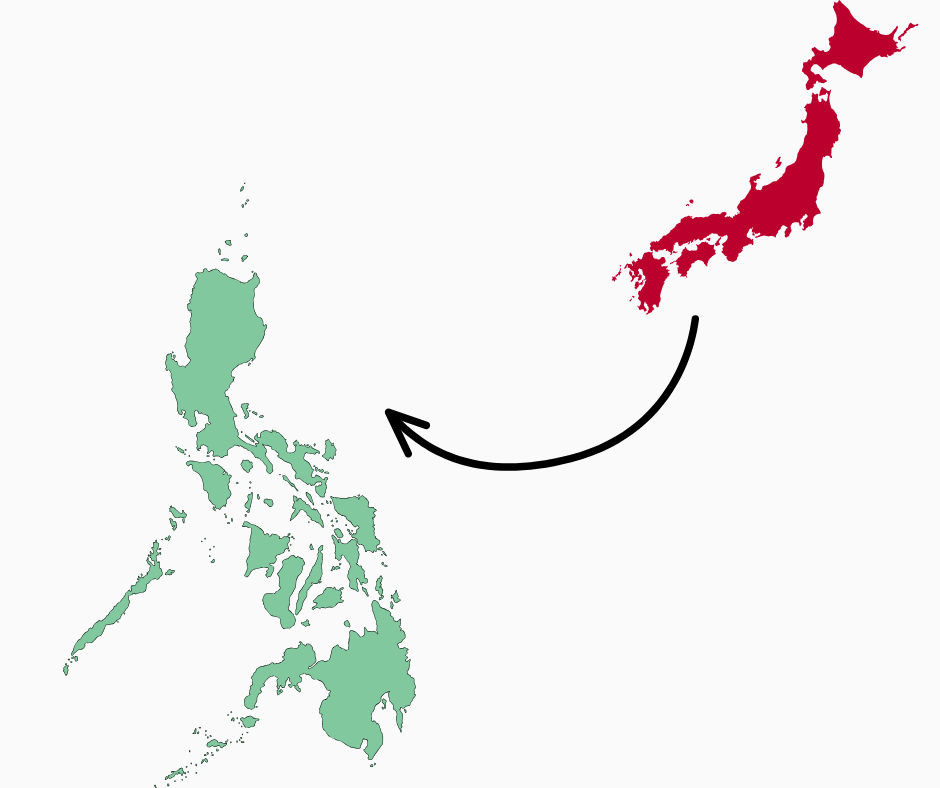
Research by Makarov and Schoar documented historical price differences across countries and exchanges, with barriers to moving capital. Regional premiums can reflect:
- capital controls;
- banking access;
- local demand;
- currency conversion;
- KYC and limits;
- settlement time;
- regulation;
- credit and counterparty risk.
A persistent premium is often the price of a barrier, not an unattended gift.
What algorithmic traders do
Algorithms can:
- monitor many venues;
- calculate executable rather than headline prices;
- place and cancel quotes;
- split large orders;
- hedge inventory;
- rebalance portfolios;
- enforce risk limits;
- detect anomalies;
- stop trading when data or connectivity fails.
Automation makes rules execute faster. It does not make bad assumptions correct.
The data problem

An algorithm relies on timestamps, order books, trades, balances and reference prices. Problems include delayed feeds, missing messages, inconsistent symbols, fake volume, clock drift and venue outages.
The program must distinguish last price from executable bid and ask. A last trade at PHP 101 does not mean we can sell our intended size at 101.
The leg-risk problem
If the buy fills and the sell fails, the trader holds directional exposure. The spread can be tiny compared with the loss from a sudden price move.
Risk controls may include maximum unhedged time, order-size limits, cancel logic, price collars and kill switches. This article does not provide deployment code; real systems require security, testing, compliance and accountable operations.
Counterparty and custody risk
Arbitrage capital is often distributed across venues to react quickly. A venue failure, Withdrawal suspension or account freeze can trap funds.
Expected trading edge should be compared with potential capital loss. A strategy earning small spreads repeatedly can be destroyed by one counterparty event.
Competition closes easy opportunities

When many fast traders observe the same difference, they buy the cheap price and sell the expensive one. Their action narrows the gap.
The remaining edge tends to belong to participants with faster data, cheaper fees, better capital placement, stronger credit or risk tolerance. BIS research on decentralized liquidity similarly shows advantages for technologically sophisticated participants.
Algorithms can amplify stress
Many systems can respond to the same signal by cancelling quotes, reducing risk or selling. Liquidity can vanish and price moves can accelerate.
This does not mean algorithms caused every crash. It means common rules, crowded positions and feedback loops are part of market structure.
Market integrity
Automation can support legitimate execution. It can also be used for prohibited or abusive conduct, depending on facts and law. IOSCO frameworks address governance, testing, market abuse, conflicts and operational risk.
We do not teach spoofing, wash trading or evasion. An advanced trader should understand that speed increases the need for controls and auditability.
Fictional arbitrage ledger
Venue A ask: PHP 100.00 for 1,000 units. Venue B bid: PHP 100.80 for 1,000 units.
Costs per unit:
- Venue A fee: 0.20;
- Venue B fee: 0.20;
- expected slippage: 0.15;
- rebalancing and funding: 0.15;
- operational reserve: 0.20.
Total expected cost is PHP 0.90 against PHP 0.80 gross spread. The trade is negative even before uncertainty. Rejecting it is the correct analysis.
A safe no-money lab
Record simultaneous bid and ask snapshots from two historical or simulated venues. Use the intended order size. Calculate weighted executable prices, every cost and the time each data point was captured.
Then apply stress: one leg fills 50%, the other quote moves 2%, and Withdrawal is delayed. Measure exposure. Do not connect a live API or place funds for the lesson.
Philippine and Asian context

PHP, JPY and other Asian currencies introduce local FX and banking constraints. Cross-border arbitrage can trigger legal, tax, AML, capital-control and provider-eligibility questions.
Do not structure transactions to avoid limits or monitoring. Verify each jurisdiction and service. A platform’s public API does not prove a user is authorized to perform every strategy.
Backtests can invent an edge
A backtest may use closing or last prices that were never simultaneously executable. It may ignore delisted assets, failed orders, queue position, fees, downtime and capital tied up in rebalancing. Choosing parameters after seeing the outcome can overfit history.
Use bid/ask data, realistic size, timestamps and failure assumptions. Separate the period used to design the rule from the period used to test it. Even a careful historical result does not promise live performance.
Operational controls are part of the strategy

Define who can deploy code, change parameters, rotate API credentials, stop trading and reconcile balances. Keep logs that connect data, decision, order and fill. Test what happens when a feed freezes, a venue returns a duplicate message or one account balance becomes unavailable.
An algorithm that earns in normal conditions but cannot stop safely is not production-ready.
Capacity limits
An edge can disappear as trade size grows. Larger orders consume depth, reveal intent and require more capital across venues. The strategy’s historical percentage return may not scale.
Measure net result at the intended size and record the volume at which slippage removes the edge. Capacity is an economic constraint, not only a software problem.
How this connects to market mastery
Arbitrage teaches executable price, latency, capital efficiency and market integration. Algorithmic trading teaches that rules must include failure states, not only entries.
Advanced mastery is recognizing when a visible difference is compensation for a hidden risk.
Key takeaways and check
- Apparent spread is not net arbitrage profit.
- Pre-positioned inventory replaces transfer delay with capital and counterparty risk.
- Algorithms improve speed, not truth.
- Leg risk and venue failure can overwhelm repeated small gains.
- Regional premiums can persist because moving capital is constrained.
Advanced Trader check: Recalculate the fictional PHP 0.80 spread and explain why it should be rejected. Add one failure that makes the result worse.