Why you should know this
Price responds to orders that can actually meet. A network may show millions of units in total supply, but only a portion sits near a market and is offered at today’s prices.
Long-term holders matter because their decisions influence this available supply. If many holders refuse to sell, new demand may need to reach higher prices to attract offers. If old balances move toward venues, the market may expect additional supply—even when no sale has yet happened.
This is a basic supply lesson with an advanced warning: blockchain data shows movements and balances, not private motives.
Investor, trader and HODLer
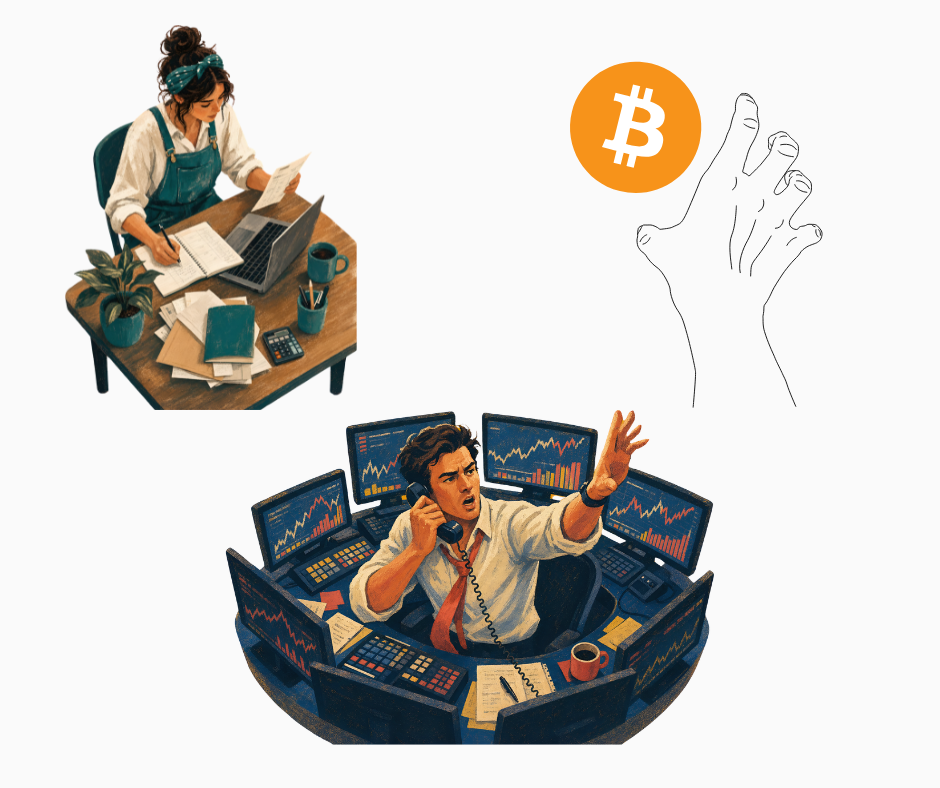
An investor generally buys based on expected longer-term value. A trader focuses more on price movement and execution over a chosen horizon. A HODLer is crypto culture’s informal name for someone who keeps holding despite volatility.
One person can be all three. They may hold a core position for years and trade a smaller balance. Labels are useful only when connected to observable behavior, time horizon and risk plan.
Long-term does not mean forever. An investor may sell because the thesis changed, a target was reached, risk became too concentrated or real life needed money.
Total, circulating and liquid supply

These ideas should not be blended.
- Maximum supply: a protocol-defined upper limit, if one exists.
- Issued supply: units created so far under the protocol or issuer rules.
- Circulating supply: an estimate of units considered available to the public under a data provider’s method.
- Liquid supply: units realistically available for trading without major delay or restriction.
- Order-book supply: amounts currently offered for sale on a particular venue at particular prices.
The definitions can differ across projects and data providers. An editorial claim must name the method and date rather than presenting “circulating” as a natural fact.
Why held coins can tighten available supply

Imagine 100 units exist. Sixty are held in wallets that have not moved for years, twenty are locked under a disclosed vesting schedule, ten sit on exchanges and ten are used in applications.
Total supply is 100, but immediate sell-side supply near current price may be far smaller. If demand for 15 units appears, buyers may need to offer higher prices—or wait.
This does not guarantee a rise. Existing holders can change their minds, market makers can source inventory, derivatives can alter exposure and demand can disappear.
Dormancy is evidence, not intention

A balance can remain still because the owner has conviction. It can also remain still because:
- keys were lost;
- the asset is locked or legally restricted;
- the address belongs to long-term custody;
- the owner forgot or abandoned it;
- an institution uses cold storage;
- the asset lacks a practical market;
- the address was misclassified.
Calling every dormant coin “strong hands” turns an observation into a story.
One address is not always one holder
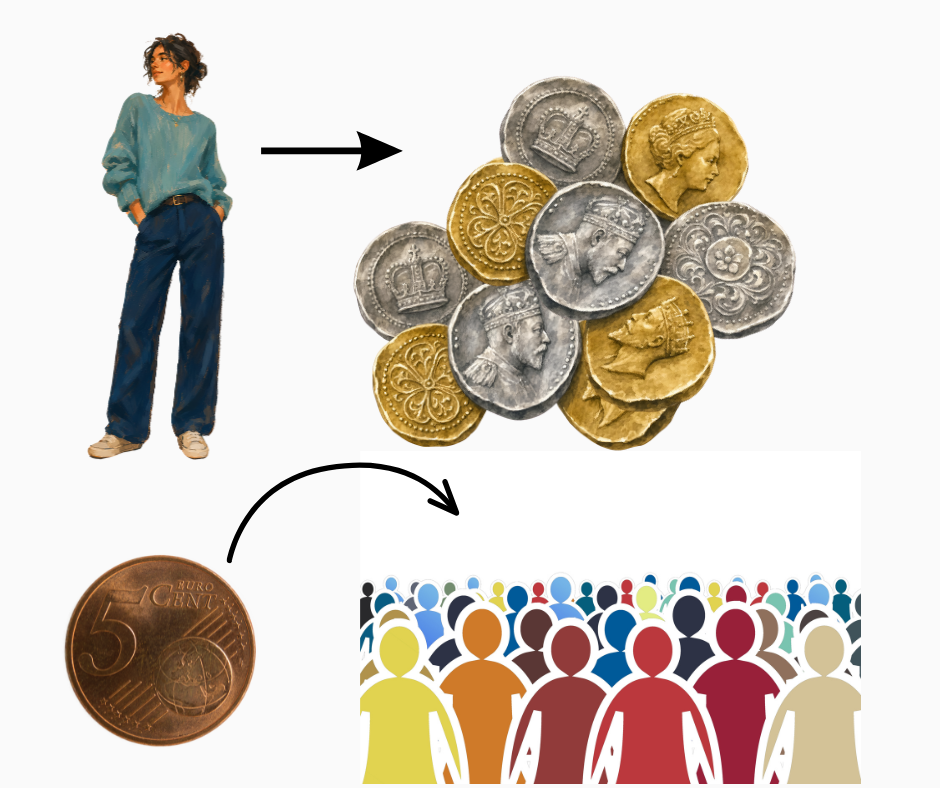
An exchange can pool balances for many customers. One person can control many addresses. A custodian can move assets between internal wallets. A smart contract can hold assets for thousands of users.
On-chain analysts use clustering and labels, but these are methods with uncertainty. We should say “address” when we mean address and “entity estimate” only when a documented method supports it.
Exchange inflow is not the same as a sale
When an old wallet sends assets to a known exchange address, possible explanations include:
- preparing to sell;
- posting collateral;
- moving to custody;
- lending or earning activity;
- consolidating accounts;
- transferring for another customer.
The movement can affect sentiment because other participants anticipate supply. The actual market impact depends on whether orders are placed, order-book depth and how the venue handles the assets.
Exchange outflow is not automatically bullish
Moving assets away from an exchange may reduce immediate venue inventory, but it can also reflect custody changes, security policy, internal restructuring or movement to another venue.
“Outflow means price will rise” is too strong. Use flows as one input alongside price, volume, liquidity, derivatives, disclosures and broader conditions.
Vesting and unlocks

Token allocations to founders, employees, investors, foundations or communities may be locked and released over time. An unlock increases the amount transferable under the schedule. It does not prove that recipients will sell immediately.
Important questions include:
- who receives the allocation;
- original purchase or grant terms;
- cliff and vesting schedule;
- whether the schedule can change;
- treasury or governance restrictions;
- current venue liquidity;
- disclosures and conflicts.
An unlock calendar without size relative to liquid volume can exaggerate or understate risk.
Conviction can help—and trap

Long holding can reduce overtrading and focus attention on fundamentals. It can also become identity. A holder may reject new evidence because selling feels like admitting failure.
Healthy conviction has conditions. Write what would invalidate the thesis: security failure, governance breakdown, loss of real use, unsustainable economics, legal constraint or a personal concentration limit.
“Never sell” is not a complete risk plan.
The opportunity cost of holding

A position consumes capital and attention. Even if its token count stays the same, the holder gives up alternatives: PHP liquidity, safer assets, business investment or emergency flexibility.
Compare expected benefit with custody risk, volatility, concentration and the job the money must perform. Family remittance or essential savings should not become long-term crypto exposure merely because holding is admired online.
A fictional supply exercise
Project Bayani has one billion tokens issued. Public materials say 300 million are vested, 200 million are held by a treasury contract, 250 million are at labeled exchange addresses and 250 million are spread across other addresses.
We still cannot say 500 million tokens are for sale. Treasury assets may require governance. Exchange addresses can include customer custody. Other addresses may be lost or actively traded through decentralized venues.
The useful output is a range of possible supply categories and a list of evidence needed—not a confident prediction.
Five wallet cards

Classify these fictional observations:
- A ten-year-old address remains still.
- A foundation wallet sends to a custody provider.
- A vesting contract releases tokens to investors.
- An exchange cold wallet moves to a new address.
- Many small wallets send to one deposit cluster.
For each, write what is observed, two possible explanations and what evidence would distinguish them. No money is required.
Philippine and Asian context

Long-term exposure should be evaluated in the user’s real currency and obligations. A token can rise against US dollars while PHP conversion cost, spread or access changes the practical result.
Asian market access and regulation vary. A holder must still know where lawful PHP conversion is available, which provider holds custody and what happens if access changes. Global liquidity is not automatically local liquidity.
Holder cohorts are models, not natural species

Analysts may group balances by age, size, realized price or activity. These cohorts can reveal patterns, but every boundary is chosen by a method. A coin held 364 days and one held 365 days do not suddenly become economically different because a chart uses a one-year line.
Check whether the method adjusts for exchange custody, internal transfers, smart contracts and lost coins. Compare the metric through several market periods instead of reading one snapshot. If the data provider changes its labels, the historical series may also change.
Demand must still appear
Restricted available supply can amplify new demand, but it cannot create demand by itself. A market with few sellers and even fewer buyers can remain inactive or fall when one holder needs liquidity.
Combine holder analysis with real use, funding conditions, market depth and price paid by new buyers. Scarcity is valuable only when someone wants the scarce asset at an executable price.
How this connects to market mastery
Supply analysis links protocol design, on-chain behavior, project governance and market liquidity. It teaches us to separate stock from flow and observation from narrative.
The advanced skill is not spotting one old wallet. It is building several reasonable explanations, measuring the evidence and defining what would change the conclusion.
Key takeaways and check
- Total, circulating, liquid and order-book supply are different.
- Dormancy can reflect conviction, lost access, restrictions or custody.
- One address does not always equal one person.
- Exchange flows and unlocks change possibilities, not guaranteed direction.
- Long-term conviction still needs invalidation and concentration limits.
Market Explorer check: For the five wallet cards, state the observation, two explanations and one missing piece of evidence.