
Why you should know this
An exchange may say “Withdrawal completed” while a network still waits for confirmation. A block explorer may show a transaction while the recipient’s provider has not credited it. These layers make more sense when we know which participant owns which job.
Networks differ. Bitcoin uses proof of work. Ethereum uses proof of stake. Other blockchains use other designs, permission models and finality rules. This lesson builds a map, not one rule for every coin.
Start with the node
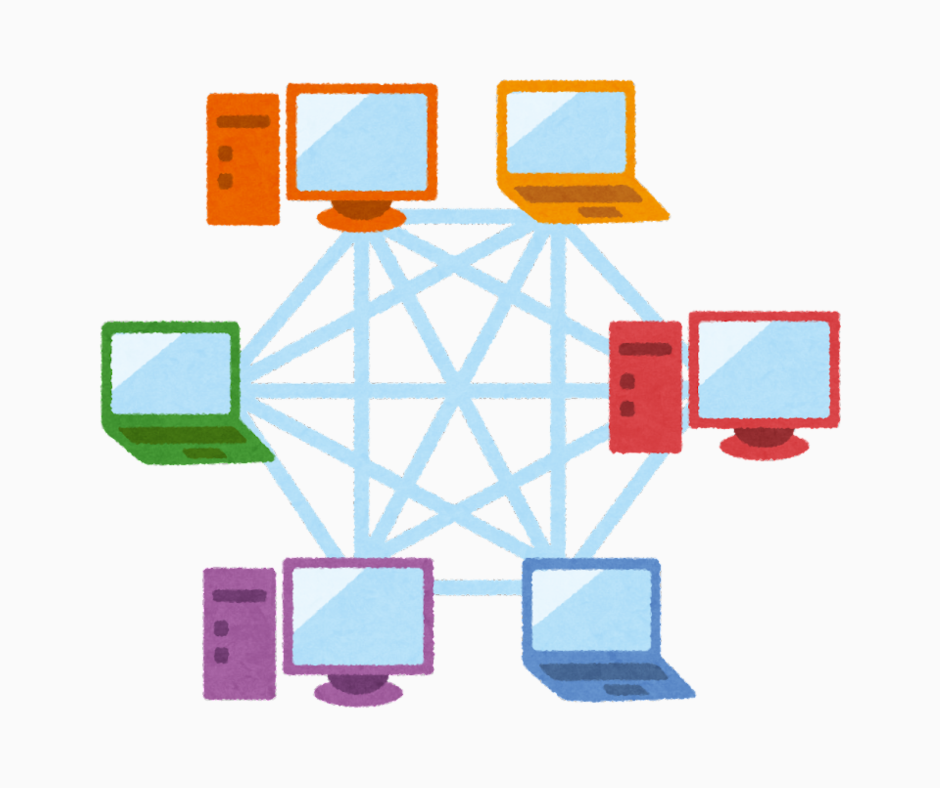
A node is a computer running software that connects to a blockchain network. Depending on the design and configuration, a node can receive, relay and verify transactions and blocks.
A full node independently checks data against the protocol’s consensus rules. It does not accept a block merely because a famous company sent it. This ability lets the operator verify rather than depend entirely on a third-party service.
Not every node creates blocks or earns a reward. Ethereum’s official documentation explicitly distinguishes ordinary nodes from validators.
What nodes verify
Rules can include:
- valid digital signatures;
- sufficient balance or unspent output;
- no prohibited double spending;
- correct block format and limits;
- valid issuance and reward;
- correct state transition;
- accepted chain or fork-choice rule.
The exact rules are network-specific and implemented in client software. Bugs, outdated software and disagreement over upgrades can affect operation.
Proof-of-work miners

In Bitcoin’s proof-of-work design, miners assemble candidate transactions into blocks and expend computation searching for a valid proof. When a miner finds one, it broadcasts the block. Nodes verify that the block obeys the rules.
The miner proposes; verifying nodes do not simply surrender rule enforcement. If a block creates too much Bitcoin or contains an invalid spend, compliant nodes reject it even if substantial energy produced the proof.
Miner economics

Miners can receive protocol-created block rewards and transaction fees under network rules. Their costs can include:
- specialized hardware;
- electricity;
- cooling and facilities;
- pool fees;
- maintenance and financing;
- regulatory and tax obligations;
- downtime and price risk.
Revenue is often in the mined asset while costs may be in fiat. A miner may sell part of rewards to pay bills. That sale does not necessarily mean the miner has become bearish.
Mining pools

Individual mining rewards can be unpredictable. Pools combine participants’ work and distribute rewards under pool rules.
Pool concentration can matter for block production, transaction selection and resilience. A pool’s apparent share does not always equal one owner’s total economic control because miners may redirect hash power. Still, dependence on a few coordinators deserves monitoring.
Proof-of-stake validators

In proof of stake, validators commit the network’s required asset or stake and perform consensus duties. Ethereum validators attest to blocks and can be selected to propose them. Honest participation can receive rewards; missed or provably conflicting duties can cause penalties, including slashing under specified conditions.
Stake is an economic bond, not a magical guarantee of honesty. The protocol makes certain misconduct costly and uses the combined behavior of validators and nodes to reach agreement.
Validator economics

Validator outcomes can depend on:
- amount and structure of stake;
- uptime and correct software;
- reward rules;
- penalties and slashing;
- hosting, hardware and monitoring cost;
- delegation or service fee;
- token price;
- lockup, exit queue and liquidity;
- tax and legal treatment.
An advertised yield is not guaranteed profit. Token depreciation, service failure or slashing can exceed rewards.
Delegators and staking services

Some networks allow users to delegate stake or use a pooled service. This can lower operational barriers but introduces service, custody, smart-contract, concentration and disclosure risks.
Ask who controls keys, who selects validators, how rewards and penalties are allocated, whether assets are liquid, and what happens if the provider fails. “Staking” can refer to different legal and technical arrangements.
Finality and confirmations

Proof-of-work networks often gain confidence as additional blocks build on a transaction’s block. A reorganization remains theoretically possible, with probability and policy depending on the network and conditions.
Proof-of-stake systems may define explicit finality under protocol votes. Provider crediting can require additional internal thresholds beyond network finality.
Do not quote one confirmation count for every asset, provider or transaction. Verify current rules and receiving-provider policy.
Transaction journey
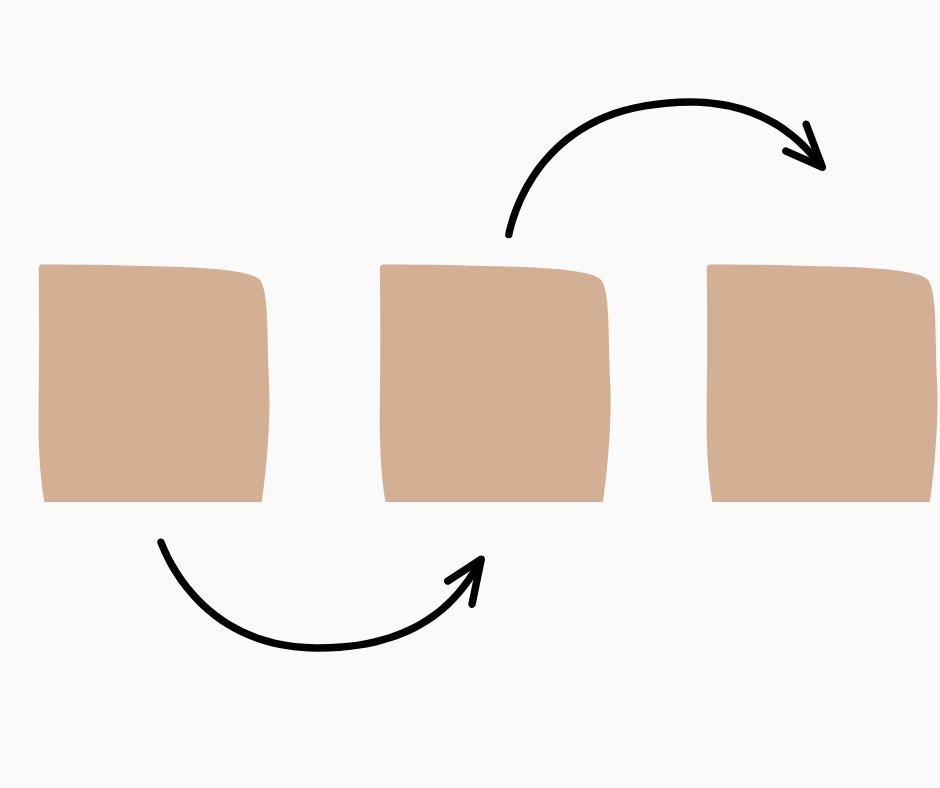
Consider a signed transfer:
- A wallet or provider broadcasts it.
- Nodes receive and check it.
- Valid transactions propagate and wait under network rules.
- A miner or validator includes it in a proposed block.
- Other nodes and consensus participants verify the block.
- The chain gains confirmations or reaches finality.
- A receiving provider detects the transfer and applies its own crediting and compliance controls.
The blockchain part can succeed while fiat conversion remains pending.
Fees and priority

Block space is limited under network parameters. Users may attach fees or priority settings, and block producers generally have economic incentives that influence transaction selection.
Low fees can delay inclusion during congestion. A high fee does not correct a wrong address, wrong network or missing destination tag. Fee estimation is a technical choice, not a recovery tool.
MEV and ordering
Block producers or specialized participants can sometimes benefit from transaction ordering, inclusion or exclusion. This field is commonly called maximal extractable value.
The mechanics differ by network. Effects can include arbitrage, liquidation and harmful forms of reordering. A beginner does not need to chase this activity, but should know that “the blockchain processed transactions” does not mean ordering was economically neutral.
Security depends on distribution and incentives
Important questions include:
- how concentrated block production or stake is;
- whether users can independently run verifying nodes;
- how clients and implementations are distributed;
- what an attack costs;
- how upgrades are decided;
- what happens during a major outage or fork;
- which participants can censor or delay activity.
Decentralization is not one number. It includes technical, economic and governance dimensions.
A no-money network map

Draw a wallet, three ordinary nodes, one block producer and a receiving provider. Move a fictional transaction through the map. At each step write:
- what is checked;
- who can reject it;
- what evidence exists;
- what the step cannot prove.
For example, network finality can prove an accepted state under the protocol. It does not prove the recipient’s legal identity or final PHP delivery.
Philippine and practical context

A Philippine user normally interacts through a wallet or provider, not directly with every miner or validator. Still, network congestion, finality and fees can affect Top Up, Withdrawal and transfer timing.
Verify the supported asset and network through the provider. Do not send to a network merely because the asset name appears similar. Provider and network support are transaction-time facts.
Client diversity and upgrades
A network can have many nodes yet depend heavily on one software implementation. A bug in a dominant client can affect a large share at once. Client diversity can reduce common-mode risk when independent implementations follow the same protocol correctly.
Upgrades also reveal governance. Who proposes the change, writes code, releases clients, coordinates activation and decides which chain to follow? Users, miners, validators, developers, exchanges and applications may have different influence.
Network participant concentration

Hash rate, stake, pool coordination, hosting and geographic infrastructure can concentrate separately. A dashboard showing many validators may still hide common operators or cloud dependencies. Conversely, a large pool share does not always equal permanent ownership of every participant’s resources.
Use several measures and state limitations. Security analysis should examine the ability and incentive to disrupt the network, not rely on one decentralization score.
How this connects to market mastery
Network participants link technology to economics. Rewards create potential sell supply; fees reveal demand for block space; concentration affects security assumptions; outages affect market access.
The market price reflects more than chart patterns. It also reflects whether the network can continue producing and verifying trustworthy state.
Key takeaways and check
- Nodes verify and propagate; not every node produces blocks.
- Proof-of-work miners and proof-of-stake validators use different security resources.
- Rewards must be compared with cost, price, penalties and operational risk.
- Network finality is separate from provider credit and PHP delivery.
- Parameters and confirmation policies are network- and provider-specific.
Market Explorer check: Map a fictional transfer from broadcast to finality and provider credit. Name the participant responsible at each stage.


