Why you should know this
Crypto conversations often compress years of messy history into a smooth story: accumulation, rally, euphoria and collapse. Stories help memory, but they can hide disagreement, survivor bias and changing market structure.
Understanding cycles matters because liquidity, participation, volatility and leadership change over time. The survival skill is not memorizing a perfect sequence. It is defining what you mean, measuring it and remaining willing to be wrong.
What is a market cycle?
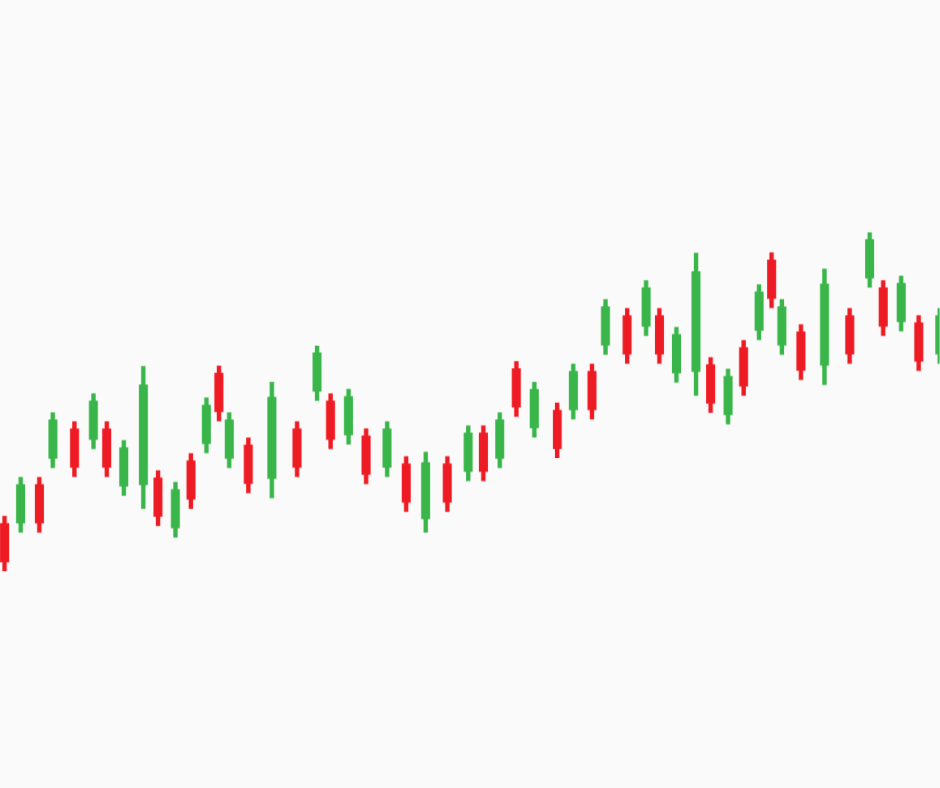
A market cycle is a recurring—but not identical—pattern in activity, prices, credit, participation or psychology. Analysts may divide it into phases such as:
- recovery or accumulation;
- expansion or broadening participation;
- excess or distribution;
- contraction or capitulation.
Those labels are interpretations. There is no official bell announcing the phase. Different assets, countries and participant groups can occupy different conditions at the same time.
Price cycle versus adoption cycle
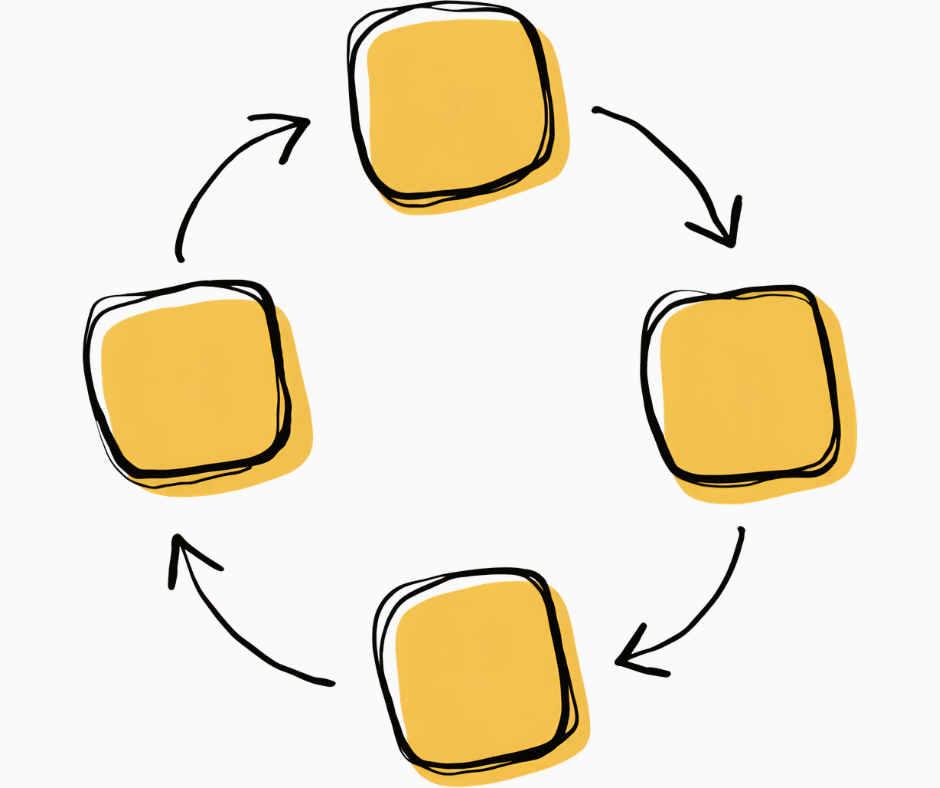
Crypto has several overlapping clocks:
- price: returns and drawdowns;
- liquidity: spreads, depth and access to capital;
- usage: transactions, active addresses or settlement value;
- development: releases, code and ecosystem activity;
- regulation: permissions, restrictions and enforcement;
- narrative: what media and communities are discussing.
Price can rally while real usage stays flat. Development can continue through a price decline. A good cycle analysis states which clock it is measuring.
The Bitcoin halving is an event, not a timer

Bitcoin’s protocol reduces the block subsidy according to its rules. Market participants often compare price history around halving events. That history contains only a small number of observations and many other changing conditions: monetary policy, leverage, regulation, technology and participant mix.
It is reasonable to study the event. It is not reasonable to present a fixed post-halving return as guaranteed. A calendar pattern needs a sample definition, comparison window and acknowledgment that correlation is not a complete causal explanation.
What people mean by “altcoin season”

There is no universal definition. It may mean:
- many non-Bitcoin assets outperform Bitcoin over a stated window;
- Bitcoin dominance falls under a chosen measure;
- trading volume broadens from large assets to smaller ones;
- a particular sector—such as smart-contract platforms—leads.
Each can give a different answer. “Altcoin” itself is an enormous category that mixes established networks, stablecoins, illiquid tokens and failed projects. A claim needs a defined universe.
Build an honest breadth measure

Suppose we define a fictional measure:
Among the 50 largest non-stablecoin assets by market value at the start of each 90-day window, what percentage outperformed Bitcoin in USD after applying the same data source and survivorship rules?
This is more useful than “altcoins are pumping” because it specifies:
- universe;
- benchmark;
- currency;
- window;
- stablecoin exclusion;
- starting membership;
- data source.
Even then, market-cap ranking introduces selection effects, and smaller assets may be hard to trade at displayed prices.
Leadership and rotation

A common observation is that leadership sometimes moves from Bitcoin to larger alternative assets and then to smaller, more speculative tokens. It does not have to happen. Rotation can stop, reverse or remain narrow.
Watch measurable signs:
- breadth of positive returns;
- spot volume distribution;
- liquidity and spread changes;
- sector-relative strength;
- leverage and funding where relevant;
- new issuance and token unlocks;
- retail search or app activity, with methodology disclosed.
No single sign is an altcoin-season certificate.
Cycle risks that hide behind averages

An index can rise while most tokens fail. Historical databases can omit delisted assets, creating survivorship bias. Market-cap weighting can make a few large winners dominate. Equal weighting can exaggerate returns that were not realistically executable in thin markets.
For Filipino readers, USD returns also differ from PHP outcomes, and local conversion costs matter. A global chart is not the final wallet result.
A cycle dashboard, not a prophecy
| Lens | Observation | What it does not prove |
|---|---|---|
| Price | Benchmark above long-term range | Continued gains |
| Breadth | More assets outperforming benchmark | Tradable liquidity in each asset |
| Liquidity | Tighter spreads, deeper books | Permanent stability |
| Leverage | Funding and open interest rising | Direction of the next move |
| Usage | Selected network metrics growing | Token-holder value accrual |
| Sentiment | Search and social activity rising | Authentic adoption or fair value |
Set thresholds before looking at the outcome and include an “unclear” state.
Common mistakes
- Treating four phases as fixed and equally long.
- Using a halving date as a profit guarantee.
- Declaring altcoin season from a few favorite tokens.
- Changing the asset universe after winners emerge.
- Ignoring stablecoins, delistings and survivorship bias.
- Confusing price leadership with lasting utility.
- Assuming an old cycle must repeat under new regulation and market structure.
A no-money cycle lab
Write a fictional cycle hypothesis using this template:
- Measure: price, breadth, liquidity, usage or another defined variable.
- Universe and benchmark.
- Currency and time window.
- Threshold for expansion, contraction and unclear.
- Evidence that would invalidate the hypothesis.
- Known data biases.
Then test it on an earlier historical period without changing the rules. The goal is not to find a perfect model; it is to discover where the story becomes ambiguous.
How this connects to market mastery
Cycle awareness helps place chart signals, fundamentals, sentiment and risk inside a broader environment. But mastery requires multiple lenses: a strong price cycle can coexist with weak fundamentals, and an adoption cycle can develop while price falls. The mature question is not “Which phase guarantees profit?” It is “Which measurable conditions are present, and what risk would make my interpretation fail?”
Key takeaways
- Cycle phases are frameworks, not official dates.
- Price, usage, development and regulation can follow different cycles.
- “Altcoin season” needs a defined universe, benchmark and window.
- Breadth, liquidity and executability matter alongside returns.
- Historical repetition is evidence to investigate, not a promise.
Completion check: Define one cycle or altcoin-breadth measure with a fixed universe, benchmark, period, bias note and invalidation.