Why you should know this
Imagine researching a smaller token carefully, only to see it fall when Bitcoin drops. The project may not have changed at all. The market environment did.
Bitcoin is not a remote control for every crypto asset, but its price, liquidity and role in investor attention can influence the wider market. Knowing the channels helps us separate market-wide pressure from project-specific evidence—a skill that remains essential in technical, fundamental and risk analysis.
Bitcoin as a reference asset

Bitcoin is widely used as a headline measure of crypto-market conditions. Media, traders and risk systems often watch it first. When the benchmark moves sharply, participants may reassess risk across the whole category.
This is a coordination effect: many people observe the same asset and react to one another. It does not require Bitcoin’s technology to change another network directly.
Shared trading pairs and collateral
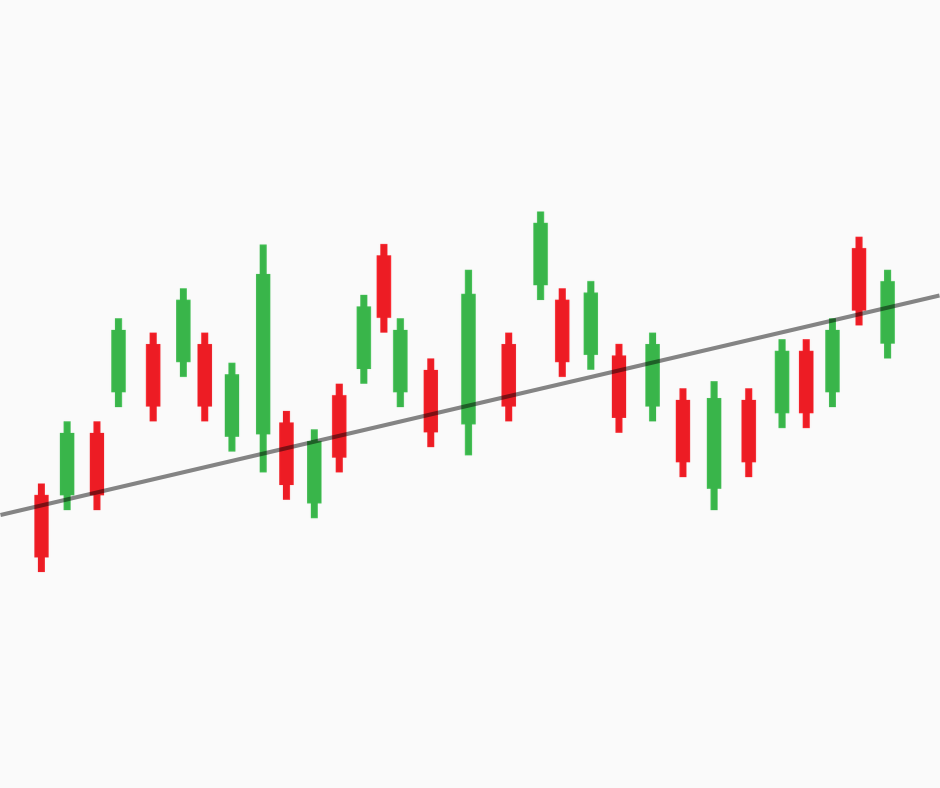
Some assets trade against BTC, stablecoins or major fiat currencies. If an altcoin/BTC rate stays unchanged while BTC/USD falls, the altcoin’s USD value also falls mathematically.
Bitcoin and other major assets may also serve as collateral in leveraged positions. When collateral loses value, risk systems can demand more margin or liquidate positions. Selling can spread across assets even when their individual news is unchanged.
These mechanisms depend on venue and product design; they must be verified before making a specific claim.
Liquidity moves toward the exits

During stress, traders often prefer assets or currencies they perceive as easier to sell. Smaller tokens usually have thinner books and wider spreads. When risk appetite drops, liquidity providers may widen quotes, traders may reduce inventory and a modest sell order can move price more sharply.
The result is often asymmetric: a 5% Bitcoin decline can accompany a larger decline in a thin token. That ratio is not fixed and does not predict the next event.
Portfolio and index effects

Funds, systematic strategies and individual traders may manage crypto as a basket. If a portfolio’s total risk rises, several holdings can be reduced together. Benchmarks and index products can also create common flows among constituents.
Co-movement therefore can arise from who owns the assets and how they manage risk—not just from similarity in technology.
Sentiment and narrative

Bitcoin carries symbolic weight. A major Bitcoin event can change the perceived legitimacy, danger or momentum of crypto broadly. Social media can amplify that reaction.
Sentiment is not the same as a fundamental cause. A rumor-driven move may fade; a market-wide policy shock may persist. The analyst’s job is to identify the event, the transmission channel and the evidence—not merely say “Bitcoin did it.”
When altcoins decouple

An asset may move differently because of:
- a protocol release or failure;
- token issuance, unlock or burn;
- exchange listing or delisting;
- security incident;
- regulatory action;
- sector-specific narrative;
- liquidity concentrated on a different venue;
- idiosyncratic large-holder activity.
Decoupling can be brief. A token that outperforms for one day may still share the broader monthly trend.
Measure the relationship

Correlation summarizes how two return series moved together over a selected window. It ranges from −1 to +1, but a number requires choices: price source, return interval, currency, time zone and period.
A 30-day daily-return correlation can differ from a one-year hourly correlation. High correlation does not prove direct causation. Low correlation does not guarantee diversification during crisis; relationships can rise precisely when protection is needed.
Also compare relative strength: is the altcoin gaining or losing versus BTC? That question differs from whether both are rising in USD.
A four-question check
When a token moves with Bitcoin, ask:
- Benchmark: Did Bitcoin or the broad crypto market move first?
- Mechanism: Could shared pairs, collateral, liquidity or portfolio risk transmit the move?
- Specific evidence: Is there project news or on-chain evidence?
- Measurement: Over which timeframe and currency is co-movement visible?
If the mechanism is unknown, label it as a hypothesis.
Philippine and Asian context
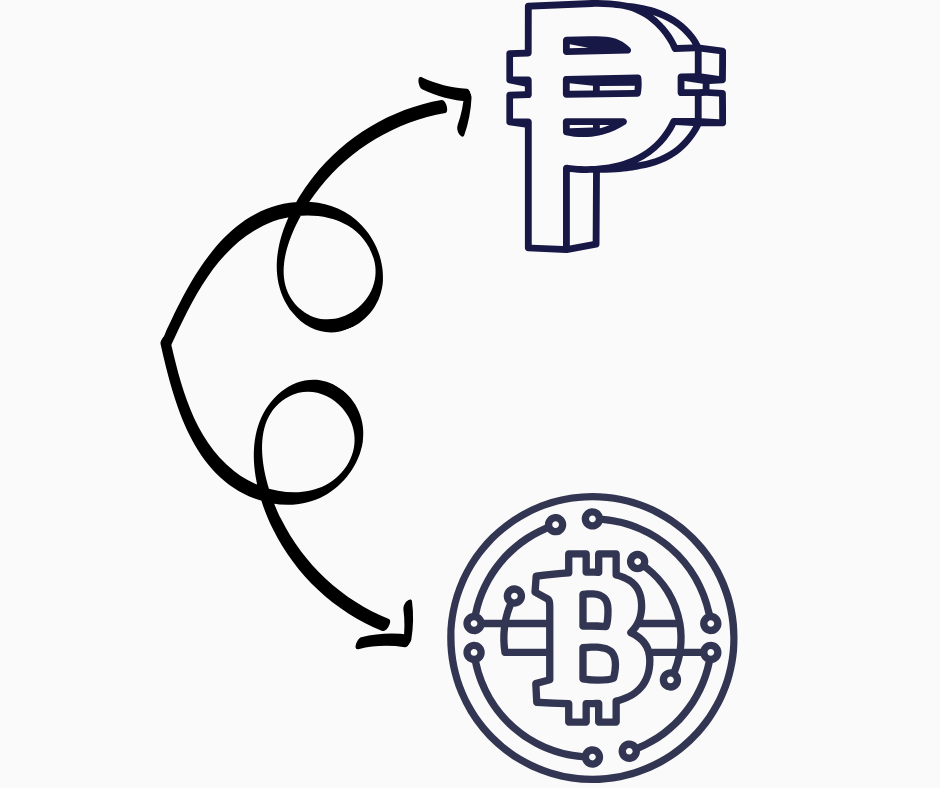
A Filipino reader may experience two layers: BTC/USD movement and USD/PHP movement. An asset can decline in USD yet fall less—or more—in PHP. Local spreads and conversion availability add a third layer.
Asian business hours can influence when regional news is processed, but crypto remains continuous. Avoid assigning nationality to a move without evidence about the event or flow.
Common mistakes
- Assuming Bitcoin explains every altcoin move.
- Treating correlation as proof of causation.
- Comparing prices instead of returns.
- Using one short window as a permanent relationship.
- Ignoring leverage, liquidity and common ownership.
- Forgetting the quote currency and PHP outcome.
- Believing “decoupled” means permanently independent.
A no-money influence lab
Choose a frozen historical week for Bitcoin and one other asset. Record returns in the same currency and interval. Mark any asset-specific event. Write:
- one observed relationship;
- three possible transmission channels;
- one alternative explanation;
- what evidence would distinguish them.
Do not conclude which asset to buy. The purpose is causal humility.
How this connects to market mastery
Market mastery means seeing both the asset and the system around it. Bitcoin influence connects market cycles, correlations, liquidity, sentiment, leverage and risk. Later, fundamental analysis will ask whether a project’s own evidence is strong enough to matter; technical analysis will ask whether relative strength confirms that claim.
Key takeaways
- Bitcoin often functions as a benchmark and attention anchor.
- Shared pairs, collateral, liquidity and portfolio management can transmit moves.
- Asset-specific events can create temporary or lasting divergence.
- Correlation depends on window, interval, currency and methodology.
- Co-movement is evidence to investigate, not proof of cause.
Completion check: Explain one fictional altcoin move with three market-wide channels and one asset-specific alternative, clearly labeled as hypotheses.