Why you should know this
Crypto never closes, so the market can make us feel we should never stop watching. That is not mastery. A routine creates boundaries: what to check, what to record and when to walk away.
The goal is not more predictions. It is a comparable record. The beginner who writes clear facts every day is building the same discipline an experienced analyst needs.
Step 0: define today’s task

Before charts, choose one:
- learn and observe;
- monitor an existing risk;
- plan a possible trade;
- prepare a conversion or transfer;
- write research.
If there is no decision, say so. “No action planned” is a complete answer.
Minute 1–4: check the calendar

Open primary-source calendars for relevant central banks, regulators and project events. Convert times to Manila and note holidays.
Record only events that could plausibly affect your asset, currency or route. A calendar with 50 unrelated items creates noise.
Minute 5–8: read the broad market

Use a fixed dashboard:
- Bitcoin and one broad crypto benchmark if methodologically sound;
- selected asset in the decision currency;
- USD/PHP or USD/JPY when relevant;
- major equity or rate context only if it belongs to the plan.
For each, write one factual sentence. Avoid adjectives like “crazy” or “obvious.”
Minute 9–12: inspect market variables
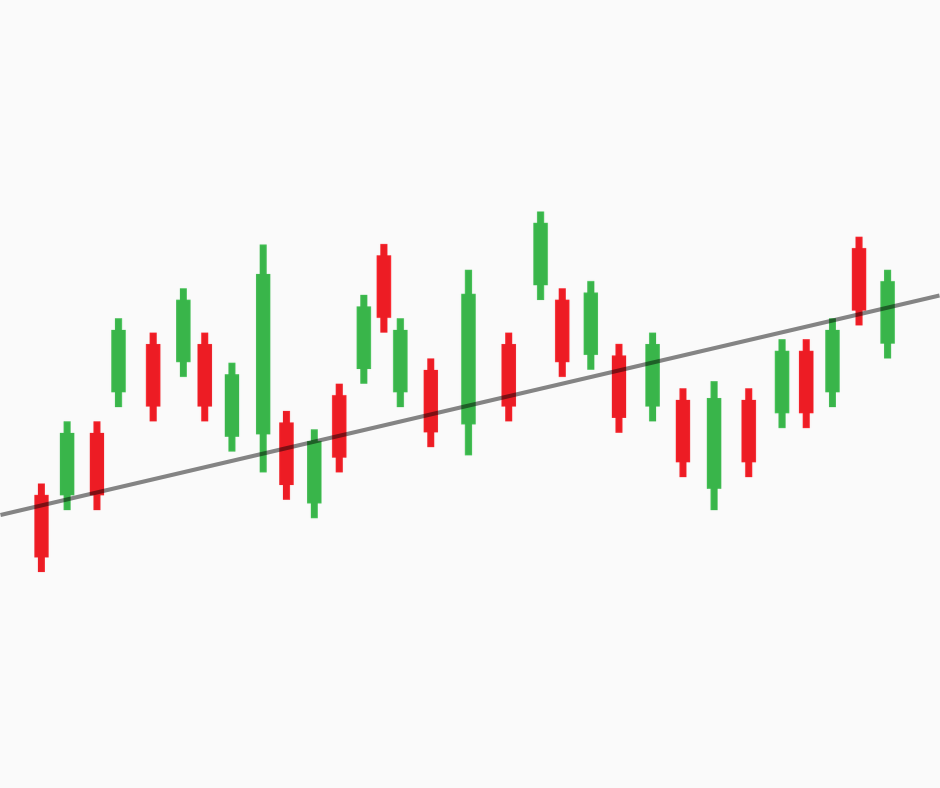
For the chosen pair and timeframe, note:
- price location relative to defined structure;
- volume versus a fixed recent baseline;
- volatility or range;
- spread and liquidity if execution may occur;
- any data gap or venue outage.
Do not add indicators merely because the chart looks uncertain. Uncertainty is often the correct observation.
Minute 13–16: write scenarios

Use three conditional scenarios:
- Continuation: If price holds or accepts beyond defined structure, what would that mean?
- Alternative: If the opposite boundary breaks, what changes?
- Noisy/unclear: What if price stays inside the range?
Each scenario needs evidence and invalidation. None is a command.
Minute 17–18: check personal and operational risk

Ask:
- Is essential money protected?
- Is the account and device secure?
- Is the size affordable under the written risk rule?
- Are spreads or event conditions unusually poor?
- Is there pressure, fatigue or fear of missing out?
- For a transfer, what is the recipient’s deadline and final usable amount?
If the process fails any critical check, stop. Market access is not an obligation.
Minute 19–20: save the note

Record the timestamp, source links and decision. Do not edit the original thesis after the outcome. Add a later review as a new section.
A compact note can be:
| Field | Entry |
|---|---|
| Task | Observe only |
| Context | Daily range; weekly trend still intact |
| Facts | Volume below 20-day median; spread normal for sample |
| Events | BSP item at stated Manila time |
| Scenarios | Continuation / alternative / unclear |
| Risk | No position; no action |
| Confidence | Low because evidence conflicts |
| Review | Tomorrow at the same time |
Facts, interpretations and decisions
Keep these separate:
- Fact: “Price closed above the prior 20-day high.”
- Interpretation: “This may indicate a breakout attempt.”
- Decision: “No action until the predefined confirmation is present.”
Separation makes the note auditable. A correct decision can come from uncertain interpretation if the risk rule is sound.
Adapt the routine to the persona

- New trader: observe one pair, no money, 15–20 minutes.
- Active trader: add execution and position-risk details.
- Long-term participant: use weekly notes and fundamental events.
- Remittance user: focus on rates, route cost, deadline and service status.
- Community educator: preserve sources and avoid turning a scenario into a recommendation.
The routine serves the reader; the reader does not serve the routine.
Common mistakes
- Opening social media before primary sources.
- Changing the dashboard daily.
- Mixing facts with predictions.
- Writing only after the market moves.
- Treating “no trade” as failure.
- Monitoring continuously and calling it discipline.
- Reviewing profit instead of process.
A five-day no-money lab
Complete the same 20-minute note for five consecutive market days. Freeze each note. At the end, review:
- Which facts were consistently useful?
- Which inputs created noise?
- Did the timeframe remain stable?
- Were source links primary and clean?
- Did any scenario become an emotional prediction?
Improve the template only after the five-note sample.
How this connects to market mastery
Mastery is accumulated, reviewable decision quality. The daily routine supplies the raw material for technical analysis, weekly outlooks, regime identification and risk review. It also teaches a caring relationship with the market: curious and prepared, but not compelled to participate.
Key takeaways
- Start with the task, not the chart.
- Use primary calendars and a fixed dashboard.
- Separate fact, interpretation and decision.
- Write conditional scenarios and invalidation.
- “No action” is a valid outcome.
Completion check: Complete five fixed-template, no-money notes and review consistency rather than directional accuracy.