Why you should know this
Labels such as “breakout” or “reversal” sound precise but often become hindsight stories. Practice should force the reader to state what was actually observed and what would prove the label premature.
This is a no-money observation exercise. The goal is to produce a record that another careful reader could understand and review later.
The practice sequence
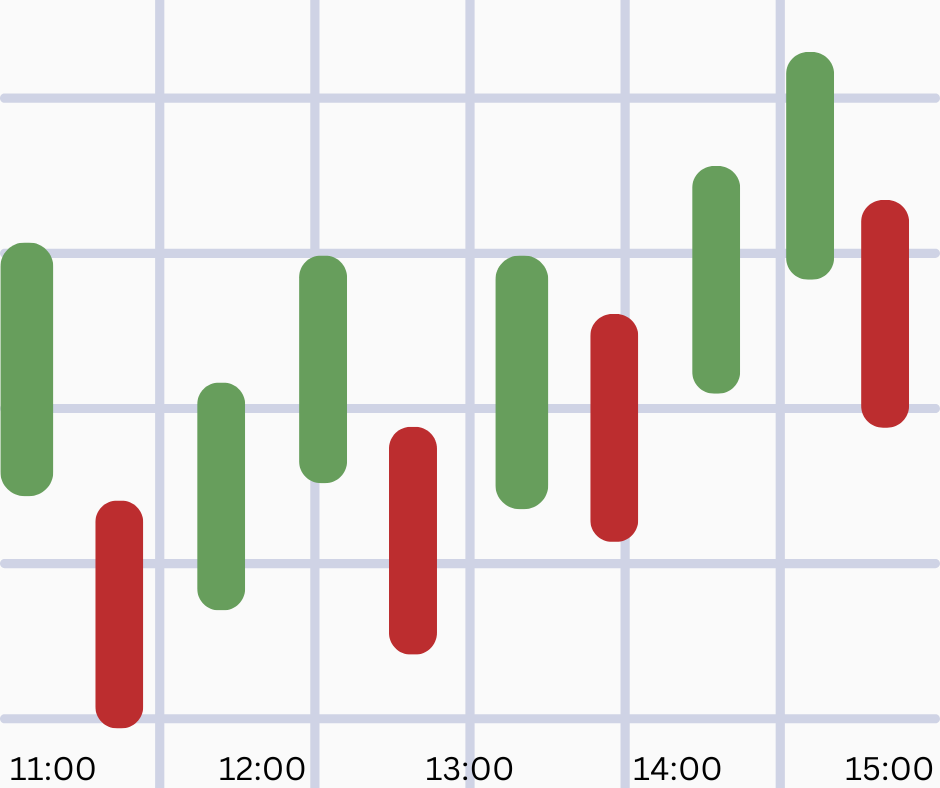
- Mark the timeframe and the recent swing highs and lows.
- Describe the current structure before naming it: higher highs/lows, lower highs/lows, or repeated boundaries.
- If price leaves a range, record whether it closed outside, returned inside or held outside; do not assume every touch is a breakout.
- Check whether activity and liquidity changed around the move.
- Write one alternative label that could also fit the evidence.
- State the price/structure condition that would invalidate the first label.
Your market-reading worksheet
| Structure | Evidence | Alternative label | Invalidation condition | Execution concern |
|---|---|---|---|---|
| Write your observation | Write your observation | Write your observation | Write your observation | Write your observation |
Keep facts, interpretations and decisions separate. If the worksheet cannot show which is which, the note is not finished.
Worked practice scenario
A historical market trades inside the same band for several days, briefly trades above the upper boundary and then closes back inside. The first note is “range with failed excursion,” not automatically “breakout.” The reader records what would need to happen next before changing the label.
The useful output is not the “right call.” It is a transparent chain from observation to interpretation, with an alternative explanation still visible.
Common practice mistakes
- Calling a single large candle a new trend.
- Calling every move outside a range a confirmed breakout.
- Declaring a reversal before the prior structure is actually challenged.
- Moving the boundary after the fact to preserve the original call.
One risk or limitation
Market structure is interpretation built from chosen swings and timeframes. Different reasonable definitions can produce different labels.
How this connects to market mastery
Market mastery is not having a story for every move. It is building a repeatable process, noticing when the evidence changes, and preserving the earlier record so hindsight cannot quietly rewrite the analysis.
Completion check — no money needed

Complete the worksheet using a historical or paper-only snapshot. Then answer four questions:
- Which statements are facts?
- Which statements are interpretations?
- What is the strongest alternative explanation?
- What observable condition would make you change the current view?
If another reader can follow those four answers without knowing the future outcome, the practice is complete.