Why you should know this
Reversing the base and quote asset can reverse the reader’s calculation and lead to the wrong order size or expectation.
This is not about being told which trade to take. We are learning how to inspect the mechanism together, so a later decision is more deliberate and reviewable.
The short answer
This lesson shows how to read BTC/PHP, BTC/USDT and other pairs before placing an order.
A trading pair is an exchange relationship

A crypto trading pair shows one asset priced in another. In BTC/PHP:
- BTC is the base asset—the thing being bought or sold;
- PHP is the quote asset—the unit used to express BTC’s price.
If a fictional BTC/PHP price is ₱4,000,000, the sentence is:
One BTC is priced at four million Philippine pesos.
The first asset is normally the base. The second is normally the quote. Platforms may display a dash, slash or no separator, such as BTC-PHP, BTC/PHP or BTCPHP. We should still verify the venue’s own convention before acting.
Read the pair from left to right
Use this three-part translation:
- Name the left asset.
- Name the right asset.
- Say, “One unit of the left asset costs this many units of the right asset.”
For a fictional price of 62,000 on BTC/USDT:
One BTC costs 62,000 USDT.
For a fictional price of 58 on USDT/PHP:
One USDT costs ₱58.
These examples teach notation. They are not live prices or statements that a particular pair is available on DOPAY or any other platform.
What changes when you buy or sell?
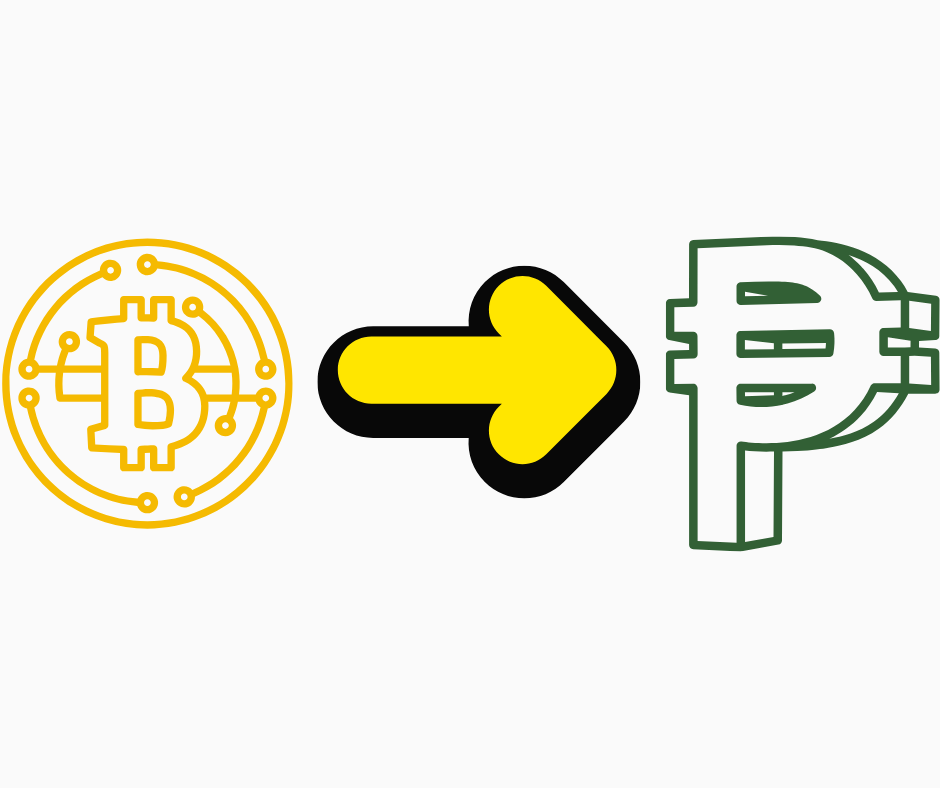
When we buy the base asset, we give up the quote asset. Buying BTC/PHP means acquiring BTC and spending PHP.
When we sell the base asset, we give up the base and receive the quote. Selling BTC/PHP means selling BTC and receiving PHP before applicable fees and execution differences.
The words buy and sell therefore refer to the base asset. A common beginner mistake is to press “buy” while thinking it means “buy pesos.” On BTC/PHP, it normally means buy BTC with PHP.
Quantity and notional value
The order quantity is commonly expressed in the base asset. The approximate quote value, sometimes called notional value, is:
Base quantity × Pair price = Quote value
Suppose Mia considers buying 0.002 BTC at a fictional price of ₱4,000,000 per BTC:
0.002 BTC × ₱4,000,000/BTC = ₱8,000
That ₱8,000 is not necessarily her final debit. Fees, spread and slippage may change the total. Academy 5 will add those layers one by one.
To reverse the calculation:
Quote budget ÷ Pair price = Approximate base quantity
With an ₱8,000 budget at the same fictional price:
₱8,000 ÷ ₱4,000,000/BTC = 0.002 BTC
Round only after checking the venue’s permitted quantity and price increments. A calculator may produce more decimals than the order system accepts.
Crypto-to-crypto pairs
The quote asset does not need to be government-issued money. BTC/USDT prices Bitcoin in the stablecoin USDT. ETH/BTC prices Ether in Bitcoin.
This creates two layers of exposure. If Lina trades ETH/BTC, her result measured in BTC may improve while the peso value of both assets falls. She should decide which unit matters to her:
- more ETH;
- more BTC;
- more PHP value;
- or a practical amount available after conversion and Withdrawal.
A trade can be successful in one measurement unit and disappointing in another.
A familiar Philippine or Asian example

A learner in the Philippines studies a fictional crypto quote and writes the pair direction, intended action, price control, estimated cost, possible fill problem and exit plan. The exercise uses paper values only. No order is placed.
One risk or limitation
Examples simplify execution. Real venues differ in order logic, trigger source, fees, tick and lot sizes, available liquidity and outage handling. A checklist can reduce avoidable mistakes, but it cannot guarantee a price, fill, exit or profit.
How this connects to market mastery
Market mastery includes execution discipline. A strong market view can still fail when the pair, order type, size, liquidity, fee or exit mechanics are misunderstood.
Quick check — no money needed

Use a fictional quote. Write the pair, buy or sell action, order type, price control, size, estimated fees, liquidity concern and the condition that would cancel the plan. Then explain which field protects you from the largest avoidable mistake.
If you can explain your answer and name the main limitation, this lesson is complete.