Why you should know this
Luck versus skill matters because short trading samples can produce convincing stories. The reader needs a way to ask whether results are consistent with a repeatable process rather than assuming that recent profit proves an edge.
Trading psychology is useful when it changes a decision, not when it gives us a label for ourselves. The goal is therefore not to call someone “emotional,” “disciplined” or “biased.” It is to notice the point where the evidence, position size, timing or risk rule begins to change—and to make that change reviewable.
A small sample can look more meaningful than it is
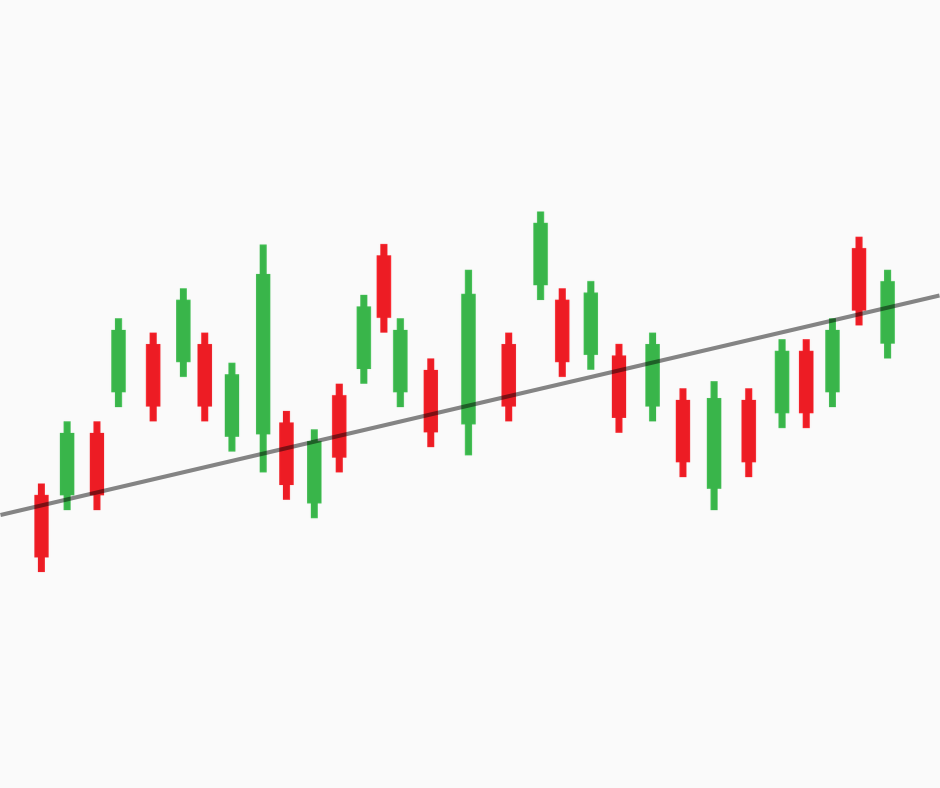
Three wins in a row feel persuasive, especially when the outcomes are large. But a short sequence cannot reveal much about the full distribution of a strategy. A process with positive expectancy can lose several times; a poor process can also enjoy a favorable run.
The first protection is humility about sample size. Results should be interpreted together with process consistency and the market conditions in which they occurred.
Expectancy is more useful than win rate alone

A strategy can win often and still lose money if losses are much larger than wins. It can also win less often and remain viable if winners are sufficiently large relative to losses.
A simple educational framework is:
Expectancy in R = (win rate × average win in R) − (loss rate × average loss in R).
If a fictional sample wins 45% of the time with an average +2R winner and loses 55% with an average −1R loss, the sample expectancy is 0.45 × 2 − 0.55 × 1 = +0.35R per trade before costs. That number does not prove a permanent edge; it gives the reader a more informative description than “45% win rate.”
Skill should appear as repeatable decision quality, not only as one favorable market regime

A trend strategy may look brilliant during a strong trend and weak during a range. The trader needs to know whether results came from a method that matched the regime or from broad market beta that lifted almost everything.
Review process adherence, results by setup and results by regime. The more the performance depends on one unusual period, the less confidently it should be generalized.
Worked example — follow the decision, not just the feeling
A learner has 8 wins in 10 trades during a broad rally and concludes that she has found a strong edge. She expands the review to 60 historical or paper trades and separates trending from ranging periods. The win rate falls, but the process still shows positive expectancy in trends and poor expectancy in ranges. The useful finding is not “I was lucky” or “I am skilled.” It is a more precise statement about where the method appears to work.
The important part of the example is the sequence. First there is a market event. Then there is an interpretation. Then the trader feels pressure to alter a rule. By separating those stages, the reader can decide whether new evidence actually supports the change.
What this framework cannot guarantee
A behavioral framework cannot tell us the next price, remove uncertainty or guarantee that a disciplined decision will make money. It also should not be used to explain every loss as a psychological failure. Markets can invalidate good decisions, and operational problems can overwhelm a reasonable plan.
The useful standard is narrower: make the decision process visible enough that later review can distinguish a market outcome from a preventable process change.
No-money exercise — reconstruct one decision before seeing the outcome
Choose a fictional or historical setup and stop the story at the decision point. Write the market facts that were available, the original plan, the behavioral pressure and the rule that was about to change. Then write one alternative explanation and the condition that should keep the original plan in force.
Do not judge the exercise by whether the later price moved in the imagined direction. Judge it by whether the decision could be explained before the outcome was known.
How this connects to market mastery
Academy 10 built external risk controls: sizing, loss limits, liquidity, counterparty risk and crisis rules. Academy 11 adds the internal operating layer. The objective is not to become emotionless; it is to make sure that stress, excitement and recent P&L do not silently rewrite the controls already built.