
Why you should know this
Loss aversion matters because avoiding the discomfort of realizing a small loss can create a much larger financial loss. The key skill is separating the money already lost from the decision that makes sense now.
Trading psychology is useful when it changes a decision, not when it gives us a label for ourselves. The goal is therefore not to call someone “emotional,” “disciplined” or “biased.” It is to notice the point where the evidence, position size, timing or risk rule begins to change—and to make that change reviewable.
The position does not know the price you paid
After an asset falls below entry, the purchase price can become emotionally important. The trader may think, “I will sell when I get back to even.” But the market is not required to revisit that price, and the current decision should depend on present evidence, risk and alternatives—not on the historical number that would erase the feeling of loss.
This does not mean every losing position should be sold. It means the entry price should not replace the thesis. A position can be worth holding below entry if the planned thesis remains valid and the risk is acceptable; it can also be worth exiting at a loss if the thesis has failed.
Moving a stop can transform a planned risk into an undefined one
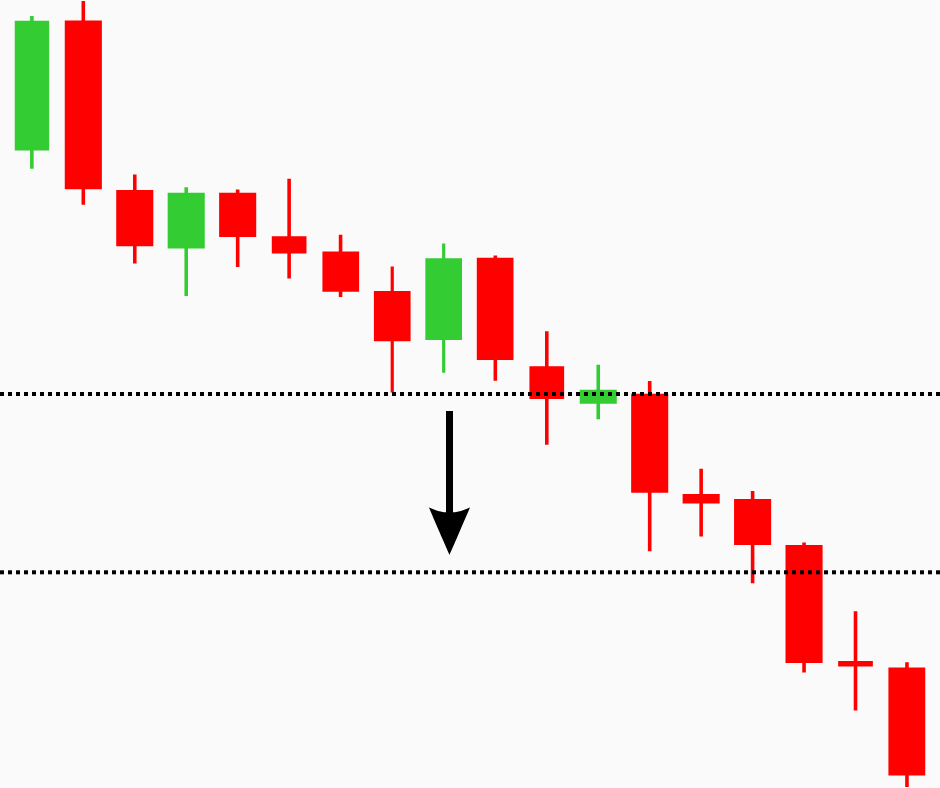
Suppose a fictional trade enters at PHP 100 with invalidation at PHP 95. The planned loss is PHP 5 per unit. When price reaches PHP 95, the trader moves the stop to PHP 90 because taking the loss feels too painful. The position has not become safer. The acceptable loss has doubled while the original invalidation has been ignored.
Averaging down can create the same problem if it is used to improve the average entry rather than because a preplanned scaling rule is still valid. Lower average price feels comforting, but total exposure may be rising as evidence becomes worse.
A better question is: would I open this position today at its current size?

This counterfactual removes some of the emotional weight of the entry price. If the reader had cash instead of the current position, would they choose this same asset, same size and same thesis today? If not, holding merely to avoid realizing the loss deserves scrutiny.
The test is not perfect; taxes, fees and portfolio constraints can matter. But it exposes when the decision is anchored mainly to the hope of returning to break-even.
Worked example — follow the decision, not just the feeling
A learner buys a fictional asset at PHP 100 with a planned exit at PHP 95 if support fails. At PHP 95, she wants to widen the stop to PHP 90 because she “doesn’t want to lose.” She writes down the original thesis and finds that the support level was the actual invalidation. Moving the stop would not preserve the thesis; it would preserve the feeling of not having realized the loss. She follows the original plan and records the discomfort for review.
The important part of the example is the sequence. First there is a market event. Then there is an interpretation. Then the trader feels pressure to alter a rule. By separating those stages, the reader can decide whether new evidence actually supports the change.
What this framework cannot guarantee
A behavioral framework cannot tell us the next price, remove uncertainty or guarantee that a disciplined decision will make money. It also should not be used to explain every loss as a psychological failure. Markets can invalidate good decisions, and operational problems can overwhelm a reasonable plan.
The useful standard is narrower: make the decision process visible enough that later review can distinguish a market outcome from a preventable process change.
No-money exercise — reconstruct one decision before seeing the outcome

Choose a fictional or historical setup and stop the story at the decision point. Write the market facts that were available, the original plan, the behavioral pressure and the rule that was about to change. Then write one alternative explanation and the condition that should keep the original plan in force.
Do not judge the exercise by whether the later price moved in the imagined direction. Judge it by whether the decision could be explained before the outcome was known.
How this connects to market mastery
Academy 10 built external risk controls: sizing, loss limits, liquidity, counterparty risk and crisis rules. Academy 11 adds the internal operating layer. The objective is not to become emotionless; it is to make sure that stress, excitement and recent P&L do not silently rewrite the controls already built.