Why you should know this
Revenge trading matters because a loss can change the trader’s objective from making a good next decision to getting the money back quickly. Once the objective changes, frequency, size and setup quality can deteriorate together.
Trading psychology is useful when it changes a decision, not when it gives us a label for ourselves. The goal is therefore not to call someone “emotional,” “disciplined” or “biased.” It is to notice the point where the evidence, position size, timing or risk rule begins to change—and to make that change reviewable.
The dangerous shift is not anger itself; it is the change in objective

A losing trade creates information and emotion at the same time. The market may have invalidated a thesis, execution may have been poor, or the loss may simply be part of a strategy’s normal distribution. The psychological problem begins when the next trade is asked to repair the previous one.
At that point the target is no longer “take a setup that fits the plan.” It becomes “return the account to where it was.” That target has no necessary relationship to current market opportunity. The trader may accept a weaker setup because the account balance, not the market, is now driving the decision.
Why size and frequency often rise together after a loss
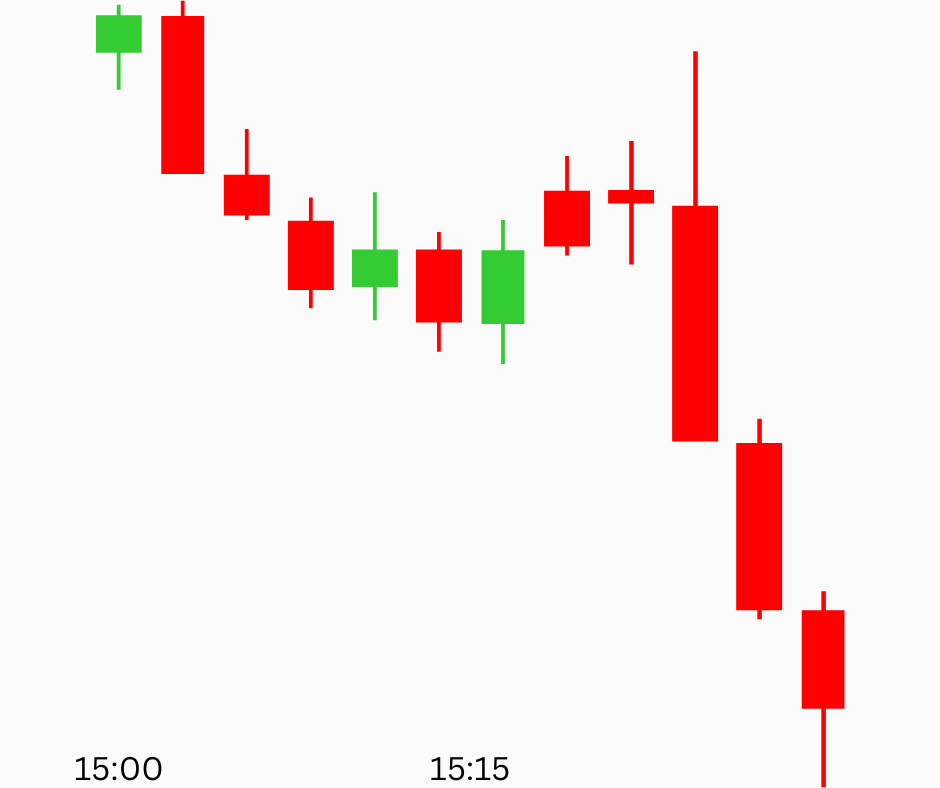
Suppose a fictional PHP 100,000 account takes two planned losses of PHP 1,000 each. The account is now PHP 98,000. If the trader decides that the next trade “must make back PHP 2,000,” a normal 1R opportunity may suddenly feel too small. The temptation is to double size, trade a lower-quality setup, or take several positions at once.
Nothing about the next market setup became better because the previous two trades lost. The larger risk is therefore not a recovery mechanism; it is a new exposure created by frustration. This is why a loss limit and a reset process belong to trading psychology as much as to risk management.
A useful reset asks whether the next trade would exist without the previous loss

One of the cleanest tests is counterfactual: if the account had been flat today, would this exact setup, size and entry still be acceptable? If the answer is no, the previous loss is controlling the current trade.
The reset should not depend on feeling perfectly calm. It should depend on observable conditions: the prior loss is recorded, the daily limit has not been breached, the new setup can be described independently, and the size returns to the planned baseline. If those conditions are missing, waiting is not weakness; it is process control.
Worked example — follow the decision, not just the feeling

A trader loses PHP 1,000 on a planned breakout and another PHP 1,000 on a failed retest. Ten minutes later, a different token starts moving. He wants to risk PHP 3,000 because one winner could “fix the day.” He writes the setup as if he had not seen the earlier losses and realizes he would normally risk only PHP 1,000 and would not enter at the current price. The market opportunity did not justify the larger risk; the account balance did.
The important part of the example is the sequence. First there is a market event. Then there is an interpretation. Then the trader feels pressure to alter a rule. By separating those stages, the reader can decide whether new evidence actually supports the change.
What this framework cannot guarantee
A behavioral framework cannot tell us the next price, remove uncertainty or guarantee that a disciplined decision will make money. It also should not be used to explain every loss as a psychological failure. Markets can invalidate good decisions, and operational problems can overwhelm a reasonable plan.
The useful standard is narrower: make the decision process visible enough that later review can distinguish a market outcome from a preventable process change.
No-money exercise — reconstruct one decision before seeing the outcome

Choose a fictional or historical setup and stop the story at the decision point. Write the market facts that were available, the original plan, the behavioral pressure and the rule that was about to change. Then write one alternative explanation and the condition that should keep the original plan in force.
Do not judge the exercise by whether the later price moved in the imagined direction. Judge it by whether the decision could be explained before the outcome was known.
How this connects to market mastery
Academy 10 built external risk controls: sizing, loss limits, liquidity, counterparty risk and crisis rules. Academy 11 adds the internal operating layer. The objective is not to become emotionless; it is to make sure that stress, excitement and recent P&L do not silently rewrite the controls already built.