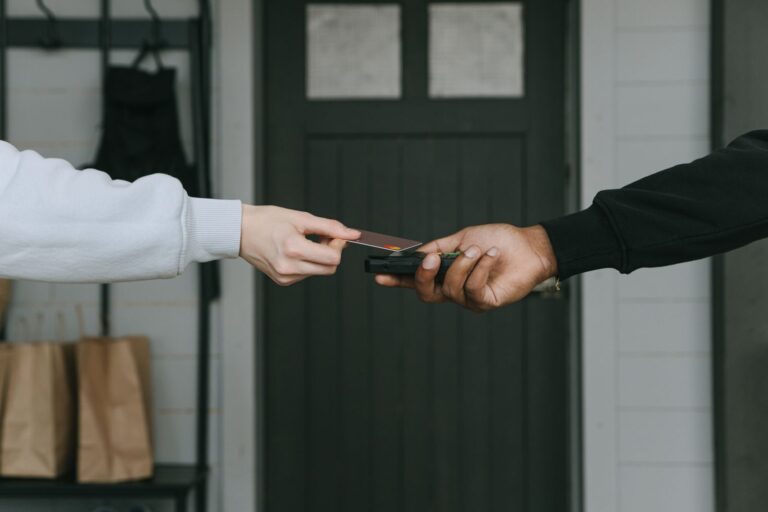
Many Filipinos nowadays are using digital financial services more than ever. According to the Bangko Sentral ng Pilipinas (BSP), nearly 80% of Filipino households are already utilizing digital banking and e-wallets for their day-to-day transactions.
During the first five months of the year the digital payments surged to ₱13.18 trillion through PESONet and InstaPay. with the growing number of digital banks and e-wallets available, access to financial services has become easier for individuals, making it more inclusive and accessible for every Filipino.
In recent developments, the BSP has also encouraged banks and other digital financial service providers to reduce or remove transaction fees.
This initiative aims to further promote the use of digital payments and lessen reliance on physical cash. Given these developments, it is reasonable to consider whether digital transaction data can be used to help assess an individual’s creditworthiness.
The House Bill 9149
A proposed bill has been submitted by lawmakers to help Filipinos establish creditworthiness using their digital transactions. House Bill No. 9149, or the Open Finance and Consumer Data Empowerment Act of 2025, encourages lenders to use alternative data including e-wallet transactions, utility bill payments, and subscription history, and in addition to traditional credit information when evaluating borrowers.
This bill also grants consumers the legal authority to allow lenders to access their financial and transactional data, which can serve as supporting evidence for credit assessments.
This measure could provide significant support, especially since millions of Filipinos remain unbanked and lack formal credit history up until now.
Tingog Party-list Representative Jude Acidre, one of the co-authors of the bill, emphasized that Filipinos are already generating rich financial data through their daily use of mobile phones and e-wallets.
The bill aims to leverage this data to expand access to financial tools and services, helping bridge existing gaps and enabling more Filipinos to participate in the digital economy.
The proposal comes amid the continued rise in digital payments. In 2024, digital transactions accounted for 57.4% of all retail payment transactions in the Philippines, with an estimated 58 million Filipinos using e-wallets.
Despite this rapid shift, a significant portion of the population remains excluded from formal financial systems.
Fintech and legal Insights
A trustee from the Fintech Alliance Philippines shared that Open Finance legislation matters because it achieves two key objectives at once. First, it expands financial access for consumers. Second, it opens new market opportunities for the industry to compete in serving underserved customers.
He further explained that many Filipinos already generate rich financial data beyond traditional banking, which can demonstrate their creditworthiness.
However, the missing piece is a legal framework that allows this data to be utilized, along with a mandate requiring institutions to provide such data upon the consumer’s request.
The bill also proposes the creation of a Consumer Data Commission under the Office of the President. The commission would be composed of a commissioner from the Securities and Exchange Commission as co-chair, alongside a Bangko Sentral ng Pilipinas deputy governor, with representatives from the National Privacy Commission, National Telecommunications Commission, and Philippine Competition Commission, as well as four private sector experts.
Its mandate would include establishing technical and security standards for data sharing, accrediting entities authorized to access consumer data, conducting compliance audits, enforcing sanctions against violators, submitting annual reports to Congress, and reviewing the law every two years.
The push for Filipino’s better financial literacy
Despite the rise of digital banking and e-wallets, many Filipinos are still left behind in terms of financial inclusion. To address this gap and support the push for improved financial literacy, the Bangko Sentral ng Pilipinas (BSP) launched its digital platform, PisoLit, in collaboration with KasKasan Buddies.
KasKasan Buddies’ Facebook page has over 580,000 followers, while its private group has approximately 1.3 million members. Its content includes guides on credit cards, travel deals, and financial technology-related topics. The community has also launched its own mobile application.
PisoLit, on the other hand, is the Bangko Sentral ng Pilipinas’ official financial education platform. It is used to provide guidance on financial management and consumer protection, particularly in areas such as budgeting, saving, responsible credit use, scam awareness, and cybersecurity.
The partnership focuses on creating social media content and conducting learning sessions, which will be distributed across various platforms to reach a wider audience.
The goal of this initiative is to help more Filipinos not only understand how financial products work but also learn how to manage potential risks when using these platforms. Both organizations envision a future where every Filipino is well-informed, confident, and responsible in making financial decisions.
BSP Deputy Governor Bernadette Romulo-Puyat said that the growing ease of using digital payment channels not only provides convenience but also poses risks to consumers. A few taps on a phone can be used to pay bills and transfer money, but they can also lead to impulse purchases, overspending, debt, and even scams.
She added that the central bank’s partnership with KasKasan Buddies aims to help Filipino consumers manage these risks and improve their financial literacy.
On the other hand, KasKasan Buddies Corporate Secretary and Co-Founder Jacques Yves “Jax” Reyes stated that their collaboration with the BSP through PisoLit aims to reach more Filipinos and promote financial education. He explained that sometimes people just need a small push, and this partnership is designed to provide that push in a way that is accessible and relatable to the public.
In line with the goals of BSP’s PisoLit and KasKasan Buddies, DOPAY App also aims to help more Filipinos become confident in their digital and financial literacy.
DOPAY App is licensed by the Bangko Sentral ng Pilipinas (BSP) as an Electronic Money Issuer (EMI) and a Virtual Asset Service Provider (VASP). It offers secure e-wallet and crypto wallet services to support users in managing their digital finances.
With DOPAY’s crypto wallet, you can gain crypto rewards for every trade under our Trade & Earn program. Not just that, with DOPAY’s Refer & Earn program, Filipinos can unlock new doors for earning possibilities with every successful referral.
Download the DOPAY app today!