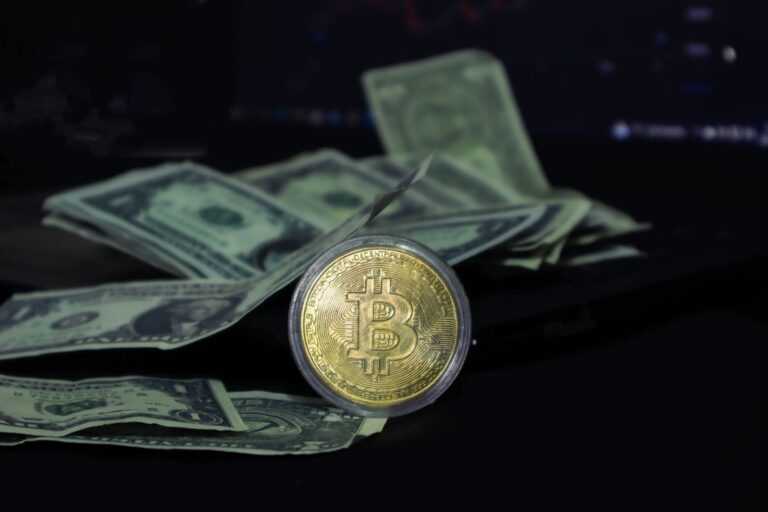
In an era increasingly defined by digital payments, mobile wallets, and cashless transactions, it may seem surprising that the Bangko Sentral ng Pilipinas (BSP) is investing in expanding its capacity to produce physical currency.
But the central bank’s latest move to establish local polymer banknote production reveals an important reality about modern monetary systems: despite rapid digitalization, cash remains a critical component of economic resilience, monetary sovereignty, and national security.
The BSP reportedly aims to begin local production of polymer banknotes through its own production line in 2027, reducing its long-term dependence on imported polymer currency from Australia.
One production line will have the capacity to produce approximately 500 million polymer banknotes annually. Currently, polymer banknotes used in the Philippines are sourced from Australia through imports.
Mamerto E. Tangonan, Deputy Governor of the BSP’s Payments and Currency Management Sector, told reported that the objective is to develop the expertise and operational capability necessary for domestic production rather than relying indefinitely on foreign suppliers.
However, he also noted that imports may continue in the near term because a single production line may not be sufficient to meet total national demand.
The move builds upon the BSP’s gradual transition toward polymer banknotes, which began with the ₱1,000 polymer note and expanded into additional denominations under the First Philippine Polymer Banknote Series.
At first glance, the initiative may appear to be a manufacturing project. In reality, it represents part of a longer-term strategy centered on monetary resilience and supply security.
Banknote Production Matters More Than Most People Realize
Currency production is rarely discussed outside central banking circles.
Most consumers interact with money without considering where banknotes originate, how they are manufactured, or the logistical systems supporting their circulation. However, the ability to produce national currency represents a strategic capability.
A nation that relies entirely on external suppliers for currency production exposes itself to a range of potential vulnerabilities, including supply chain disruptions, geopolitical tensions, transportation bottlenecks, and production delays.
The COVID-19 pandemic demonstrated how vulnerable global supply chains can become during periods of crisis.
Countries that depended heavily on imported medical supplies, semiconductors, food products, and industrial components encountered significant disruptions.
Currency production is not immune to similar risks. The BSP’s decision to build domestic polymer production capability reflects a broader trend toward strengthening national resilience in strategically sensitive sectors.
Evolution from Paper to Polymer
The Philippines’ move toward polymer banknotes is part of a global transformation in currency production.
Polymer banknotes have been adopted by numerous countries, including Australia, Canada, New Zealand, Vietnam, Malaysia, and Mexico.
Unlike traditional paper notes made from cotton or cotton-abaca blends, polymer notes are produced using specialized plastic substrates. Central banks have increasingly favored polymer currency for several reasons:
- Polymer notes generally last significantly longer than paper notes
- They are more resistant to moisture and dirt
- They contain advanced security features that improve protection against counterfeiting
- They are generally more durable in tropical environments and high-circulation conditions
These advantages are important to the Philippines because of the country’s climate and geographic characteristics.
Banknotes often circulate through environments involving high humidity, frequent rainfall, flooding risks, and intensive handling. Durability therefore becomes a cost-efficiency issue as well as a security consideration.
Economic Logic Behind Local Production
The BSP’s initiative should also be viewed through an economic lens: domestic production capability creates more control over currency supply management.
Rather than depending entirely on external manufacturing schedules, transportation arrangements, and foreign production capacity, the BSP will gain greater flexibility in responding to local demand conditions.
According to Deputy Governor Tangonan, one challenge in currency production involves managing shifts in demand across denominations.
Production planning requires coordination between inventory management, forecasting models, and printing schedules. Local capability provides greater flexibility in adapting to these conditions.
The economic benefits also extend beyond operational efficiency. Local production can strengthen institutional knowledge, technical expertise, specialized workforce development, and long-term manufacturing capacity in highly specialized fields.
Even if imports continue, domestic production provides an important strategic alternative.
The Cash Paradox
One of the most interesting observations came from Deputy Governor Tangonan’s discussion of what he described as a “cash paradox.”
According to BSP data, digital payments accounted for approximately 64.7 percent of retail transactions in 2025. Yet demand for physical currency continues to rise rather than decline. This phenomenon is not unique to the Philippines.
Tangonan noted that similar patterns have emerged in countries such as China and India, both of which have highly developed digital payment ecosystems.
The assumption that digital payments would eventually eliminate cash has proven overly simplistic. Instead, evidence from many jurisdictions suggests that digital payments often complement rather than replace physical currency.
Consumers use different payment methods depending on circumstances, digital payments offer convenience, and, cash offers immediacy, privacy, resilience, and accessibility.
The coexistence of both systems reflects consumer preferences rather than technological limitations.
Philippines’ Digital Finance Future
Some observers may interpret increased investment in banknote production as contradictory to the country’s digital finance ambitions.
In reality, the two objectives are complementary.
The BSP has simultaneously promoted digital payments, interoperability, instant transfers, financial inclusion, and innovation in the payments ecosystem.
The central bank therefore recognizes that digitalization and cash coexist. A modern financial system requires multiple payment rails capable of serving different needs.
Digital channels increase efficiency, while physical currency provides resilience.
Rather than choosing one system over the other, policymakers increasingly focus on maintaining a balanced ecosystem. The future of payments is likely to be hybrid rather than exclusively digital.
DOPAY, as a BSP‑licensed EMI and VASP, offers OFWs a low‑cost remittance pathway through in‑app user‑to‑user transfers, allowing OFWs to send money from abroad using secure crypto‑to‑PHP conversion and direct wallet‑to‑wallet transfers.
For overseas Filipino workers (OFWs) and local employees, DOPAY provides a reliable way to manage money, send remittances, and access digital financial tools protected by strong KYC and AML/CFT controls.
With DOPAY’s crypto wallet, you can gain crypto rewards for every trade under our Trade & Earn program. Not just that, with DOPAY’s Refer & Earn program, Filipinos can unlock new doors for earning possibilities with every successful referral.
Download the DOPAY app today!