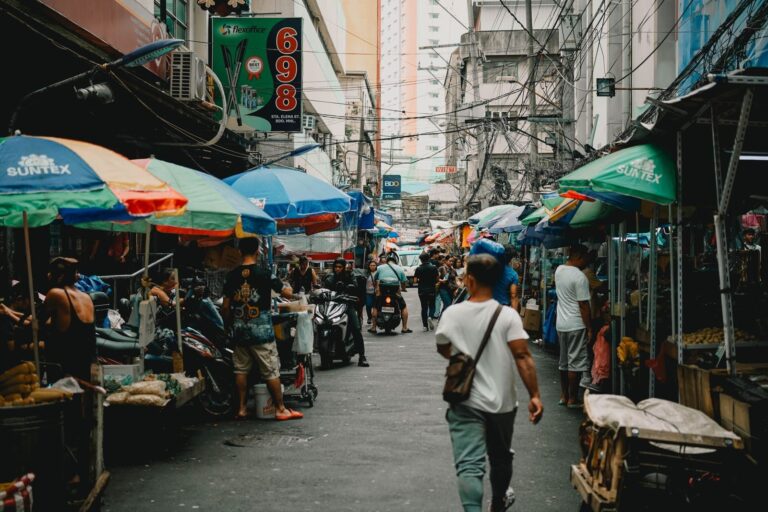
The EDSA Busway could be cashless by the end of the year.
For the Filipino, using cash has always been a bottleneck for the daily commute. There is a friction point at which cash, through asking for change or exact amounts, leads to a stressful experience. Waiting in line for hours on the bus home, only to find that one does not have enough cash on hand; already on the bus, only to see that change is not accepted; at home and seeing that cash on hand is less. Cashless transactions can pave the way forward for improving commuters’ quality of life.
Addressing the Pain: Transportation Secretary Lopez
Transportation Secretary Giovanni Lopez said on Wednesday that he directed bus operators to pilot cashless fare payment systems by December. This is aimed at cutting delays and speeding up passenger movement. Acknowledging the pain point of the commuter, Lopez stated: “I have instructed the LTFRB that, hopefully by December, this time, the operators have to provide what we call an automatic fare collection system for our Busway consortiums and operators. They have to provide that. We need it to make travel faster for our commuters”
Should this push through, there will be a mandate for operators to provide cashless payment options for commuters. The options for cashless settlement are still in consideration; however, it may take shape in the form of electronic wallets (GCash, Maya) or possibly cards like those used in the MRT.
Multiple Cashless Options to be Implemented
The Secretary pointed out that the goal is not to constrict the options to one single platform, but rather, give the commuters several options of cashless modes of payment: “What I am asking from them is that there should still be kiosks at our Busway stations where commuters can load their cards and where GCash can also be used. The key here is interoperability and ensuring that the system can integrate other payment platforms and e-wallets”
Commuter Behavior and Sentiments: Willing to Adapt
The EDSA busway currently serves over 180,000 commuters daily. For those 180,000, it is not a far-off speculation that most already have some form of cashless payment–be it in the form of GCash, or other platforms. GCash has over 40 million active users—a third of the Filipino population. Statistically, at least 60,000 commuters must therefore have GCash downloaded and in use for daily touchpoints. From the sari-sari transactions to the convenience store payments, haircuts, soda, bills, stocks, and much more, GCash is a ‘super app’ whose importance cannot be overstated. It has turned from a luxury or an edge to a necessity for businesses. There is thus a logical gap in the public commuting system to implement such cashless methods. The market is already there—it is up to the operators to adapt and assess its impact.
In a study by Agile Data Solutions conducted in 2025, focusing on commuter sentiment, Filipino commuters share many struggles. Notably, the congestion and traffic in everyday commutes. The study particularly noted that despite hardships, commuters are open to digital innovations. This has been observed in ride-hailing apps like MoveIt, Grab, and so on. But digitalization could also extend to modes of payment. If anything is to be taken away from the study, it is that the Filipino wants a better experience; if digital payments allow for that, then the demand is there.
Where Will This Go?
This is still an evolving development that is currently in the initial stages of ideation and communication to operators and authorities. Those concerned must weigh the demand and improvement to customer experience, versus the cost of implementation (both financial and opportunity).
Evolving Landscape
As is with the planned implementation of cashless payments for commuters who travel by bus on the EDSA route, innovation will come at the benefit of the end-user—and possibly, with a positive feedback loop, the benefit of the operators. While there is no study on the concrete outlook of the cashless system implementation, one thing is certain: commuters should be given more options to pay.
DOPAY, Your Digital Ally that Listens
The DOPAY application listens to the evolving needs of the Filipino. Much like how the Transportation Secretary has planned for cashless payments, we address pain points of the consumer. Beyond offering services, we go the extra mile to improve upon niches. For the OFWs abroad, or the transferrers at home, we offer a means for transparent, affordable remittance. For cryptocurrency traders, we offer a simplified but comprehensive platform.
This is part of our core mission: to provide financial services for everyone, everywhere. And we listen, and we improve; ultimately, we cater to the Filipino with care.
We offer the DOPAY Academy, free of charge, for those who seek to add to their financial literacy. With over 600 articles ranging from basic concepts to advanced trading strategies, whichever level you are at in your journey, the DOPAY Academy caters to you.
For those who spread the word of DOPAY, we offer incentive programs. Content creators and Video Affiliates are welcome to join the Video Affiliate Program, where they can earn up to 3,000 pesos in ETH—terms and conditions apply. Traders who are market makers can avail of the Trade and Earn program. And referrers who successfully refer the application to their friends will be rewarded with 70 pesos in ETH; with their referred friends earning 30 pesos in ETH. Terms and conditions apply.
As an institution that cares for the Filipino, we provide news daily. Visit our website at dopay.ph or keep posted on our social media platforms—where we post two news articles daily on Facebook, X and LinkedIn. Across all platforms, meanwhile, we offer insights on trading strategies, remittance, and financial concepts, twice a day as well.
The DOPAY app is now available for download on iOS and Android and DOPAY is regulated by the Bangko Sentral ng Pilipinas—so you can transact with confidence. Download now and benefit from trading and remittance.