Recently, Senator and Lawmaker Erwin Tulfo made a call for ‘Zero Barriers’, sending an urge for financial inclusion among Filipinos.
Senator Tulfo stated his view regarding attaining true financial inclusion, which should encompass borders of the mindset of just opening bank accounts, digital wallets, and starting digital banking applications. The correct vision should ensure accessibility of the general financial system from Filipinos interested.
Making advocacies and programs for financial literacy and continuous promotions across the country, especially in the rural areas or targeted areas, and translating results into Filipinos opening bank accounts for savings, receiving money, borrowing money, applying for insurance, while being aware and informed of the financial process, its services, and its benefits, are most ideal.
Hearing Senator’s Tulfo’s call of action from financial sectors then led to Bangko Sentral ng Pilipinas’ statement.
The central bank states that they agree in the viewpoint of financial inclusion extending beyond transaction fees and reflecting in financial services which are accessible, affordable, understandable, and useful for all Filipinos.
It also insisted the importance of its recent actions – regarding regulatory issuances urging financial institutions to lower transaction fees, leading to a chain movement of financial institutions of removal and minimized transaction fees for cashless payments.
BSP’s Response and Support
Bangko Sentral ng Pilipinas (BSP) posits that payments are the gateway to making further transactions—such as creating accounts, depositing, withdrawing, transferring and applying for loans.
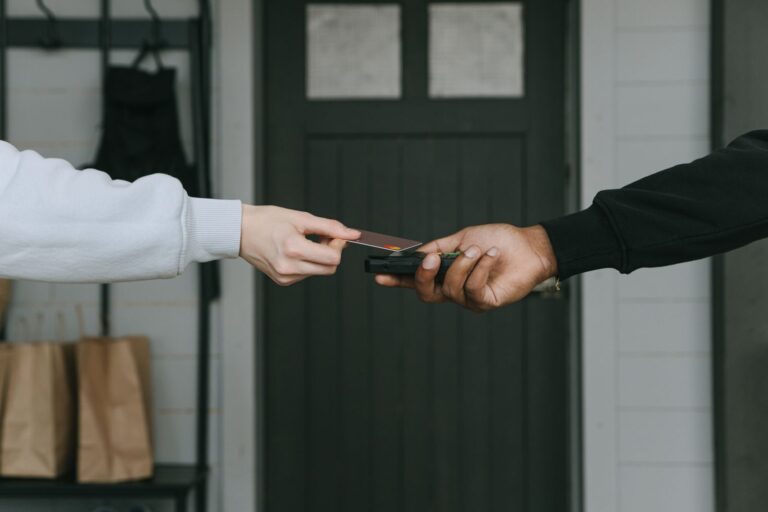
In the banking sector’s perspective, there have been multiple developments in making payments easier. In the physical sense, there are cashless options available; in the digital sense, there are insta-pay options among many others.
The groundwork has therefore been laid for the ease of transactions; and this is the very nature of innovation within the banking and financial sector.
Th central bank says that Tulfo’s thesis states that the measurable goal of ease in banking and transacting should be of a focal lens. Current goalposts are accounts opened, transaction volume, users engaged, and so on.
There is no existing comprehensive framework that captures the more qualitative nature of ‘ease’, even though this is a crucial measure—or rather, prerequisite—for success. A banking individual who must go through many documentary hurdles to apply for a loan, say, may opt out of doing so if the efforts outweigh the value.
The conversation thus shifts to the actual value added by financial institutions in the very way that they include Filipinos. In the simplest sense, that in which friction or barriers-to-entry to access the benefits of banking is reduced as much as possible.
If there are 10 million accounts open, but there is a lost opportunity cost of 10 million others because of a difficult process, the net value is zero.
Financial Inclusion Today in the Philippines
As technology and digitalization expand, so is the information disseminated. In the country, there are few programs rolled out specifically to help the education of Filipinos regarding financial inclusivity.
One example is the BSP-launched program, BSP E-Learning Academy (BELA) which was soft-launched in 2024 and aims to educate Filipinos regarding financial planning, budgeting, and debt management. With BELA any Filipino citizen seeking to improve their personal finance habits can sign up and learn courses which can help in their personal finance planning, payments, and growth.
Further, BELA is accessible through BSP’s application and can be used with mobile devices, making learning compact and easy. The modules integrated in BELA also include informational courses for Agriculture (farmers) and Social Workers sectors, as well as Professional Cash Handlers (Cashiers, Treasury staff, etc.) with modules focused on Know-Your-Money (KYM).
With BELA, long unaddressed concerns for rural and underserved areas are properly addressed with the right resources. For those in remote and rural areas with internet connectivity issues, BSP has partnered with Department of Information and Communication Technology (DICT) to deploy and install satellite internet so that residents can in targeted areas can access the academy’s courses.
Through BELA, BSP gives every Filipinos a platform to financially educate themselves in terms of money, what to do with it, when to spend it, how to borrow, and many more, in a simplified way which can be understand by many. While not mainstream today, BELA is and remains to be a good example of the government’s concrete actions for the long concerns of lack of education of financial systems by the Filipinos.
Encompassing modules, there are also present initiatives to encourage Filipinos in joining banking system, traditionally and digitally, with Paleng-Qr Ph Plus, a day-to-day cashless payment QR-code systems specifically built for public market vendors, public transportation drivers, and other community merchants.
In addition, Basic Deposit Accounts (BDA) is also present and is implemented by financial services providers across the country, which is designed for low-income individuals. BDA’s key features are zero maintaining balances, no dormancy fees, and with minimum opening fees at PHP 100, or less.
The programs stated above are proof that financial inclusion is not an end goal; it is a constant demand and a smart way of financial access among everyone.
DOPAY, A Financially-Inclusive Platform
The DOPAY application is a platform that provides transparency, ease of use, and low barrier to entry.
This is substantiated by our core services that require documents that are easily accessible; liveliness checks that are convenient to do; and end-to-end transactions which take place with little need for additional effort on your end. Our onboarding process is designed specifically to address the hurdles currently posed by traditional institutions—such as physical applications, onsite visits, and other limiting requirements that lengthen (or sometimes discourage) users to engage with their services.
With DOPAY, we commit to financial inclusivity not just with low transaction fees, but also with educating our users. Easy to understand instructional posters and articles about the applications features and services enables users to have a step-by-step understanding on how the app works. Further, DOPAY commits to informing users of the latest trends, events, and regulatory changes which can be seen on the DOPAY website, News.
You can rest assure that with the ease of DOPAY’s application process, we still adhere to stringent standards of safety, security, risk management, and profile confidentiality. Our platform is built around the unalterable nature of the blockchain. Our workforce is created around delivering the utmost safety and convenience to you.
DOPAY is an Electronic Money Issuer and Virtual Asset Service Provider that is licensed and regulated by Bangko Sentral ng Pilipinas (BSP)—and as a BSP-regulated financial institution, we strictly adhere and adapt to the latest and evolving policies and regulations that ultimately yield the most value for you.
Download the DOPAY application now, and discover our features of e-wallet balance, remittance and fund transfer, and cryptocurrency trading.
What’s more, there is no minimum balance required to use our platform. Whether you are an Overseas Filipino worker, or a crypto-trader, DOPAY is here to serve your needs.