Why you should know this
A single app can show pesos, crypto and transfers, but the legal relationship can change from one screen to the next. If you do not identify the activity and responsible entity first, you can easily expect the wrong protection, disclosure or complaint route.
The aim is not to turn every reader into a lawyer or compliance officer. It is to make the reader harder to confuse. A strong Academy 15 lesson should let someone identify the activity, the accountable role, the evidence and the point where a general rule stops being enough for a personal conclusion.
One interface can hide several legal relationships

When people say an app is “regulated,” they often compress several different questions into one word. A regulated entity may be permitted to perform one activity but not every financial activity that appears beside it in the same interface. In the Philippines, electronic-money activity and virtual-asset activity are not interchangeable simply because the customer reaches both through one brand or login.
The practical habit is to follow the activity rather than the logo. Ask what balance you are looking at, what transaction you are asking the provider to perform, and which legal entity is responsible for that step. That mapping matters before you ask what disclosure, safeguarding, complaint or assistance route may apply.
Start with the balance and the transaction
Imagine a user who holds PHP in an electronic-money balance, converts part of it into a virtual asset, then sends that asset to an external wallet. The peso balance, the conversion and the blockchain transfer may involve different regulated activities, operational systems and risk disclosures.
The same is true when something goes wrong. A failed peso cash-in is not automatically the same type of problem as a delayed virtual-asset withdrawal. The useful question is not “Is this company regulated?” but “Which entity and regulated activity was responsible for the step that failed?”
Regulation narrows uncertainty; it does not remove risk

Supervision can impose requirements around governance, records, disclosures, consumer assistance and other controls. It does not turn market risk, operational failure, fraud, insolvency or irreversible blockchain transfers into guaranteed outcomes. A licence or registration is evidence about regulatory status; it is not a promise that a particular asset will keep its value or that every loss will be recoverable.
Work through a realistic case
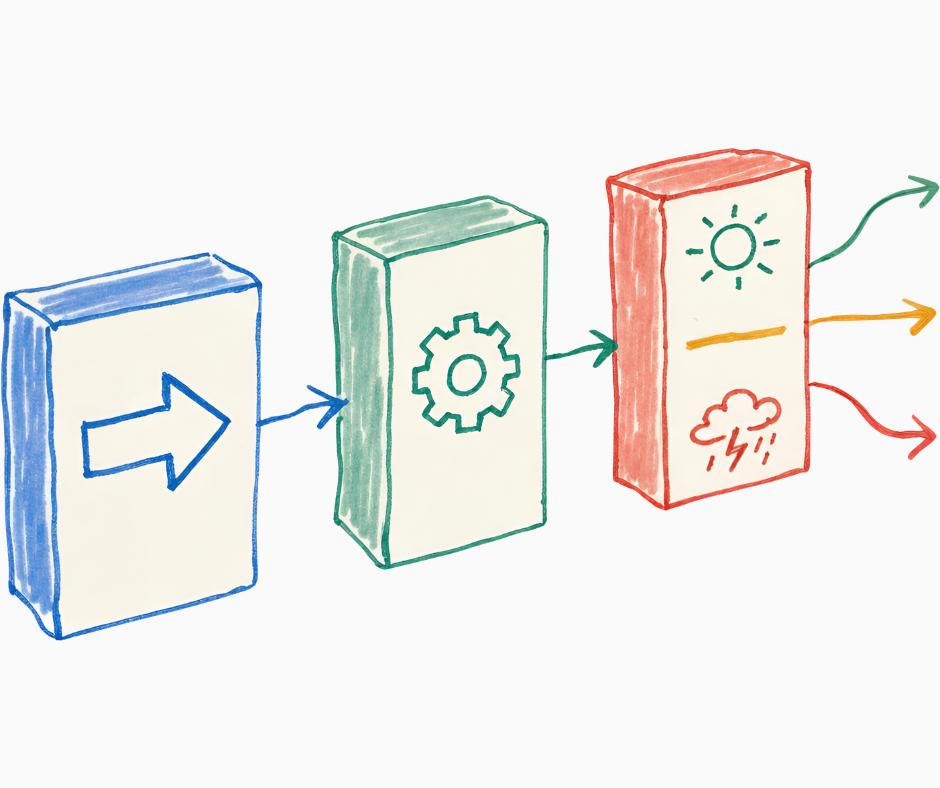
A fictional user sees ₱20,000 in a peso balance and 300 units of a stablecoin in the same app. Before assuming both are protected in the same way, she writes three rows: peso balance, crypto conversion, and external-wallet transfer. For each row she records the responsible legal entity, the activity, the relevant terms and the assistance channel shown by the provider. The exercise turns a brand-level assumption into a transaction-level map.
Notice what the exercise does not do. It does not start with a legal slogan and force the facts to fit. It starts with the transaction or communication, identifies the relevant roles and records, and only then asks which current rule or protection may apply.
Where the protection boundary ends

Regulatory categories, entity permissions and consumer-assistance routes can change. The exact status and scope must be verified against current authoritative records before publication or action.
For publication, every current statement about a regulator, provider status, legal duty, complaint route, deadline, threshold or available remedy must be reopened from the controlled source pack and mapped to the exact jurisdiction and as-of date. If that evidence does not establish applicability, the claim stays qualified or moves to needs_review.
Practice — no money needed

Use the fictional case above or create a comparable case. Write one page with four headings:
| Question | Your note |
|---|---|
| What exactly happened? | State the transaction, data event, communication or promotion without legal labels. |
| Who is responsible for this step? | Name the entity or role, not only the brand. |
| What evidence supports the expectation? | Terms, receipt, regulator record, privacy notice, transaction reference or other primary evidence. |
| What remains uncertain? | Record the legal, factual or operational point that still requires verification. |
Then explain in two or three sentences why the uncertain point matters. If your conclusion changes when that fact changes, you have found the decision boundary.
How this connects to market mastery
Advanced judgment begins by mapping responsibility correctly. The same discipline will later help with custody, complaints, privacy and cross-border jurisdiction.
The next lesson turns this understanding into a rights, duties and escalation exercise. The goal is not to memorize regulators. The goal is to build a repeatable way to protect yourself when money, data and regulated services meet.