Protect Your Money (PYM) Campaign by Bangko Sentral ng Pilipinas

Protect Your Money Campaign

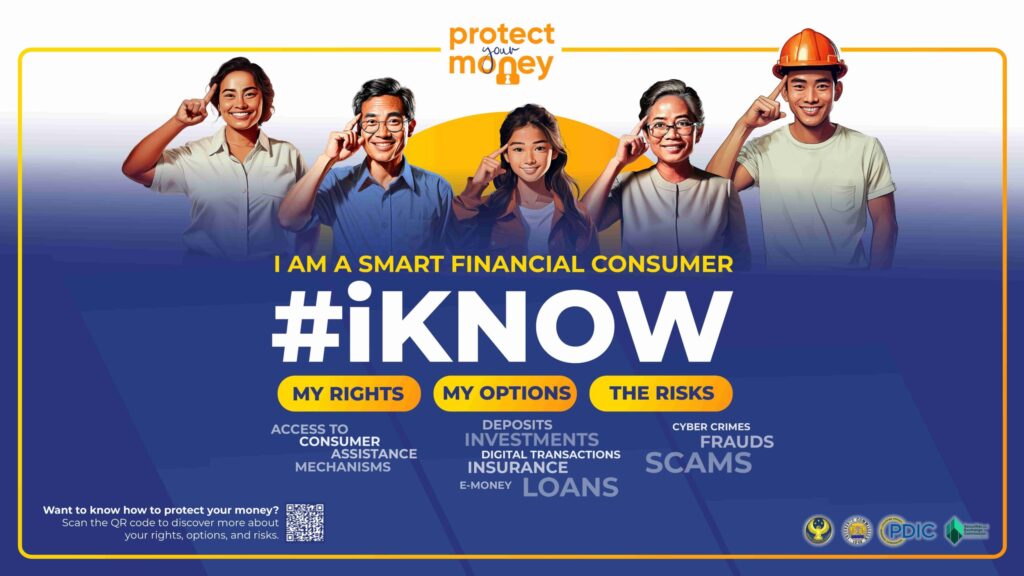
March 09, 2026 — Whether you’re a retiree, an Overseas Filipino Worker (OFW), or simply managing your daily finances, knowing your rights, options, and risks is the first step toward financial security. 

Digital Literacy Program

The Bangko Sentral ng Pilipinas (BSP) implements a Digital Literacy Program as part of our financial education advocacy. The Program aims to increase public trust and confidence in the digital finance ecosystem and encourage massive usage of digital financial services (DFS) by consumers across all sectors – individuals, corporations, businesses, and even government institutions.   

Through strategic communication campaigns, consumers are informed and educated to generate familiarity with DFS; reduce their vulnerability to usage errors, scams and frauds; mitigate risk of loss; protect consumer welfare; and ensure positive customer experiences and outcomes.  

A component of this Program is the #Safe at Home with E-Payments Campaign to promote usage of e-payment solutions such as PESONet and InstaPay during the COVID-19 pandemic and beyond. Communication materials are developed and delivered through social and traditional media and shared with fintech and banking industry associations for utilization in their own information drives.   

Another component of the Program is a Cybersecurity Awareness Campaign to ensure that financial consumers remain vigilant in practicing appropriate cyber hygiene to protect their accounts and online transactions. These Campaigns are implemented with support from the United States Agency for International Development, particularly the E-PESO Project. A unified set of digital literacy and cyber security messages, when amplified together with key stakeholders, increases recall and resonates more widely among Filipinos, bringing us closer to our shared goal of a cash-lite society.  


Customer Centricity Campaign 

The Customer Centricity Campaign (C3) is a joint initiative of the Consumer Protection and Education Committee (CPEC) under the Financial Sector Forum (FSF) which serves as a platform for inter-regulator coordination. C3 is a multi-sectoral and long-term campaign to advocate customer centric business conduct among financial institutions supervised by the BSP, Insurance Commission, Philippine Deposit Insurance Corporation and Securities Exchange Commission. 

Through C3, financial institutions are encouraged to practice customer centricity – a way of doing business that focuses on positive customer outcomes and experiences. A customer centric financial institution puts the needs and welfare of its customers in mind when designing products and services; when making policy and investment decisions; and by increasing efficiency in all aspects of its operations, including effective redress. Customer centric business conduct can drive customer loyalty, enhance company reputation, and consequently impact profitability. 

Protect your money

Be a smart financial consumer! 

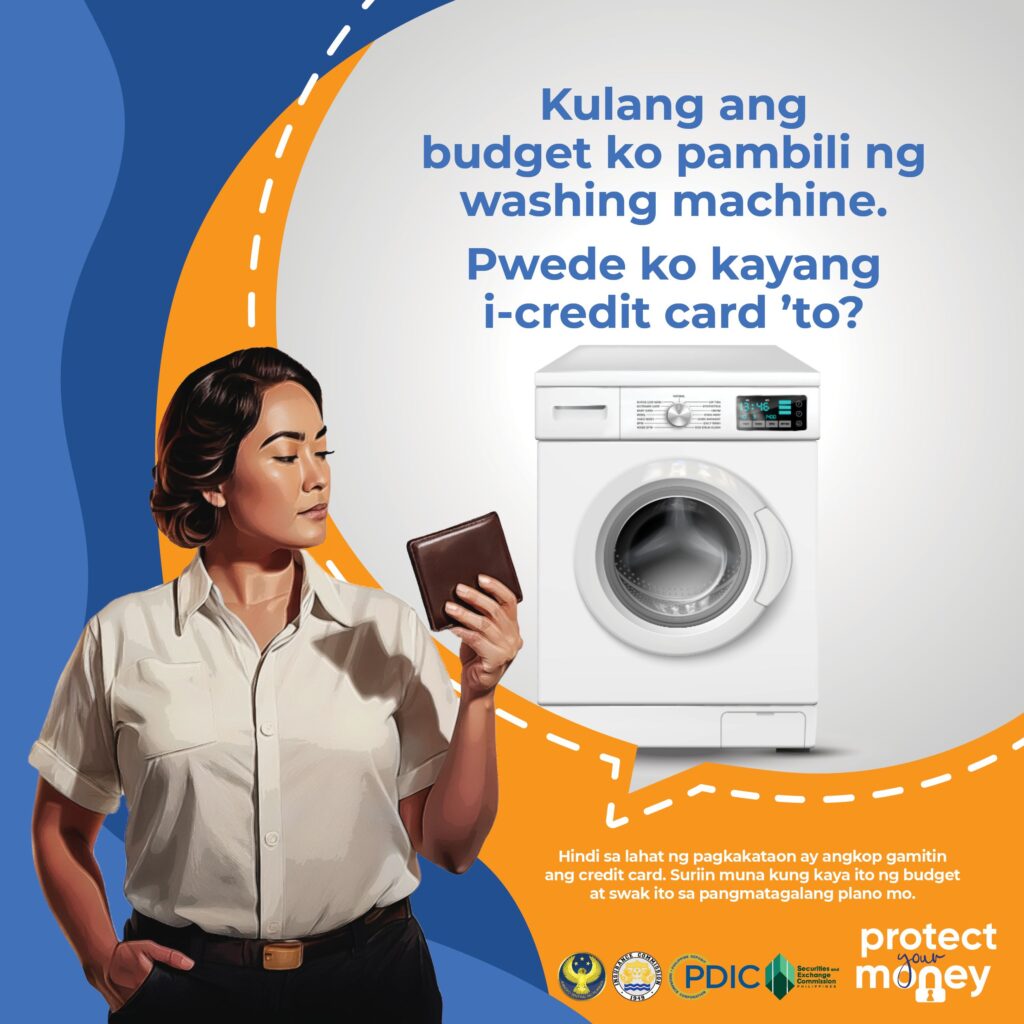
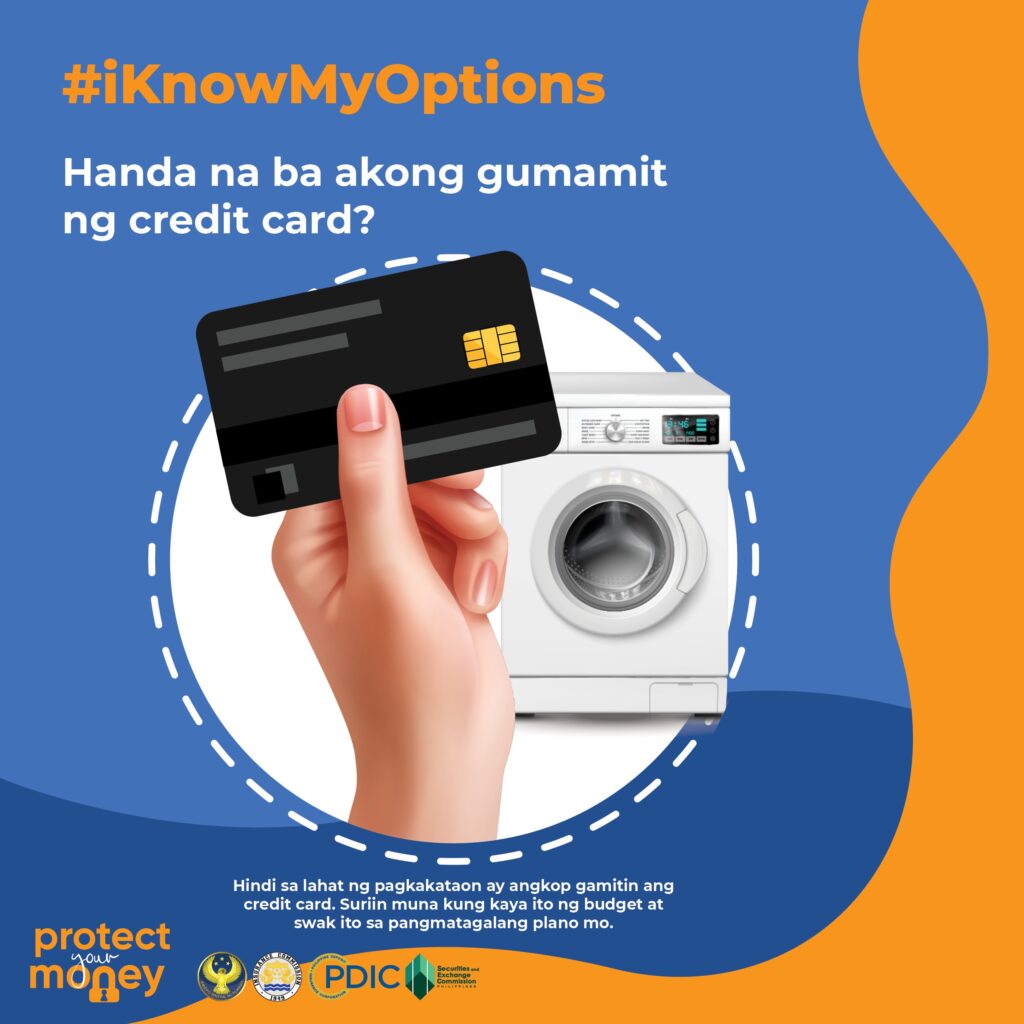
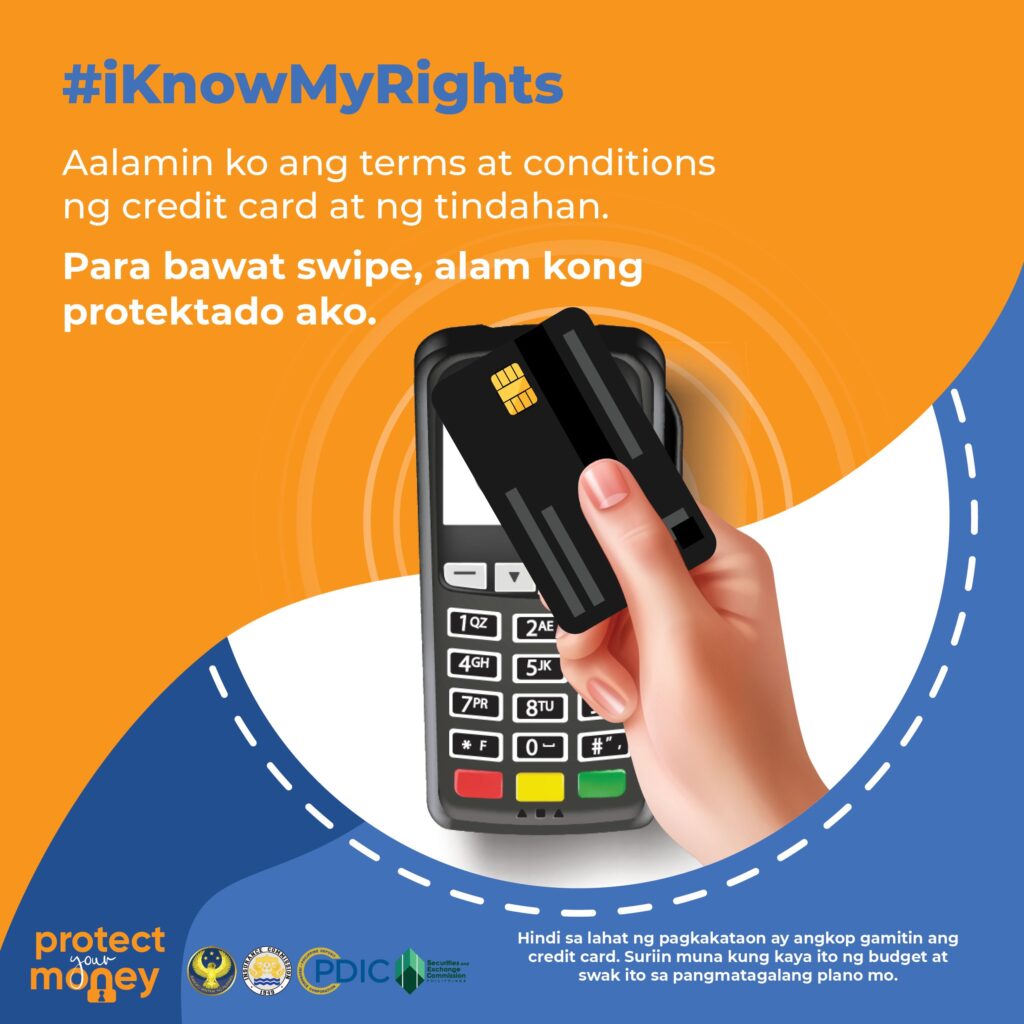
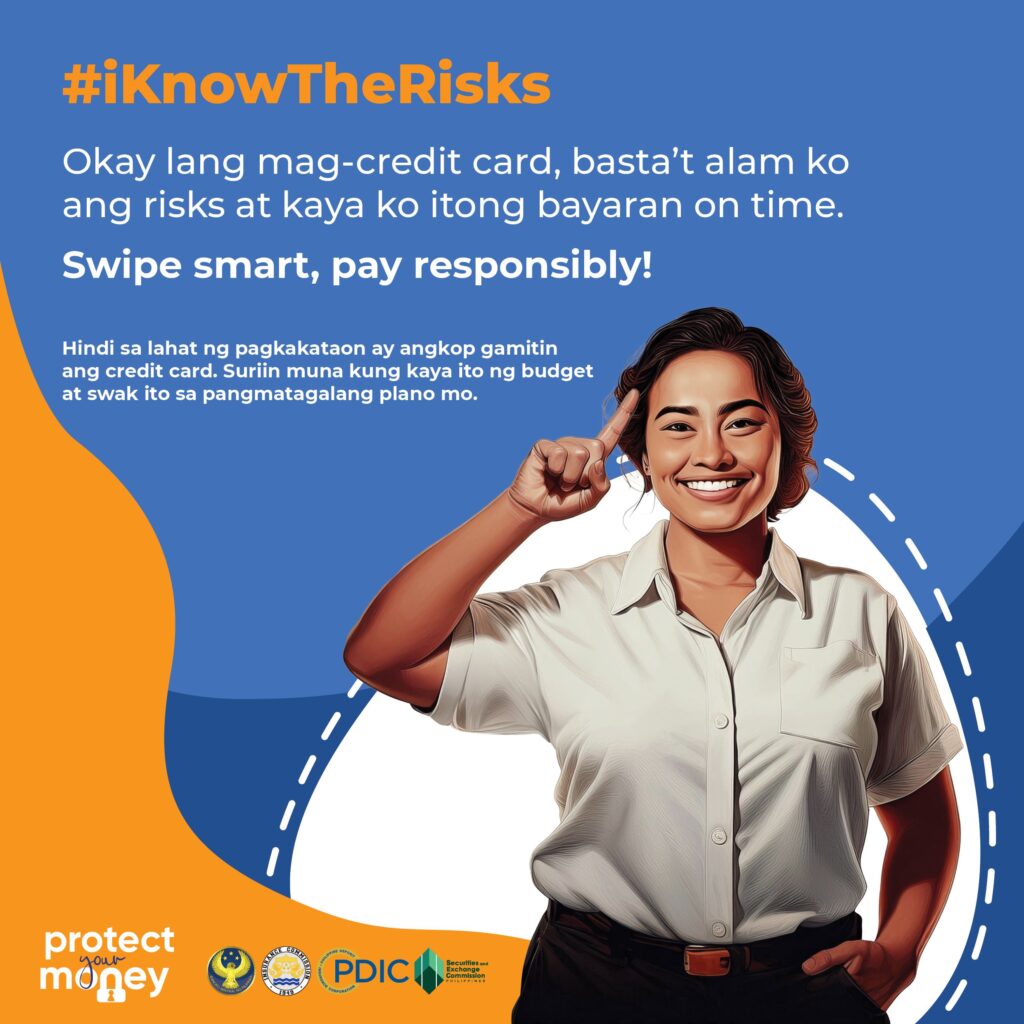
You can use a credit card, but before you swipe, know your options and understand its terms and risks for responsible borrowing and repayment. 

Think before you swipe!

Before using your credit card, ask yourself these questions first: 

  • Do I really need this?
  • Do I really need to buy this now or I can just save funds first?
  • Can my budget handle paying in installments, including the interest? 

If the monthly credit card payment fits your budget, also make sure to check its interest, fees, and charges.

Be sure the total cost and the promo details of what you’re buying are clear—especially if you’re paying in installments.

If you encounter issues with payments, remember:

  • You have a right to a fair debt collection.  Harassment and threats in debt collection are not allowed! 
  • If the bank response to your concerns is not enough, you can reach out Bangko Sentral. 
  • Immediately contact your bank to discuss the appropriate payment arrangement.

⚠️ Credit cards can help to manage budget, but there are always risks such as online scams and phishing.  

To avoid scams: 

  • Do not give your card number, CVV, One-Time Password (OTP), or passwords to others. 
  • Double check the sender and avoid clicking suspicious links. 
  • Check if there’s unauthorized transaction in official channel or app. 


To avoid penalties: 

  • Spend only what you can afford. 
  • Know your due date and total amount due. 
  • Pay on time to avoid interest and penalties. 
  • Avoid minimum payment because it will add more interest.

Share this post:

Latest Articles

Person holding anonymous mask near servers, hinting at cybersecurity and hacking themes.

SEC Conducts Investigation of Data Security Incident 

Trust is one of the most valuable assets in any financial system.  Investors trust regulators to safeguard market integrity. Businesses trust government agencies to protect sensitive corporate information. Citizens trust institutions to secure their personal data.   When questions emerge about whether those data protections remain effective, the issue quickly extends

A well-lit supermarket aisle showcasing a variety of yogurt products in a refrigerated display.

France Links Supermarket Fridge Cyberattack to Iranian Cyber Unit 

French authorities have formally attributed a series of unprecedented cyberattacks on supermarket refrigeration systems to the Islamic Revolutionary Guard Corps (IRGC) of Iran, describing the incident as the first large-scale cyber sabotage operation conducted on French territory.  According to French officials, the attacks affected hundreds of supermarket locations, forcing businesses

Detailed view of assorted coins highlighting different denominations in monochrome.

Self-Print: BSP Wants to Invest in Local Currency Production   

In an era increasingly defined by digital payments, mobile wallets, and cashless transactions, it may seem surprising that the Bangko Sentral ng Pilipinas (BSP) is investing in expanding its capacity to produce physical currency.  But the central bank’s latest move to establish local polymer banknote production reveals an important reality

A modern humanoid robot with digital face and luminescent screen, symbolizing innovation in technology.

PH Digital Economy Eyes $42B Value as Filipinos Continue AI Utilization  

According to the latest e-Conomy SEA 2026 Report by Google, Temasek, and Bain & Company, the Philippine digital economy is projected to reach $42 billion in gross merchandise value (GMV) in 2026, representing a 15 percent increase from $36 billion in 2025.  More significantly, the report projects that the country’s

Grayscale photograph of a handcuffed individual holding a letter board with the word 'FRAUD'.

Gcash, SEC Join Forces to Fight Scams and Digital Fraud 

Financial services are becoming more accessible, convenient, and inclusive.  Millions of Filipinos now use mobile wallets, digital lending platforms, online investment products, and app-based financial services as part of everyday life.  But the same technologies that have expanded financial inclusion have also created new opportunities for fraudsters, scam operators, and

Nighttime street scene with people walking under festive lights on a wet brick pavement.

Businesses Face Rough Roads Ahead: Challenges after Christmas Profits Fade 

The Christmas season remains the most important period of the year for many Philippine businesses.  It is a time when consumer spending accelerates, remittances from overseas Filipinos increase household purchasing power, retailers experience stronger sales, and many industries receive a temporary boost from holiday demand.  However, behind the festive atmosphere,

Download DOPAY.ph Now!

Bringing Your Money Closer to Home.

Whether you’re in the Philippines or working abroad as OFW, DOPAY makes it easier to manage and transfer your funds.

With our low remittance fee, you can enjoy a digital wallet built for convenient and cost-efficient transactions.

DOPAY Download App

Related Articles: