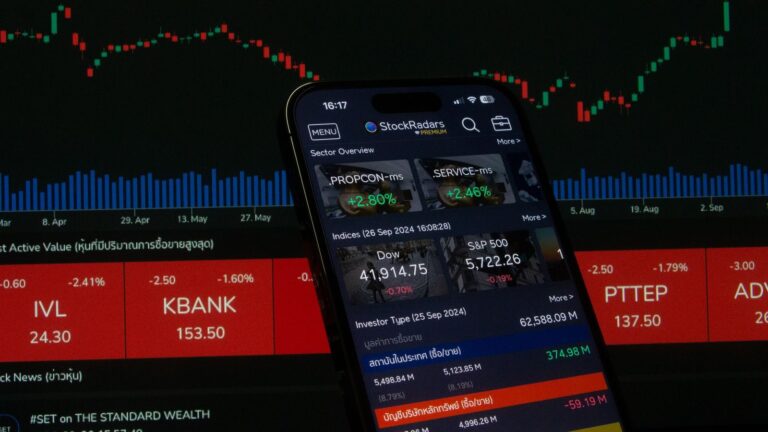
GCash parent Mynt is set for a record-breaking initial public offering (IPO) in October 2026, with an indicative price of up to ₱10 per share and a potential raise of ₱90 billion.
This blockbuster listing is already prompting institutional funds to reshuffle portfolios, proving its noteworthiness for the Philippine stock market and financial ecosystem.
Details of Mynt’s IPO
Mynt Inc., the operator of GCash, has filed for an Initial Public Offering (IPO) on the Philippine Stock Exchange (PSE), scheduled for October 2026.
The deal involves 8.02 billion common shares, split between 1.6 billion primary shares and 6.4 billion secondary shares, with an overallotment option of 1.2 billion shares. At a maximum price of ₱10 per share, the IPO could raise ₱90 billion, making it the largest in Philippine history.
The indicative valuation of Mynt is around $8 billion, positioning it among the most valuable fintechs in Southeast Asia. The public offer period runs from October 5 to 12, with listing targeted for October 19–20.
Retail investors will receive 30% allocation, while 70% is earmarked for institutional investors, reflecting the scale of institutional demand.
Mynt’s Relevance in the Philippine Financial Space
GCash is the Philippines’ leading mobile wallet and “super app,” with 40.4 million monthly active users as of March 2026. It processed ₱17 trillion in transaction volume in 2025, covering payments, transfers, bills, investments, and lending.
Mynt, its parent company, is backed by Globe Telecom, Ayala Group, and Ant Financial, combining telco infrastructure, conglomerate capital, and fintech expertise. This synergy has allowed GCash to dominate the e‑wallet market, outpacing competitors like Maya and ShopeePay.
What Does an IPO Do for a Company?
An IPO allows a private company to raise capital by selling shares to the public.
To Mynt, the IPO provides funds to expand lending services (GLoan, GGives, GCredit), invest in cloud infrastructure, and enhance AI‑driven risk engines. It also offers liquidity to existing investors, enabling them to realize gains.
IPOs increase transparency, as listed companies must comply with disclosure and governance standards, reassuring investors and users alike.
The IPO is also set to strengthen GCash’s balance sheet, enabling it to expand credit offerings and SME tools. To market funds, the ₱90‑billion deal is so large that institutional investors are reshuffling portfolios, selling other equities to free up cash.
Analysts note this technical selling is already affecting PSE‑listed stocks, emphasizing the IPO’s disruptive scale, as the listing is expected to be the largest in Philippine history, boosting PSE’s visibility and liquidity.
It could attract foreign funds, enhance market depth, and set a precedent for other fintechs considering public offerings. However, the sheer size may temporarily distort portfolio flows, as funds rebalance to participate.
The IPO also depicts the maturity of the Philippine fintech sector, elevating the PSE’s profile in regional capital markets.
Implications for Gcash Users
Mynt’s IPO is an indicator of stability and growth. Expanded services in credit, payments, and SME tools could improve accessibility.
However, as GCash becomes accountable to shareholders, users may see changes in pricing, fees, or service prioritization. Transparency and governance will be under greater scrutiny, potentially improving consumer protection.
The IPO also reassures users that GCash is financially robust, reducing concerns about sustainability.
Proceeds will fund scaling of GLoan, GGives, and GCredit, enhancing consumer lending. Investments in AI risk engines and cloud infrastructure will improve reliability and fraud detection.
To small and medium enterprises (SMEs), expanded digital tools could integrate payments, credit, and business management, positioning GCash as a comprehensive financial platform.
Planned services may include deeper integration with insurance, investments, and cross‑border payments, reflecting Mynt’s ambition to become a full‑spectrum financial services provider.
Inferences for the Country’s Financial Landscape
The IPO is considered a watershed moment for Philippine finance as it validates fintech as a mainstream sector, capable of raising capital at scale. It also emphasizes the shift toward digital finance, where mobile wallets rival banks in transaction volumes.
At the same time, it urges regulators for the need to balance innovation with oversight, ensuring that fintech growth does not compromise stability.
Moreover, banks and brokerages will benefit from increased trading activity and fee income. Furthermore, GCash’s expanded lending services may intensify competition with traditional banks, particularly in consumer credit and SME financing.
Financial institutions must adapt to a landscape where fintechs are increasingly capitalized and regulated like mainstream players. The IPO also pressures banks to accelerate digital transformation, as GCash’s scale challenges their dominance in retail finance.
Are We Seeing Similar Innovations in the Future?
The GCash IPO may inspire other fintechs to pursue listings, including Maya and regional players. Future innovations could include tokenized securities, blockchain‑based remittances, and AI‑driven credit scoring.
The IPO sets a precedent, leading a road that hints that Philippine fintechs can achieve global scale and attract institutional capital.
How This Affects Inward Remittances
GCash has already integrated remittance services, allowing OFWs to send money directly to wallets. With IPO proceeds, GCash could expand partnerships with global remittance firms, reducing costs and improving efficiency.
This strengthens inward remittance flows, which account for nearly 10% of Philippine gross domestic product (GDP). However, competition with other licensed providers means users must weigh fees, reliability, and compliance.
Latest BSP figures show that Filipino workers sent $14.1 billion from January to May 2026, with cumulative cash remittances reaching $17.15 billion by end‑June.
Growth has slowed compared to previous years, averaging 2.4% in the first half of 2026, down from 3.1% in the same period last year. June’s inflows of $3.04 billion marked the weakest pace since 2022, indicating softer economic conditions in host countries and geopolitical tensions in the Middle East.
DOPAY, as a BSP‑licensed e‑wallet and crypto wallet, complements this evolution by enabling OFWs to send money home safely and at low cost. Operating under BSP and AMLC oversight, DOPAY ensures minimal-fee transfers from anywhere in the world to the Philippines.
For our beloved OFWs, with DOPAY, you can be assured that you can send money to the Philippines safely and at low cost.
Simply top-up your DOPAY wallet from anywhere in the world and send that to someone in the Philippines through DOPAY, and they will receive pesos in their DOPAY wallet; all within the app!
With DOPAY’s crypto wallet, you can gain crypto rewards for every trade under our Trade & Earn program. Not just that, with DOPAY’s Refer & Earn program, Filipinos can unlock new doors for earning possibilities with every successful referral.
Download the DOPAY app today!