
Why you should know this
ISO 20022 improves how financial messages describe payments, but a messaging standard is not a settlement network, blockchain, token endorsement or guarantee of faster cross-border payment.
Academy 14 is where “I know the term” stops being enough. A useful technology explanation should let you predict what happens when one component fails, which party still has power, and which part of the user outcome sits outside the technology. That is the standard we will use here.
Payments need both instructions and settlement
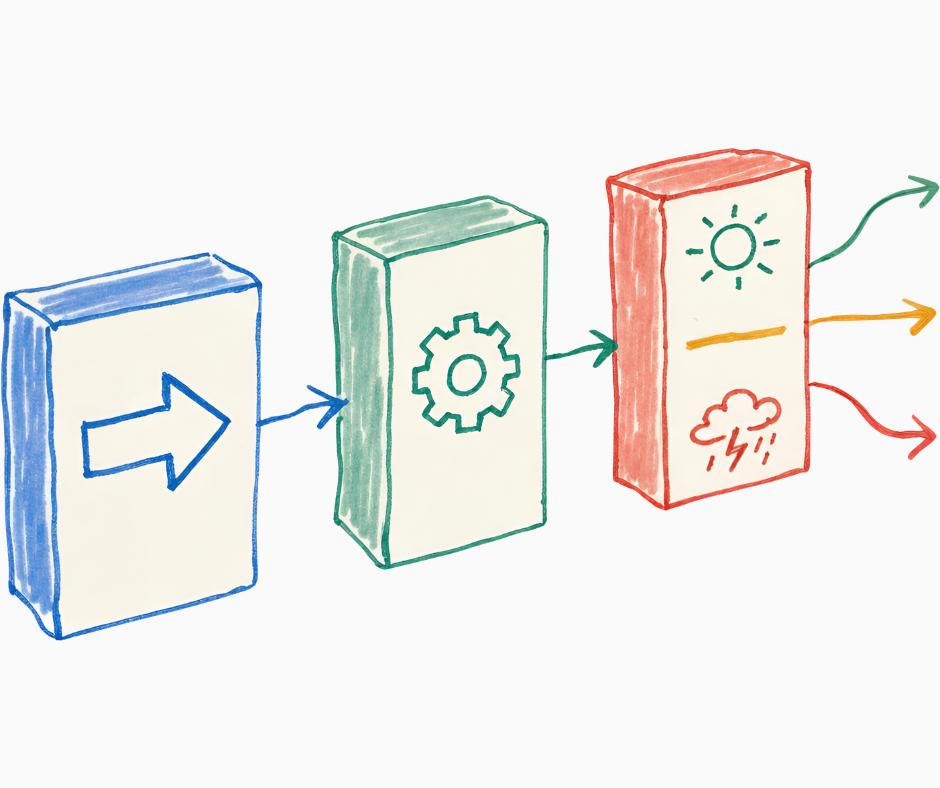
A cross-border payment has at least two conceptual layers. The messaging layer tells institutions who is paying whom, how much, in what currency and with which structured references. The settlement layer changes balances and discharges obligations.
ISO 20022 is a financial messaging standard. It can make data richer and more structured across systems. It does not by itself determine which ledger, correspondent bank, payment system or digital asset settles the money.
Structured data can improve automation and compliance

Richer standardized fields can reduce ambiguity, support reconciliation and carry information used for screening, reporting and exception handling. That can improve straight-through processing when institutions implement compatible data models and workflows.
But standard messages do not fix bad source data, conflicting identifiers, liquidity shortages or operational outages. Interoperability requires governance and implementation beyond the schema.
Blockchain can be one settlement component, not the definition of modern messaging
A blockchain-based network can exchange or settle value while using standardized messages at its boundaries. Traditional payment systems can also use ISO 20022 without any blockchain. The technologies solve different parts of the architecture.
This distinction protects readers from promotional claims that a crypto token is “ISO 20022 compliant” and therefore destined for bank adoption. Token value and institutional adoption require separate evidence.
Cross-border speed depends on the slowest necessary control

Even if messages and ledger transfers are technically fast, compliance checks, FX conversion, sanctions screening, liquidity management, beneficiary validation and local payout rails can determine final delivery time.
A good architecture maps the whole corridor rather than treating one fast component as the speed of the end-to-end payment.
Worked example — follow the mechanism, not the slogan
A fictional Japan-to-Philippines payment sends a perfectly structured ISO 20022 message in seconds. The beneficiary still receives PHP hours later because FX, compliance review and local payout occur in separate systems. The message standard improved data quality but did not eliminate every operational step.
What this lesson does not prove
Understanding a mechanism does not establish that a particular product is safe, legal, available, efficient or suitable. A protocol can work exactly as designed while a custodian, bridge, issuer, oracle, wallet, bank, service provider or user process fails around it. Current implementations can also change through upgrades and governance.
That is why technical literacy should increase caution, not replace it. The better you understand the system, the more precisely you can ask where evidence is still missing.
Philippine and Asian lens

Cross-border payment improvement is especially tangible in corridors such as Japan–Philippines, where message quality, FX, compliance, settlement and last-mile PHP payout all matter. No single standard replaces the full corridor.
Practice — no money needed

Take the worked example above or a historical system you already know. Draw a simple flow using boxes and arrows. For each box, write:
- What state or decision changes here?
- Who or what authorizes the change?
- What data does this step trust?
- What can fail even if the underlying protocol remains healthy?
- What evidence would tell you the step actually worked?
Then write one sentence beginning: “This technology solves , but it still depends on .”
If you cannot fill the second blank, you probably have a slogan rather than a system model.
How this connects to market mastery
Market mastery is not predicting which technology will win. It is being able to separate architecture from marketing, trace dependencies, compare alternatives and keep confidence proportional to evidence. That skill becomes essential in Academy 15, where the same technologies meet consumer rights, regulation and accountability.


