Why you should know this
This lab is an incident-analysis exercise. Rather than labeling a network “down” or “hacked,” classify what property failed and what evidence would show recovery.
A design is not strong because it sounds modern. It is strong when the claimed benefit survives a realistic user journey, the dependencies are visible, and the team knows what to do when an assumption stops holding.
Build the architecture before judging it

Start with one concrete user job. Avoid words such as “faster,” “decentralized,” “secure,” “AI-powered,” or “interoperable” until you can identify what is faster, decentralized, secured, automated or connected. Those adjectives should be conclusions supported by the system map, not starting assumptions.
Use this worksheet:
| Question | What the learner must establish |
|---|---|
| Safety | Did conflicting finalized states appear, or is that only feared? |
| Liveness | Are valid transactions still being included and finalized? |
| Censorship | Are some transactions selectively excluded? |
| Implementation | Is the issue protocol-wide or limited to a client/operator? |
| Application impact | Which deposits, withdrawals, bridges or contracts depend on the affected property? |
| Recovery evidence | What objective observation would justify normal operation again? |
Worked no-money case
Take a fictional 30-minute period in which blocks slow sharply and several validators disconnect. Write three hypotheses: network partition, client failure, and coordinated attack. For each, state what evidence would distinguish it and what action a payment service should take before the cause is known.
Do the case twice. On the first pass, describe the normal path. On the second pass, deliberately break one dependency that is not the headline technology—for example, an oracle, bank, bridge, custodian, data feed, recovery service, governance key or local payout rail. If the design analysis does not change, you may have missed an important dependency.
Compare an alternative, not an imaginary perfect system
Technology discussions become unhelpful when a new design is compared with a deliberately bad version of the old one. Write one realistic alternative architecture and compare the same user outcome.
For both designs, record:
| Dimension | Design A | Design B |
|---|---|---|
| User outcome | ||
| Main trust assumption | ||
| Settlement / state authority | ||
| Critical operational dependency | ||
| Privacy / data exposure | ||
| Failure and recovery path | ||
| Current evidence needed |
The result does not need to produce a single winner. A mature conclusion can be: Design A is better for one function; Design B is better for another; the remaining uncertainty is too large to choose yet.
Stress the control boundary
For the chosen design, write three failure cases:
- Technology failure: code, protocol, model, cryptography or network behaves incorrectly.
- Operational failure: operator, key, provider, bank, data source or infrastructure fails.
- Governance/legal failure: an authorized actor changes rules, an underlying legal claim fails, or current access rules change.
Now identify which case the system can detect automatically, which needs an accountable organization, and which may leave the user without immediate technical recourse.
Philippine and Asian lens
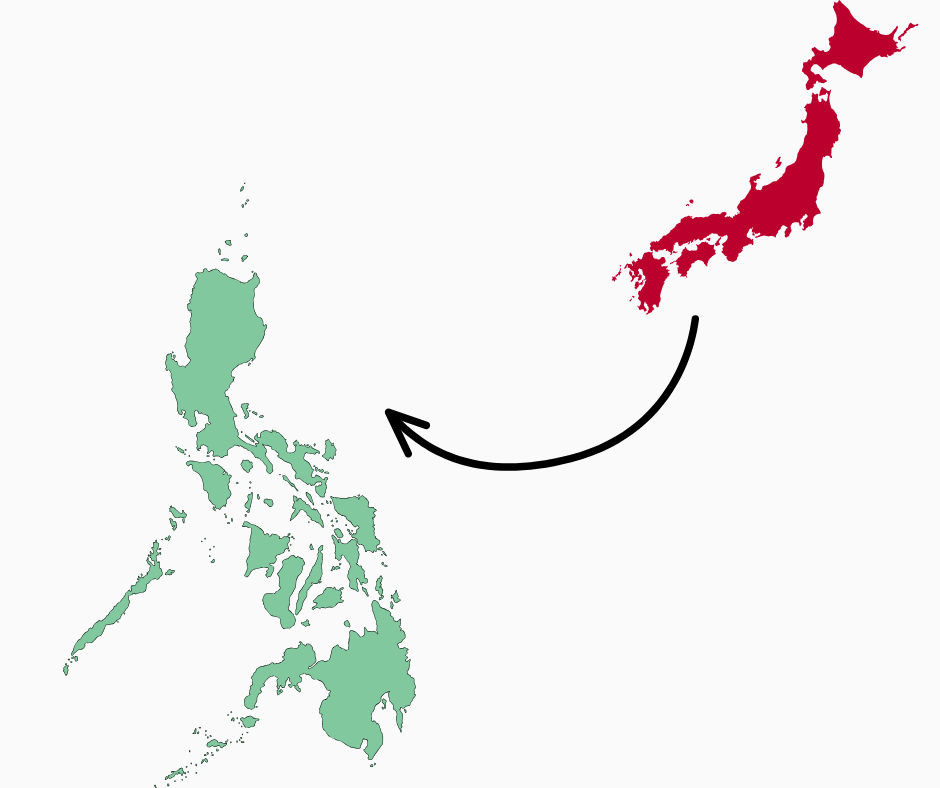
Regional services can react differently to the same chain event. A Philippine exchange, a Japanese custodian and a global bridge may pause or resume at different times because each has its own risk policy and regulatory obligations.
Regional relevance is not decoration. If a conclusion depends on a Philippine, Japanese, Singaporean, Hong Kong, Korean or other Asian provider, law, market, standard implementation or payment rail, record the jurisdiction and an as-of date. A technically accurate global explanation can still be wrong for a particular user if access or legal scope differs.
Decision record
Finish the lab with four sentences:
- The technology is useful here because…
- The most important dependency it does not remove is…
- I would not use or recommend this design if…
- I would reopen the conclusion when evidence shows…
That last sentence is the change trigger. It prevents a technology opinion from becoming permanent simply because it was once well reasoned.
How this connects to market mastery
Advanced technology analysis is less about knowing more acronyms and more about disciplined decomposition. By the end of Academy 14, the reader should be able to place a new technology into a functional map, identify what it replaces, what it adds, who remains accountable and which evidence matters.