
Why you should know this
A visible price difference is not automatically profit; arbitrage skill is measuring whether the spread survives fees, transfer time, slippage, capital constraints and the risk that one side cannot be completed.
Academy 12 is where ideas become operating rules. The aim is not to collect strategy names. It is to learn how to ask the same professional questions of every style: what is the decision rule, what market behavior is it trying to exploit, what assumptions support it, what costs sit between the signal and the result, and what evidence says the method no longer fits?
How the strategy actually makes a decision
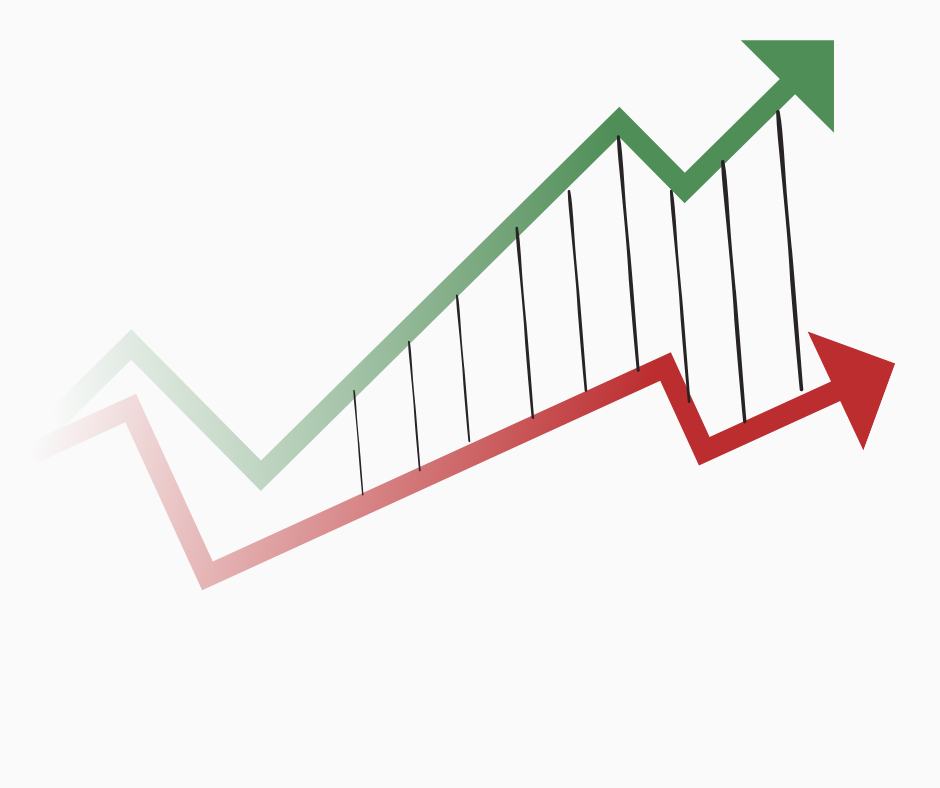
Arbitrage seeks to capture a price difference for the same or closely related exposure across venues or instruments. The textbook version buys at the cheaper price and sells at the higher price nearly simultaneously. Real crypto markets add complications: funds may need to be pre-positioned, withdrawals may be delayed, settlement networks may be congested, and each venue creates separate counterparty exposure.
The strategy is therefore less about spotting a number on two screens and more about managing a chain of execution. If one leg fills and the other does not, the trade stops being arbitrage and becomes directional exposure.
What must be true before the strategy makes sense

A realistic model needs bid and ask prices rather than last-traded prices, order-book depth for the intended size, trading fees, withdrawal fees, network costs, conversion costs, funding costs and expected transfer time. It must also specify whether both legs can be executed immediately with capital already available on both sides.
Cross-currency opportunities require another layer. A price difference quoted in USD and PHP may reflect FX conversion rather than a true arbitrage after all costs.
Work through the decision, not just the definition
For an illustrative, non-market-data example, assume Venue A shows a best ask equivalent to PHP 100 while Venue B shows a best bid of PHP 102. The PHP 2 headline spread on 1,000 units gives a PHP 2,000 gross difference. Now assume, only for the exercise, PHP 700 of combined trading fees, PHP 300 of withdrawal/network costs and PHP 600 of slippage.
Illustrative net spread = PHP 2,000 - PHP 700 - PHP 300 - PHP 600 = PHP 400
None of those cost inputs is a market average or provider quote. Replace every input with the actual executable fee, depth, network and FX data when evaluating a real opportunity.
If the second venue’s bid has depth for only 300 units, the original 1,000-unit calculation was never executable. The skill is to calculate net spread at the intended size, not admire the gross spread.
Where the strategy gives its edge back
A strategy can have a sensible market idea and still produce a poor result if its costs, timing or operating conditions are wrong. Before judging performance, separate market edge from execution drag. Fees, spread, slippage, missed signals, funding or borrowing costs, tax-record obligations and unavailable liquidity may matter differently for each style. The next lesson in this family turns those frictions into an explicit testing ledger rather than leaving them as footnotes.
Arbitrage breaks when transfers are suspended, one venue changes withdrawal limits, order-book depth disappears, one leg fails, the quoted asset is not actually fungible across networks, or the opportunity closes before capital arrives. Counterparty risk can dominate the tiny expected return.
A strategy that requires moving funds after every signal should be tested against delay distributions, not one average transfer time. The worst delays often happen during the exact market stress that creates large price differences.
Skill practice — build the rule before seeing the answer
Build a two-venue arbitrage worksheet using fictional prices. Calculate gross spread, net spread after every known cost, executable size at available depth and the result if one leg slips by 0.5%, 1% and 2%. Then test a transfer delay that closes the price gap before settlement. The strategy is valid only if the execution design explains how both legs are controlled.
Do not score the exercise only by whether the hypothetical trade made money. Score whether the rule was clear enough that another reader could make the same decision from the same information. A lucky outcome from an undefined process is not the skill Academy 12 is trying to build.
How this connects to market mastery
A strategy becomes useful only when it can be compared with alternatives, tested under different regimes and retired when its assumptions fail. That is the bridge from “I know what this strategy is called” to “I can decide whether this strategy belongs in this market and in my operating constraints.”


