The Philippines, regarded as one of Asia’s biggest beneficiaries of the tentative peace deal between the United States and Iran, estimates that every 10% drop in global oil prices could reduce domestic inflation by about 0.5 percentage point.
This prompted Nomura Global Markets Research to trim its 2026 headline inflation forecast to 5.1% from 5.5%, although it warned that underlying price pressures remain persistent.
In view of the easing global prices, the Japanese investment bank, Nomura Global Markets Research reports that while the headline inflation has shown signs of moderation with trend slipping to 6.4% in June 2026 from 6.8% in May, the core inflation continues to climb, reaching 4.4%, its highest level since late 2023
This difference highlights the continuous effects of underlying price pressures despite relief from fuel costs.
Nomura’s Key Findings and its Policy Outlook
Nomura Global Markets Research notes that while headline inflation shows signs of easing, core inflation has risen for six consecutive months, driven by second-round effects as businesses pass higher costs to consumers.
This persistence of core inflation suggests that underlying pressures remain strong, even as global oil markets provide temporary relief.
“We lowered our CPI inflation forecasts due to our latest oil price assumptions. In terms of the trajectory, we believe headline inflation has already peaked, but core inflation has not, reflecting second-round effects,” Nomura said.
The forecast remains significantly above the Bangko Sentral ng Pilipinas’ (BSP) medium-term target of 3%, highlighting the challenges policymakers face in balancing inflation control with economic growth.
Nomura also warns of the posing threat by El Niño, which could disrupt food supply chains and drive-up rice prices. Rice accounts for nearly 9 percent of the consumer basket, making it a critical determinant of inflation in the Philippines.
As a net food importer, with food imports equivalent to about 2 percent of GDP, the country remains highly vulnerable to climate-related shocks.
Against this backdrop, Nomura also expects the Bangko Sentral ng Pilipinas (BSP) to raise interest rates by 50 basis points in 2026, bringing the policy rate to 5.25 percent.
This tightening cycle is projected to be short-lived, with rate cuts of 75 basis points anticipated in the second half of 2027, lowering the policy rate to 4.50 percent.
What Second-Round Effects Mean in the Philippine Context
When an economy experiences an initial shock, such as a spike in oil prices, the immediate impact is higher costs for goods and services that directly rely on fuel. This is the direct effect.
But second-round effects occur when businesses and workers respond to these higher costs by adjusting their own prices and wages.
- Businesses raise prices to protect profit margins as input costs rise.
- Workers and unions demand higher wages to offset the loss of purchasing power.
- Consumers face higher costs across a wider range of goods and services, not just those directly affected by the original shock.
This cycle can lead to a wage-price spiral, where higher wages push up production costs, which then push up prices further, prompting more wage demands.
Suppose global oil prices rise sharply.
Transport operators increase fares; food distributors raise delivery costs, and electricity bills climb. Workers then demand wage increases to cope with the higher cost of living. Employers grant these increases but pass the added labor costs onto consumers through higher prices for goods and services.
Even if oil prices later stabilize, the wage and price adjustments remain embedded in the economy, keeping core inflation elevated.
Major factors affecting core inflation are as follows:
- Fuel and Transportation – When fuel costs rise, jeepney and bus operators increase fares, logistics companies raise delivery charges, and electricity bills climb. Even if oil prices stabilize, these fare and service adjustments often remain embedded, keeping core inflation elevated. This explains why Nomura warns that inflationary pressures will persist despite headline relief.
- Food and Commodities – Rice, which makes up nearly 9% of the consumer basket, is highly vulnerable to El Niño and other climate shocks. Nomura highlights this as a major upside risk to inflation. When rice prices spike, households spend more on food, and businesses in the food sector face higher input costs. Restaurants, processors, and retailers then pass these costs onto consumers, amplifying inflation beyond the initial shock.
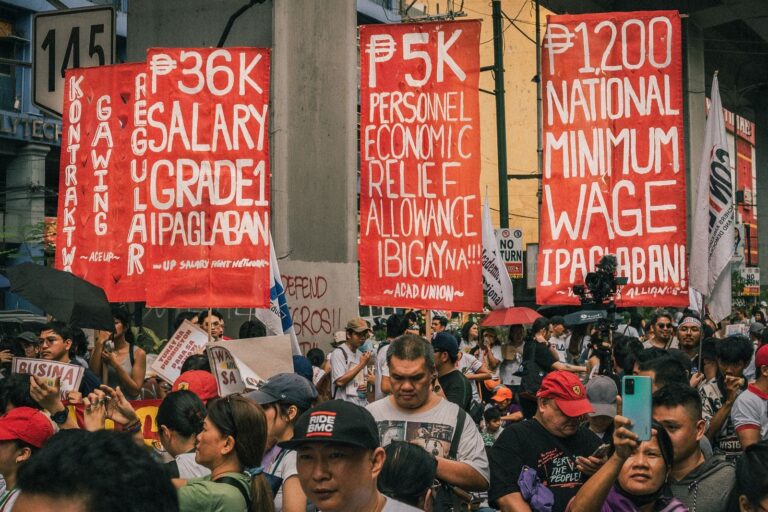
- Wages and Labor Costs – As consumer prices rise, workers demand higher wages to maintain purchasing power. Employers grant wage increases, but these higher labor costs are passed on to consumers through increased prices for goods and services. A good example would be the Department of Labor and Employment’s (DOLE) ₱85 minimum wage increase for Metro Manila workers which marks a significant development in the country’s labor landscape. This adjustment was designed to help workers cope with rising consumer prices and preserve their purchasing power amid persistent inflationary pressures. However, while the wage hike provides immediate relief to households, it also introduces new challenges for the broader economy, particularly in the context of inflation management.
- Remittances and Household Spending – Remittances from overseas Filipinos, accounting for nearly 10% of GDP, provide households with added purchasing power. While this cushions the impact of inflation, it also sustains demand-side pressures. Remittances help households absorb higher costs, but they also maintain consumption levels, which can prolong inflationary momentum if supply constraints remain unresolved.
Conclusion: Balancing Relief and Resilience in Inflation Strategy
Strengthening food security through climate-resilient agriculture can mitigate El Niño’s impact on rice and staple prices. Investments in transport efficiency such as modernized mass transit and fuel-saving infrastructure would reduce reliance on volatile oil imports and ease cost pass-throughs.
Wage policies, like the recent ₱85 increase in Metro Manila, should be paired with productivity-enhancing measures to balance worker welfare with inflation control.
Meanwhile, remittances, which cushion households against rising costs, can be harnessed more effectively by channeling inflows into savings, investments, and financial inclusion programs, ensuring they contribute to long-term stability rather than fueling demand-side pressures.
Ultimately, the Philippines’ strategic move lies in balancing relief with resilience by protecting households from immediate shocks while addressing the structural drivers of inflation.
Also, by combining prudent monetary policy with reforms in food, transport, and wage management, the country can move closer to sustainable price stability and inclusive growth.
Contribute by Integrating Remittances to your Savings
With the DOPAY app, start directing remittances from abroad to your savings account at a lower cost! You can also enjoy trading and remitting cryptocurrencies to your account conveniently.
Visit the DOPAY website and start your crypto journey, enjoy easy transfers, and remittance features all in one e-wallet.
Unlock more opportunities through our referral program and earn rewards equivalent to a cryptocurrency of your choice.
Download the DOPAY app today!