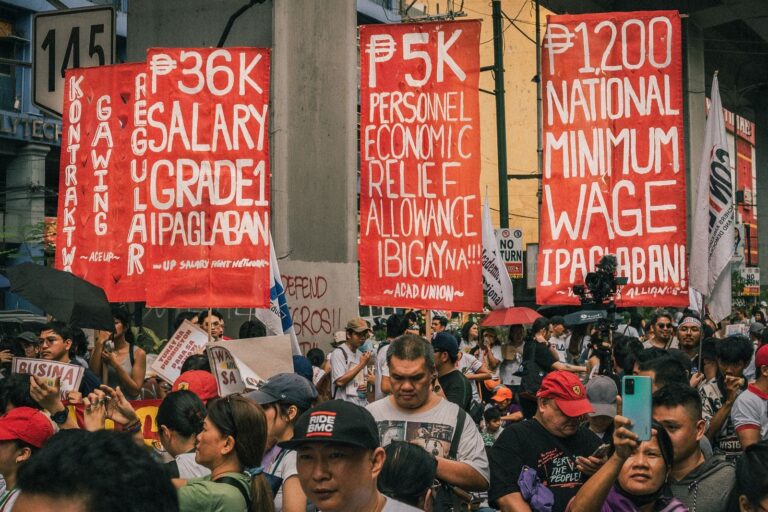
Metro Manila’s minimum wage will rise from ₱695 to ₱780 in two tranches—₱60 effective July 19, 2026, and ₱25 more on January 20, 2027—marking the largest increase ever approved by the National Capital Region (NCR) wage board.
This historic adjustment will benefit over 1.1 million minimum wage earners directly, with ripple effects on up to 1.9 million workers in the region.
The Department of Labor and Employment (DOLE) announced that the ₱85 increase will be implemented in two stages: ₱60 beginning July 19, 2026, and another ₱25 on January 20, 2027.
For non-agricultural workers, this raises the daily minimum wage from ₱695 to ₱780.
Meanwhile, agricultural, service, and retail establishments with fewer than 15 employees, as well as manufacturing firms with fewer than 10 workers, will see wages rise from ₱658 to ₱743.
DOLE estimates that as many as 1.9 million workers could benefit indirectly through wage adjustments and corrections of wage distortions, including employees in retail, service, manufacturing, and agricultural sectors.
This ₱85 adjustment is the largest single wage hike ever approved in NCR history.
It reflects government recognition of inflationary pressures, rising electricity costs, and the need to ensure workers can maintain a decent standard of living in Metro Manila, where the Philippine Statistics Authority reports the highest average annual household spending nationwide.
Labor groups have long argued that the minimum wage has lagged behind the “living wage,” which the IBON Foundation estimates at over ₱1,300 per day for a family of five.
While the ₱780 minimum wage still falls short of this benchmark, the historic increase signals a stronger commitment to bridging the gap between policy and reality.
Measuring the Impact
The wage hike covers a wide spectrum of workers, from those in retail and service industries to agricultural and manufacturing employees.
While the direct beneficiaries are minimum wage earners, the ripple effect is expected to reach employees slightly above the minimum threshold, as companies adjust pay scales to prevent wage distortions.
This means that the wage hike is not just about the lowest-paid workers—it is about creating a more equitable wage structure across industries in Metro Manila. For many, this increase represents a chance to catch up with the rising cost of living in one of the country’s most expensive regions.
For a full-time worker, the ₱85 daily increase translates to roughly ₱1,700 more per month. This additional income can make a tangible difference in household budgets, covering essentials such as food, transportation, and utilities.
However, the increase also raises important questions about financial management. With inflation continuing to erode purchasing power, workers must consider how to allocate their additional earnings wisely.
The wage hike provides an opportunity to strengthen savings habits, reduce debt, and explore new avenues for sound financial decisions.
Household Spending in PH: How is Salary Spent?
The Consumer Finance Survey (CFS) conducted by the Bangko Sentral ng Pilipinas (BSP) every three years provides a detailed look at Filipino households’ financial condition.
The 2021 survey revealed that non-financial assets such as home appliances (96.6%), residential properties (69.9%), and vehicles (35.3%) remain the foundation of household wealth.
However, the composition of financial assets is evolving: deposit accounts (35.3%), cash savings at home (28.7%), and e-money accounts (24.3%) are now the most common forms of financial holdings. This reflects a growing reliance on digital platforms for managing money, especially after the pandemic accelerated the adoption of remote financial services.
The survey also noted a decline in household debt levels, with only 29.3% of households carrying liabilities in 2021 compared to 40.4% in 2018. This shift was driven by precautionary savings during the pandemic, government assistance programs, and reduced spending opportunities due to lockdowns.
Households became more cautious about borrowing, focusing instead on building savings buffers
In 2025, BSP enhanced its research through the Consumer Finance and Inclusion Survey (CFIS), conducted annually to bridge data gaps on household wealth, debt, and spending.
The CFIS tracks not only income and expenditures but also access, ownership, and usage of financial products and services.
Early findings highlight that mid-range salaried households value residential property as their most important asset, but digital financial products are gaining traction as essential tools for everyday transactions.
Leveraging Opportunities for Filipino Workers
The wage hike is not just about survival—it is about empowerment. Workers now have the chance to rethink their financial strategies and take advantage of digital tools to maximize their earnings.
First, the increase can serve as a foundation for building savings. Even setting aside a portion of the additional ₱1,700 monthly income can help create a safety net for emergencies.
Second, workers can explore digital financial platforms like e-wallets, which offer secure, transparent, and convenient ways to manage money.
By digitizing transactions, workers reduce the risks associated with cash handling and gain access to services such as bill payments, remittances, and online purchases.
Third, the wage hike opens the door to investment opportunities.
With platforms like DOPAY offering crypto trading, workers can allocate small amounts toward prospective investments within their risk capacities that have the potential to grow over time. While crypto markets carry risks, they also provide accessible entry points for individuals who may not have traditional investment accounts.
The historic wage hike in Metro Manila is a reminder that wage policy and financial technology must work hand in hand. While government action provides the foundation for improved earnings, digital platforms like DOPAY enable workers to maximize those gains in practical, forward-looking ways.
As the digital economy continues to expand, workers who embrace e-wallets, crypto trading, and other fintech solutions will be better positioned to navigate financial challenges and seize new opportunities.
The wage hike is not just about higher pay—it is about creating pathways to financial empowerment in a rapidly changing world.
DOPAY: Partner of Filipino Workers in Financial Inclusion
DOPAY’s e-wallet and crypto trading services are designed to help workers transform wage growth into sound financial management. With the wage hike, workers can take practical steps toward financial empowerment.
Filipinos can deposit and manage earnings digitally, ensuring transparency and security in every transaction. Our users can also track spending and investments via the app, helping them avoid mismanagement and make informed financial decisions.
By automating savings, Filipino workers can allocate a portion of their additional income into their DOPAY wallet, building financial discipline over time.
Through DOPAY’s crypto trading platform, workers can also explore trading options with manageable amounts, possibly turning incremental wage gains into long-term opportunities.
As a Bangko Sentral ng Pilipinas-licensed financial institution, DOPAY aims to provide Filipinos with the means to save, spend, and invest securely and wisely; ensuring that the benefits of the wage hike extend beyond immediate consumption and toward sustainable financial growth.