The Proposal Relief
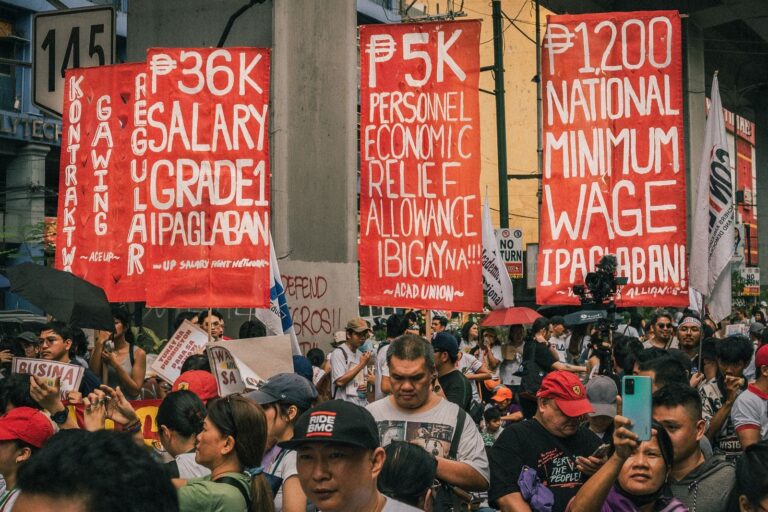
The recent State of the Nation Address (SONA) by President Ferdinand Marcos Jr. On July 27, 2026, brought a relief to many – mostly the common households and those who are part of the lower income tax bracket; including minimum wage workers.
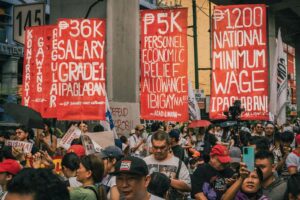
The relief was brought by President Marcos, who acknowledged the hard times in present for Filipinos and called the Government to implement two (2) economic proposals for tax relief exemption; first for micro and small enterprises from the minimum corporate income tax bracket and only requiring them to pay a total one-time tax payment for certain unpaid taxes, and the second is a general proposal for raising the annual tax-exempt income threshold to P350,000 from P250,000. By implementing this proposal, workers can reduce tax payments due to their changed tax bracket and will now have more room for retaining larger portions of their take-home pay.
Both proposals aim to reduce tax payments and increase room for using their earned income. For Filipino workers with an allocated budget every pay day, a simple tax amendment such as this proposal provides huge relief when it comes to rising costs of everyday expenses – food, rent, transportation, gas, as well as bills who do not wait such as emergency healthcare bills and many more.
While these tax relief exemptions do not directly address the issue of rising inflation, this can act as a relief for workers who are under pressure to provide for their families under a certain budget for household finances.
Roadblocks ahead
The road for true financial freedom is still far for many working Filipinos. International conflicts, rising costs, natural disasters and calamities, and so on have such a huge impact on the country’s everyday spending. The most recent financial global shock Filipinos have experienced is the rising of international and domestic fuel prices, an effect caused by U.S. and Iran international conflict. When this effect began to hit, the cost of living further increased; the rise of domestic prices of fuel affected transportation fares for commuters and increased LPG gas price for ordinary households. This recent global shock is a good example of how an international issue and what was originally an abstract headline for many, still made its way to ordinary Filipino households.
The Inflation Economy
No real solution is proposed for the continuous rise of inflation in the country, and while the bigger picture paints the economy from just few financial disasters away from collapse, it is important to note that there is still progress, although very slow. Reports from Sun Life say that the highest inflation felt this year happened previous April, when surveys hit 7.2% for inflation here in the country. This was lowered by May, hitting 6.8% but still above the government’s target range.
For many, the day-to-day cost of living causes immense pressure to prioritize needs in the present while not preserving enough funds for the future. When this phenomenon happens, the long-term financial security of Filipinos is placed at stake to cope for financial pressures such as deadline bills, emergency events, and other household costs. At the end, both long term financial security and growth are as good as gone until same pattern ends.
The proposals made by the President, forming tax exemption measures for micro and small enterprises and increase of annual tax-exempt income to P350,000 are only few steppingstones for attaining financial growth.
The Proposal’s Implementation
The President’s proposal is timely. Further, by addressing the proposal in the financially vulnerable time for Filipinos, forms of tax exemptions can ease the countrymen’s growing worries. On July 29, 2026, the government responded to the President’s call to action for raising annual tax-exempt income threshold. House of Representatives Speaker Faustino “Bojie” Dy III and Majority Leader Ferdinand Alexander Marcos both filed House Bill (HB) No. 10345, a Bill which seeks to increase Annual tax-exempt income threshold from the previous P250,000 to P350,000.
The call was made by Majority leader Marcos and stated in response to the President’s request that the bill shall pose as a relief of families and widen their ability to purchase more by lessening the gap of take-home pay and tax payments and deductions. There is no set deadline yet for when the bill will be passed and implemented, but Filipinos can expect.
Moving forward with DOPAY
The SONA Tax Exemption Proposal unfortunately does not end the tax payment and deductions for the workers, but with due legislation process, it shall mark the beginning of the Filipinos further utilizing their own salary earned through years of labor in the workforce.
Outside of the country, it is not only Filipinos living in the Philippines who are burdened by limited budget every after settlement of bills and expenses after payday – this concern also applied to Overseas Filipino Workers, which constitute for huge numbers. An official estimate made by Philippine Statistics Authority (PSA) states that the current number of Overseas Filipino Workers stands at 2.19 million active workers abroad which represents 1.86% of overall country population and 4.56% of national labor force.
For OFWs who are living far across their families, sending remittances is a common practice to provide and sustain their families. The financial implication of the OFW’s remittances does not only benefit the household families, but also the country’s Gross Domestic Product (GDP). Reports from 2025 shows that the OFW’s remittances take over account of 7.3% of the Philippines’ GDP and 6.4% of Gross National Income (GNI). These huge numbers imply that the remittances sent by OFWs create a huge impact on the country’s economic progress, not just in households.
To OFWs, sending remittances may be a common occurrence after receiving salary, but sending remittances can also be a hassle and costly. For instance, remittance can be costly when sending money through traditional banks or availing cash pickups as the average fee rate can go as high as 6% to 10%. Furthermore, there may be additional hidden and transaction costs, adding more financial burden to the OFW.
Here in DOPAY, we are powered with blockchain technology, and we use our platform to offer an easy and affordable remittance rate for as low as 2%. DOPAY is a licensed by Bangko Sentral ng Pilipinas as an E-Money Issuer (EMI) and Virtual Assets Service Provider (VASP).
On top of that, DOPAY offers a Refer & Earn referral program, where Filipinos can unlock new earning opportunities with every successful invite, and earn rewards equivalent to cryptocurrency!
Download the DOPAY app today.