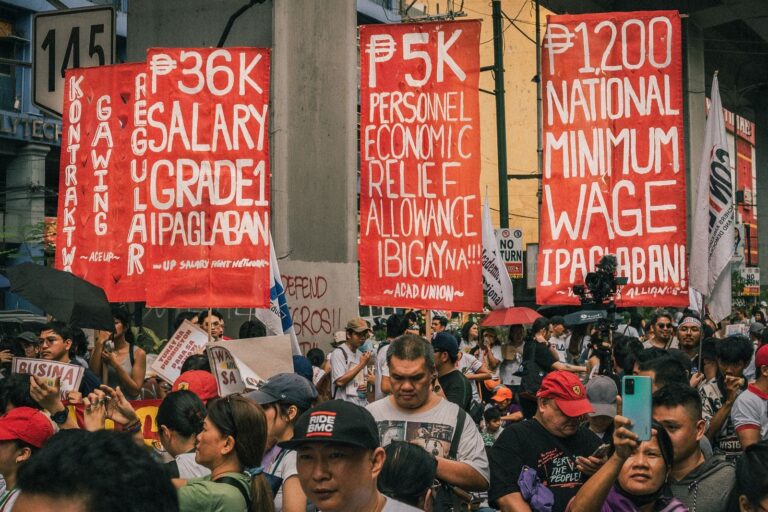
The Financial Executives Institute of the Philippines (FINEX) has welcomed the recent approval of an ₱85 daily minimum wage increase in Metro Manila, describing it as a necessary adjustment to help workers cope with rising living costs. At the same time, the group cautioned that the benefits of the wage hike could be eroded by higher consumer prices, weaker hiring, lower investment, and slower economic growth. This dual message reflects the delicate balance between protecting workers’ welfare and maintaining economic competitiveness.
The wage increase in context
The ₱85 increase raises the daily minimum wage in Metro Manila to a level that aims to provide relief for workers struggling with inflation. For many households, especially those dependent on minimum wage earners, the adjustment represents a modest but welcome boost to income. It is intended to help cover essentials such as food, transportation, and utilities, which have all seen significant price increases in recent years.
However, wage hikes are not without consequences. Employers, particularly small and medium enterprises, face higher labor costs. For companies already grappling with thin margins, the increase may force difficult decisions about hiring, investment, and expansion. FINEX’s statement acknowledges these realities, emphasizing that while the wage hike is positive for workers, it must be accompanied by policies that mitigate its potential downsides.
FINEX’s perspective
FINEX, composed of senior financial executives from leading corporations, banks, and institutions, plays an influential role in shaping economic policy discussions in the Philippines. By welcoming the wage increase, the group signals its recognition of the social and political importance of protecting workers’ welfare. At the same time, its warning about potential risks reflects its responsibility to highlight the broader economic implications.
The organization pointed out that higher wages could lead to increased operating costs for businesses, which may in turn be passed on to consumers in the form of higher prices. This cycle could erode the real benefits of the wage hike, leaving workers no better off than before. FINEX also noted that companies may respond by slowing down hiring or reducing investment, which could dampen economic growth.
Inflationary pressures
One of the main concerns raised by FINEX is inflation. Wage increases can contribute to inflation if businesses raise prices to cover higher labor costs. In Metro Manila, where the cost of living is already high, even small price increases can have significant effects on households. The challenge for policymakers is to ensure that wage adjustments do not trigger a spiral of rising costs that negate their intended benefits.
Inflation also affects investment decisions. Higher costs can make the Philippines less attractive to investors compared with neighboring countries. This is particularly important in a region where competition for foreign direct investment is intense. FINEX’s warning reflects the need to balance wage policies with measures that maintain the country’s competitiveness.
Employment and investment
Another concern is employment. Higher wages can discourage companies from hiring additional workers, particularly in labor‑intensive industries. Small businesses, which make up the majority of enterprises in the Philippines, may be especially vulnerable. For them, even modest increases in labor costs can be significant.
Investment is also at risk. Companies may delay or scale back expansion plans if they anticipate higher operating costs. This could slow down economic growth, which depends on both domestic and foreign investment. FINEX’s statement highlights the importance of creating an environment where wage increases are accompanied by policies that encourage investment and job creation.
Slower economic growth
The cumulative effect of higher prices, weaker hiring, and lower investment is slower economic growth. While wage increases are intended to improve workers’ welfare, they can have unintended consequences if not managed carefully. FINEX’s warning is a reminder that economic policy must consider both short‑term benefits and long‑term sustainability.
Slower growth affects not only businesses but also government revenues, which depend on a growing economy to fund public services. It can also limit opportunities for workers, as fewer jobs are created. The challenge for policymakers is to design wage policies that protect workers while supporting growth.
Policy responses
To address these concerns, policymakers can implement measures that mitigate the risks associated with wage increases. These include improving productivity, supporting small businesses, and encouraging investment. Productivity gains can offset higher labor costs, allowing companies to maintain competitiveness. Support for small businesses can help them absorb wage increases without reducing hiring. Investment incentives can encourage companies to expand despite higher costs.
The government can also strengthen social safety nets to protect workers from inflation. Programs that provide subsidies for essential goods or services can help ensure that wage increases translate into real improvements in living standards.
The debate over wage increases reflects broader questions about economic policy in the Philippines. How can the country balance the needs of workers with the demands of businesses? How can it ensure that wage policies support growth rather than hinder it? FINEX’s statement highlights the complexity of these issues and the need for careful policymaking.
Wage increases are not just economic decisions; they are also social and political. They reflect the government’s commitment to protecting workers and addressing inequality. At the same time, they must be designed in a way that supports long‑term growth.
Historical perspective and regional comparisons
The ₱85 increase is part of a long history of wage adjustments in Metro Manila. Over the past two decades, minimum wages have been raised periodically to keep pace with inflation and rising living costs. Each adjustment has sparked debate over its impact on workers and businesses.
Compared with other ASEAN countries, the Philippines’ minimum wage levels are relatively high in urban centers but lower in rural areas. This disparity reflects the country’s economic structure, where Metro Manila serves as the hub of commerce and industry. Wage policies must therefore balance the needs of urban workers with the realities of rural economies.
Regional comparisons also highlight the importance of competitiveness. Countries like Vietnam and Indonesia have attracted significant foreign investment by maintaining relatively low labor costs. The Philippines must ensure that wage policies do not undermine its attractiveness as an investment destination.
The Financial Executives Institute of the Philippines has welcomed the ₱85 daily minimum wage increase in Metro Manila, recognizing its importance for workers struggling with rising costs. At the same time, it has warned that higher prices, weaker hiring, lower investment, and slower economic growth could erode its benefits. This dual message reflects the need for balanced policies that protect workers while supporting businesses and growth.
The challenge for the Philippines is to design wage policies that deliver real improvements in living standards without undermining competitiveness. By highlighting both the benefits and risks of the wage increase, FINEX has contributed to a debate that will shape the country’s economic future.
In this evolving landscape, digital solutions can help households and businesses manage financial pressures more effectively. E‑wallets like DOPAY provide secure, affordable, and instant transfers, enabling families to stretch their budgets and small enterprises to streamline payments. As wage adjustments reshape the economy, tools that make money management easier become essential.
Not just that, with DOPAY’s Refer & Earn program, Filipinos can unlock new doors for earning possibilities with every successful referral.
Download the DOPAY app today!