The World Bank has officially reclassified the Philippines as an upper middle-income economy, a milestone that reflects years of steady growth and resilience. Gross national income per capita reached $4,850 in 2025, surpassing the $4,636 threshold required for the new category. This achievement marks a turning point in the country’s economic narrative, signaling progress while also highlighting the challenges that remain.
Understanding the Reclassification
Every year, the World Bank updates its income classifications based on gross national income per capita. For fiscal year 2027, upper middle-income economies are defined as those with per capita income between $4,636 and $14,375. The Philippines crossed this threshold in 2025, joining countries such as Vietnam, Jordan, Micronesia, and Sri Lanka in advancing to the next bracket.
The reclassification is more than a statistical adjustment. It is a signal to investors, policymakers, and citizens that the country has strengthened its fundamentals. It suggests that the economy has broadened its base, improved resilience, and sustained growth despite global headwinds.
Growth Drivers
From 2021 to 2025, the Philippine economy grew at an average of 5.8 percent annually. This expansion was broad‑based, spanning manufacturing, services, and agriculture. The services sector, particularly business process outsourcing, continued to thrive, while manufacturing benefited from regional supply chain shifts. Agriculture, though slower, contributed to stability in rural areas.
Gross national income per capita rose by 8.5 percent in 2025 alone, pushing the country across the threshold. Remittances from Overseas Filipino Workers played a crucial role. Their contributions are included in gross national income, and the billions they send home each year helped lift the country into the new category.
Symbolism and Substance
The upgrade carries symbolic weight. For decades, policymakers have aspired to move the Philippines into higher income brackets, seeing it as validation of reforms and resilience. The Marcos administration identified the milestone as a key target, framing it as proof that the country is on the right track.
But the substance matters more. Upper middle-income status enhances the country’s investment appeal. It improves the credit profile, widens access to financing, and signals to global markets that the economy is resilient. This could attract investments capable of generating better‑paying jobs and modernizing industries.
The Trade‑Offs
With the upgrade come trade‑offs. The Philippines will gradually lose eligibility for concessional loans and official development assistance. These financing options have long supported infrastructure and social programs. While this may limit some opportunities, officials argue that stronger fundamentals and improved access to capital markets will outweigh the decline.
The challenge will be to ensure that new financing sources are sustainable, and that debt levels remain manageable. The government must balance ambition with prudence, ensuring that growth does not come at the expense of fiscal stability.
ensuring that growth does not come at the expense of fiscal stability.
Inequality and Inclusion
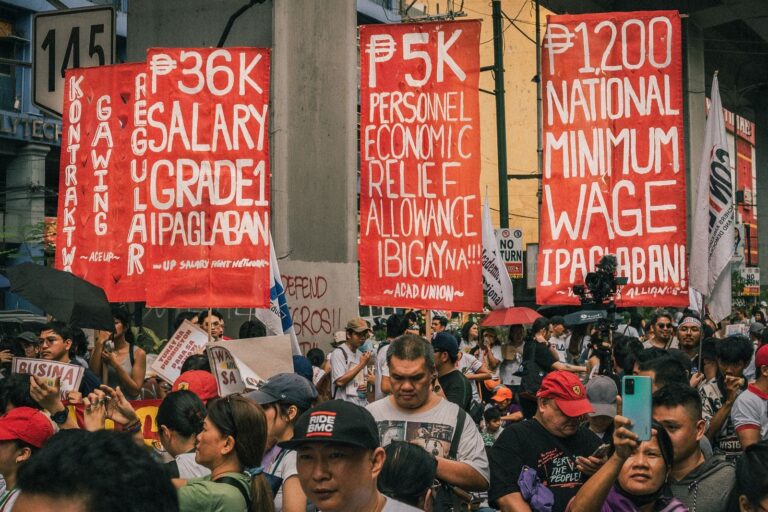
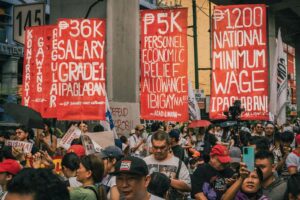
Gross national income per capita is an average. It does not reflect distribution. Inequality continues to plague millions of Filipinos. Underemployment remains high, and inflation erodes purchasing power. For many households, the milestone feels distant, disconnected from daily struggles.
The government faces the challenge of making growth more inclusive. Ensuring that gains reach rural areas, low‑income households, and marginalized communities will be critical. Without this, the upgrade risks being seen as a statistical achievement rather than a lived improvement.
Regional Comparisons
The Philippines joins Vietnam, Sri Lanka, Micronesia, and Jordan in advancing to upper middle-income status this year. Each country followed a different path. Vietnam’s rise reflects its manufacturing boom, while Sri Lanka’s trajectory highlights services and tourism.
For the Philippines, the path has been shaped by remittances, consumption, and services. This positions the country uniquely within Southeast Asia. It underscores the importance of OFWs and the need to leverage their contributions while building stronger domestic industries.
Implications for OFWs
The role of OFWs in achieving this milestone cannot be overstated. Their remittances are lifelines for millions of families and a cornerstone of the national economy. As the Philippines moves into upper middle-income status, the demand for efficient remittance channels will grow.
Digital wallets are increasingly central to this ecosystem. Platforms like GCash and DOPAY make transfers faster, cheaper, and more secure. They reduce reliance on traditional providers, lower fees, and improve accessibility. For OFWs, this means more of their hard‑earned money reaches their families.
hard‑earned money reaches their families.
The Role of Digital Finance
Digital finance is reshaping the Philippine economy. It bridges gaps in access, empowers households, and supports inclusion. As the country enters upper middle-income status, digital wallets will play an even greater role. They will facilitate remittances, enable savings, and support small businesses.
The rise of digital finance also aligns with global trends. Investors are increasingly drawn to markets where fintech adoption is high. The Philippines, with its large population and strong remittance flows, is well positioned to attract capital in this space.
Policy Challenges
The upgrade does not eliminate challenges. Inflation remains a concern, driven by food and energy prices. Infrastructure gaps persist, limiting competitiveness. Education and healthcare need investment to ensure that human capital keeps pace with economic growth.
Policymakers must also navigate global uncertainties. Rising interest rates, geopolitical tensions, and climate risks could affect growth. The Philippines must build resilience, diversify its economy, and strengthen institutions.
Looking Ahead
The attainment of upper middle-income status is a milestone, but it is also a starting point. The next goal is to reach high income status, defined by the World Bank as gross national income per capita above $14,375. This will require sustained growth, deeper reforms, and greater inclusion.
The path will not be easy. It will demand investments in infrastructure, education, and innovation. It will require addressing inequality and ensuring that prosperity is shared. But the milestone shows that progress is possible, and that the Philippines can aspire to more.
The Philippines’ attainment of upper middle-income status is a long‑sought milestone, reflecting resilience and broad‑based growth. It enhances investor confidence and signals progress, but it also highlights the need to confront inequality and ensure that prosperity is shared.
For Filipinos at home and abroad, the upgrade is both symbolic and practical. It validates years of effort, including the contributions of OFWs, while pointing to a future where digital finance and inclusive growth can redefine everyday life.
Digital wallets are part of this transformation. As the Philippines enters a new income bracket, tools like DOPAY help Filipinos manage remittances, savings, and payments more efficiently. Download the DOPAY app today and experience how secure, affordable digital finance can support your journey in a changing economy.
Download the DOPAY app today!