Rentpasada’s new revenue-sharing model marks a major shift in the Philippine ride-hailing industry, replacing the traditional “boundary” system with a more driver-friendly structure.
By tying earnings directly to completed trips and offering electric vehicle (EV) support, the program could reshape driver economics and urban mobility.
Rentpasada’s Revenue-Sharing Innovation
Developed by VinFast Philippines and Green GSM, the Rentpasada program introduces a revenue-sharing model that eliminates the boundary.
The program was unveiled alongside VinFast’s full EV ecosystem during the 10th Philippine International Motor Show (PIMS) exhibition held at World Trade Center (WTC), Manila.
Instead of paying upfront daily fees, drivers contribute a percentage of their trip earnings:
- 10% of trip earnings in the first year
- 15% in the second and third years
This structure ensures that drivers’ income is directly tied to completed rides, reducing the risk of losses on slow days.
Entry into the program requires a ₱5,000 security deposit, after which drivers are assigned a VinFast EV and onboarded into the Green GSM platform, while enjoying bundled benefits such as free EV charging until March 31, 2029, insurance, registration, GPS installation, and maintenance support.
This launch signals a broader push toward electrification of transport in the Philippines, aligning with government goals to reduce emissions and modernize public transport.
The Traditional Boundary System and Its Challenges
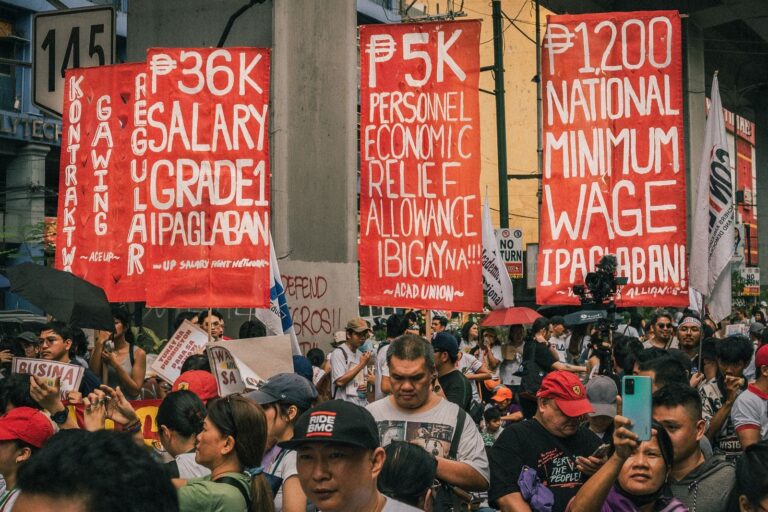
For decades, Filipino drivers have operated under the boundary system, where they pay a fixed daily rental fee to vehicle operators—often ranging from ₱1,000 to ₱1,200 or more—before earning any income.
The boundary system traces its origins to the post-World War II era, when surplus U.S. military jeeps were converted into public utility jeepneys.
Under Republic Act No. 4136 (Land Transportation and Traffic Code of 1964), public utility vehicles (PUVs) were regulated through franchises issued by the LTFRB, but compensation structures were left to private agreements. This led to the widespread adoption of the boundary system, which persisted for decades despite criticisms.
Research shows that the boundary system creates hyper-competition among drivers, pushing them to engage in unsafe practices such as speeding, overloading, and extended working hours to maximize passenger intake.
A De La Salle University study (2011) concluded that the system exacerbates disorderly driving behavior and contributes to traffic congestion, while also being financially exploitative.
Drivers often face situations of “unpaid boundary”, where low passenger volume, high fuel costs, or vehicle breakdowns prevent them from remitting the daily fee. This leaves them vulnerable to debt or penalties from operators.
The model also places significant financial pressure on drivers, as fuel costs, traffic conditions, and passenger demand all affect whether they can earn beyond the boundary.
Many Filipino drivers end up working long hours just to break even, with little room for savings or financial stability.
Linking Urban Mobility to Digital Finance in the Philippines
Ride-hailing has become a cornerstone of urban transport in Metro Manila and other major cities.
Programs like Rentpasada could accelerate the transition to EV-based fleets, reduce driver exploitation, and improve service reliability. The revenue-sharing model also introduces a more equitable framework, where drivers are partners rather than renters, potentially improving retention and satisfaction.
Meanwhile, the Philippine ride-hailing market is dominated by Grab, Angkas, JoyRide, and inDrive, each with distinct models:
- Grab: The super-app offering car, motorcycle, and delivery services. Drivers typically shoulder fuel and maintenance costs, with Grab taking a commission from fares. Payments are processed via GrabPay, credit/debit cards, or cash.
- Angkas: Specializes in motorcycle taxis, focusing on safety and speed in congested areas. Payments are flexible—cash remains common, though digital options are available.
- JoyRide: Expanded from motorcycle taxis to cars, offering multiple payment methods including cash, cards, and in-app wallets.
- inDrive: A newer entrant where passengers propose fares and drivers accept or counter. Payments are often cash-based, though digital integration is growing.
Compared to these, Rentpasada’s model is unique: it eliminates upfront boundary fees, reduces financial risk for drivers, and integrates EV support.
Despite digital wallet integration, cash remains the default payment method for many ride-hailing transactions, reflecting the country’s cash-centric economy.
GrabPay (for Frab) and JoyRide Wallet (for JoyRide) are digital options, but adoption remains uneven.
A 2025 nationwide survey found that 58.39% of Filipinos still primarily use cash, with 46.77% relying on cash for public transportation.
Cash dominates in sari-sari stores (74.84%) and small vendors (38.90%).
Digital payments are rising, especially for online shopping (68.97%) and food deliveries (41.08%), but many Filipinos mix both methods depending on context.
The survey highlights that trust, cost, and incentives drive adoption—Filipinos will shift further toward digital if fees are lower and transactions faster.
Ride-hailing apps’ reliance on cash creates inefficiencies, especially for drivers who must manage daily remittances and expenses.
Rentpasada’s EV-based model, combined with digital integration, offers an opportunity to shift drivers toward cashless ecosystems. However, the success of this transition depends on accessible, low-cost financial tools.
Drivers Still Prefer Cash: The Filipino Commute Hurdle
A University of Santo Tomas study (2025) on commuter intentions for continued use of TNVS (Transport Network Vehicle Services) found that economic benefit, trust, and perceived usefulness were key drivers of commuter satisfaction.
Many respondents highlighted that cash payments remain more convenient and trusted, especially for drivers who want immediate liquidity without waiting for wallet settlements or bank transfers.
Highlighted significant factors are:
- Immediate Access to Earnings – Cash fares allow drivers to use income instantly for fuel, food, or family expenses.
- Avoidance of Fees – In-app wallets often impose transaction or withdrawal fees, reducing net earnings.
- Trust and Familiarity – Many drivers and passengers are more comfortable with physical cash, especially in areas with limited digital infrastructure.
- Liquidity Needs – Daily expenses require cash flow, and waiting for digital settlement can be impractical.
Moreover, industry reports on the Philippines ride-hailing market also emphasize that despite growing smartphone penetration and app-based wallets, cash continues to dominate daily transport transactions, reflecting the country’s broader cash-centric economy.
DoRide with your DOPAY Wallet
As a Bangko Sentral ng Pilipinas-licensed e-wallet service provider, DOPAY offers minimal-fee transfers and payments, helping drivers and commuters alike explore fund management in convenience.
By bridging traditional cash-based systems with digital finance, DOPAY empowers drivers and commuters to:
- Instantly receive and access funds
- Enjoy low fees for digital payments
- Transition smoothly into digital ecosystems
Download the DOPAY app today!