The Philippine business process outsourcing (BPO) industry continues to show resilience despite global fears of AI disruption, with employment rising and service exports remaining strong, according to Hongkong and Shanghai Banking Corp. (HSBC).
While AI is reshaping tasks, it is also boosting productivity, suggesting that the sector is adapting rather than collapsing.
‘AI Apocalypse’ Not A Threat to BPOs
HSBC Global Investment Research emphasizes that despite global anxieties about AI replacing jobs, the Philippine BPO sector remains robust.
The narrative of “AI apocalypse” has not materialized. Instead, AI is being integrated into workflows, enhancing productivity and efficiency. HSBC points out that while certain repetitive roles may decline, the sector is evolving toward higher‑value services.
The sector’s resilience is significant because the BPO industry is one of the country’s largest employers and a major source of foreign exchange, contributing nearly 8% of gross domestic product (GDP).
HSBC’s report depicts that adaptation, not elimination, is the defining feature of AI’s impact on outsourcing.
BPO Industry in 2026
The Information Technology and Business Process Association of the Philippines (IBPAP) projects industry revenues to reach between $43.3 billion and $50.5 billion by 2028, a downgrade from earlier targets but still indicative of growth.
Employment in IT‑BPO has steadily increased since 2022, with over 1.7 million Filipinos employed in the sector by mid‑2026.
Moreover, Bangko Sentral ng Pilipinas (BSP) expects BPO revenue growth of 2.5% in 2026, down from its earlier forecast of 4%, and trimmed its 2027 forecast to 3%. These figures show moderation but not collapse.
The industry remains a stabilizing force in the economy, absorbing workers and sustaining export earnings even as other sectors struggle.
Current Economic and Market Struggles
The Philippines presently faces multiple headwinds.
Inflation has remained stubborn, driven by food and energy prices. The peso has weakened, breaching all-time low of ₱62.7 per dollar, reflecting global monetary tightening and domestic vulnerabilities.
Export growth has slowed, particularly in electronics, while foreign direct investment has been tepid. Household consumption, traditionally the backbone of GDP, is under pressure from higher prices and stagnant wages.
All these current struggles create uncertainty in the labor market, with sectors like manufacturing and retail facing layoffs or slower hiring. The resilience of BPO jobs stands out against this backdrop, providing a buffer for the economy.
Unemployment Status
The Philippine Statistics Authority (PSA) reported unemployment at 4.8% in May 2026, equivalent to 2.5 million jobless Filipinos. Underemployment remains high at over 12%, reflecting workers in precarious or low‑paying jobs.
The job market is uneven: while BPO continues to hire, other sectors are contracting.
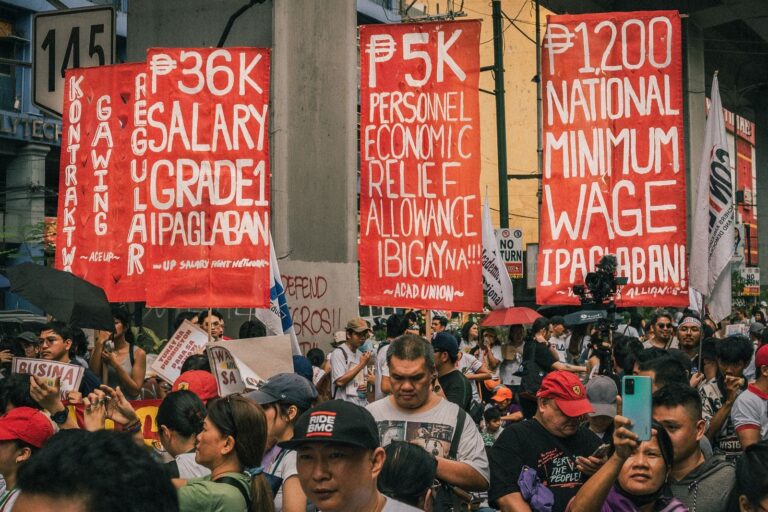
This divergence highlights the importance of BPO resilience. Without the sector’s steady demand for labor, unemployment figures would likely be higher. The industry’s ability to absorb workers helps stabilize the overall employment landscape, even as economic struggles persist.
Government Plans to Help Filipino Workers
The government has rolled out initiatives to mitigate economic and labor market pressures.
Programs under Technical Education and Skills Development Authority (TESDA) focus on digital upskilling, preparing workers for AI‑augmented roles. The Build Better More infrastructure program aims to stimulate job creation in construction and allied industries.
Department of Labor and Employment (DOLE) continues to expand livelihood programs, while IBPAP collaborates with agencies to align education curricula with industry needs. These plans portray a recognition that resilience requires adaptation.
As Filipino workers are equipped with new skills and supporting industries that can absorb labor, the government seeks to cushion the impact of global headwinds and technological disruption.
What BPO Resilience Means Amid AI Growth
The BPO industry shows its ability to adapt and evolve.
AI is not eliminating jobs wholesale; instead, it is transforming them. Routine tasks such as data entry may decline, but demand is rising for higher‑value services like analytics, customer experience management, and AI‑assisted support.
The industry is leveraging AI to enhance productivity, reduce errors, and expand service offerings. This adaptation emphasizes the sector’s maturity and its capacity to remain competitive in a changing global landscape.
Resilience is not static—it is dynamic, reflecting the industry’s ability to integrate new technologies while sustaining employment.
Can AI Really Replace BPO Jobs?
AI can automate repetitive tasks, but BPO jobs often require empathy, cultural nuance, and complex problem‑solving—areas where humans remain indispensable.
Customer service, for example, involves understanding context, tone, and emotion, which AI struggles to replicate fully. Moreover, the Philippine BPO sector’s comparative advantage lies in its skilled, English‑speaking workforce, which remains difficult to replace with machines.
AI is more likely to complement rather than replace workers, enabling them to handle more complex tasks while machines manage routine processes. The narrative of wholesale replacement oversimplifies the reality: AI is a tool, not a substitute for human judgment and interaction.
Up Ahead: Outlook for the Next Few Years
The industry is expected to continue growing, albeit at a slower pace. Revenue targets have been adjusted downward, but resilience remains evident. AI integration will likely create new roles in AI operations, data analytics, and customer experience design.
The Philippines must invest in training and governance to ensure its workforce remains competitive. If successful, the country can maintain its position as a global outsourcing hub, even in an AI‑driven world.
The next few years will be defined by adaptation: industries that embrace AI responsibly will thrive, while those that resist change may struggle.
DOPAY, as a BSP‑licensed e‑wallet and crypto wallet, provides a reliable channel for remittances and digital transactions, helping Filipinos navigate the evolving financial ecosystem with confidence.
For our beloved OFWs, with DOPAY, you can be assured that you can send money to the Philippines safely and at low cost.
Simply top-up your DOPAY wallet from anywhere in the world and send that to someone in the Philippines through DOPAY, and they will receive pesos in their DOPAY wallet; all within the app!
With DOPAY’s crypto wallet, you can gain crypto rewards for every trade under our Trade & Earn program. Not just that, with DOPAY’s Refer & Earn program, Filipinos can unlock new doors for earning possibilities with every successful referral.
Download the DOPAY app today!