Why you should know this
The final skill is not knowing more facts than everyone else. It is being able to make an independent decision, show the evidence and assumptions behind it, protect against being wrong, learn from the result and change your mind without losing discipline.
Academy 16 is where earlier lessons stop being separate subjects. Technical analysis, fundamentals, sentiment, on-chain evidence, risk, execution, psychology, technology, regulation and local market structure now have to coexist in one decision. The goal is not to sound certain. The goal is to make the reasoning strong enough that another careful reader can inspect it and that your future self can learn from it.
Mastery is defensible independence

A master-level process can explain why a decision was made without hiding behind an influencer, model or slogan. It also knows when evidence is insufficient and “no action” is the best conclusion.
Mastery keeps several systems aligned

Research, market regime, strategy fit, portfolio risk, execution, custody, regulation, psychology and communication must not contradict one another. A strong thesis with reckless sizing is not mastery. Perfect risk controls attached to unsupported analysis are not mastery either.
Mastery is falsifiable and reviewable
Important assumptions, invalidation, evidence quality and decision boundaries are written before outcomes. Post-analysis asks what was known, what was missed, what was luck and what process should change.
Mastery remains humble
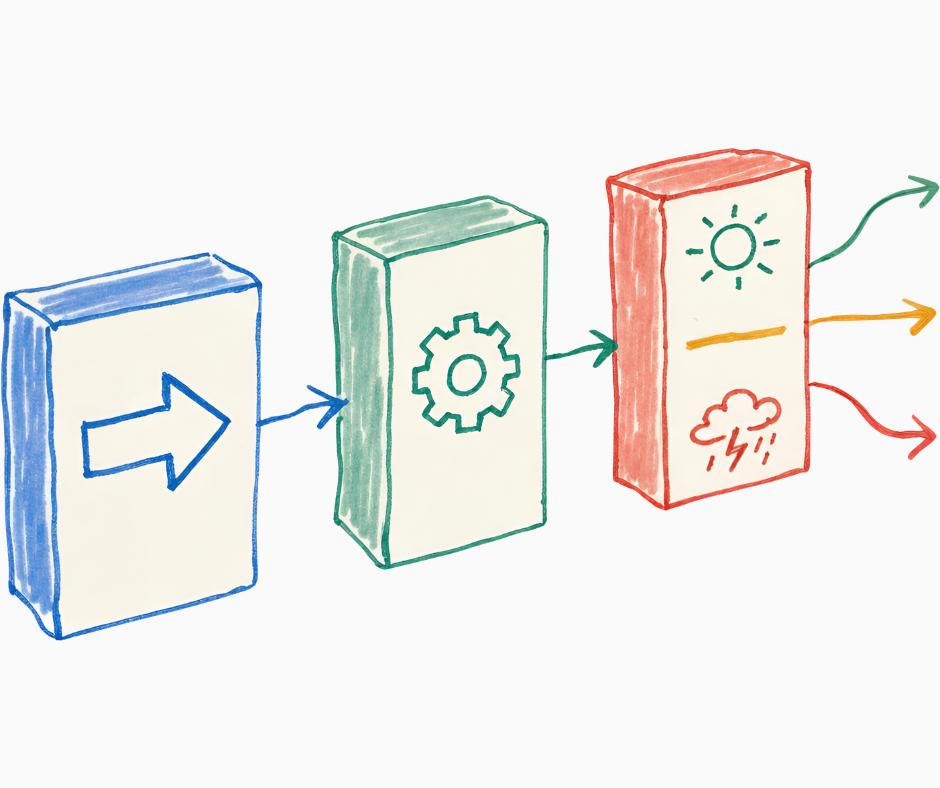
Markets change, evidence is incomplete and operational systems fail. The capstone is not a graduation from uncertainty. It is a commitment to manage uncertainty with better process.
A worked case — follow the reasoning, not the outcome

A fictional analyst is bullish on a crypto sector, but the evidence is mixed, portfolio concentration is already high and liquidity is deteriorating. The mastery decision is not forced bullish exposure. The analyst records the thesis, keeps the sector on a watchlist, reduces a correlated risk elsewhere and waits for a predefined confirmation. “No trade” is a fully reasoned decision.
The point of the case is not to imitate the conclusion. It is to see how a market-master-level process exposes assumptions before the result is known. A different learner can reach a different decision if the evidence, horizon or risk constraints differ, provided the reasoning is explicit and internally consistent.
Your mastery drill — no money needed
Assemble a mastery dossier using a historical market date. Include: thesis memo, evidence matrix, regime classification, scenario tree, portfolio/risk map, execution plan, source log, regulatory/operational constraints, decision, and post-analysis after revealing the outcome. Add a one-page self-review identifying one strength, one recurring error and one process change for the next cycle.
Keep the original version. Do not overwrite assumptions, thresholds or conclusions after seeing the outcome. If you change the method, create a new version and explain why. That version history is part of the skill.
Review the quality of the process
- Could another reader reproduce the reasoning from the dossier?
- Where did evidence quality limit confidence?
- What competing interpretation was strongest?
- How did the risk plan protect against being wrong?
A strong result with weak reasoning is not mastery. A losing or incorrect historical conclusion can still demonstrate a strong process if the evidence was handled honestly, risk was controlled and the post-analysis identifies what genuinely changed.
Philippine and Asian application

When the case involves a Philippine or Asian user, add the local layer instead of assuming a global USD market is the whole decision. Record the relevant currency, venue or provider, trading hours where material, liquidity/FX effects, jurisdiction and any operational route needed to turn the market decision into a usable outcome. Do not infer that a globally available protocol, asset or product is supported for every user or jurisdiction.
What mastery does not mean
Mastery does not mean perfect prediction, constant profit, immunity from loss, or the ability to eliminate uncertainty. It means that uncertainty is handled deliberately: sources are traceable, assumptions are visible, risk is bounded, alternatives are considered, operational constraints are respected, and the post-analysis is honest enough to improve the next decision.
Completion check

You are not finished because you can repeat the terminology. You are finished when another careful reader can reconstruct the reasoning, identify the assumptions, challenge the competing explanation, see the decision boundary and understand what you learned after the outcome.