
Why you should know this
Markets react to the difference between expectations and reality, so apparently good news can produce selling when traders were already positioned for an even better outcome.
Academy 9 is not about collecting more headlines or indicators. It is about learning how attention, emotion and information become market narratives—and where that reasoning can break.
The short answer
Event reaction depends on the pre-event information set, expectations, positioning, surprise and liquidity—not simply whether the headline sounds positive or negative.
Price reacts to surprise, not adjectives

A useful event framework compares what happened with what the market plausibly expected.
A simple conceptual measure is:
Surprise = actual outcome - expected outcome
The units depend on the event. The idea is not that every event can be reduced to one number; it is that good versus bad is less informative than better or worse than expected.
Expectations can enter price before confirmation
Rumours, guidance, prior filings, leaks, analyst estimates and positioning can move markets before the official event.
A later confirmation can therefore trigger little reaction—or even reversal—because much of the expected benefit was already priced.
Positioning changes the response
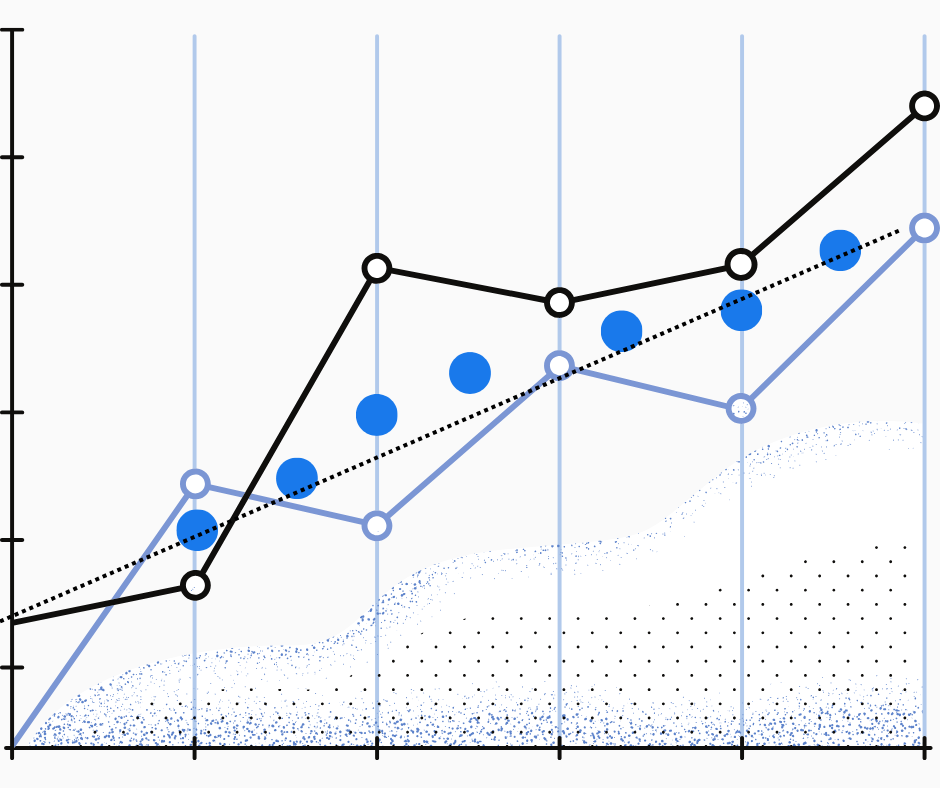
If many participants are already long, positive news may create fewer new buyers and more profit-taking. If positioning is light, the same surprise may create stronger follow-through.
Positioning measures are imperfect, but the concept matters: market reaction depends on who still needs to act.
Liquidity shapes the event path

Thin books, leverage and stop orders can amplify the first move. A sharp initial reaction may reverse once liquidity returns.
Separate the first seconds/minutes from the later market interpretation. Do not assume the first candle is the final conclusion.
Alternative events can overlap

A token-specific announcement may happen during a major macro release or market-wide liquidation. Event analysis should check whether another catalyst can explain part of the move.
Worked analytical example
A fictional protocol announces a partnership exactly as widely expected. Price falls 6% after the announcement.
Possible explanation: traders bought in advance and took profit when no additional surprise appeared. Alternative: a market-wide selloff began at the same time.
The phrase “sell the news” is therefore a hypothesis to test, not an explanation to paste onto every reversal.
The point of the example is not to forecast the next move. It is to make the assumptions and inference steps visible enough that another reader could challenge them.
Philippine and Asian application

For Philippine and Asian users, preserve event time in local time zones and check whether the practical product or access change applies locally. A global partnership can be priced by markets even if local availability starts later or not at all.
Assumptions to write down
Before using the method, record:
- unit of analysis — post, account, search term, legal document, listing pair, event or other defined object;
- time window — when the observation begins and ends;
- market / jurisdiction — which venue, country, pair or user group the evidence actually represents;
- method — how the data were selected, normalized or classified;
- missing data — what the source cannot show;
- invalidation — what new evidence would make the original interpretation weaker.
This turns a narrative into a reviewable analytical object.
Common mistakes
- Calling any post-news decline ‘sell the news’.
- Ignoring pre-event price movement.
- Treating consensus as a known fact.
- Ignoring positioning and leverage.
- Using the first reaction as final interpretation.
- Omitting overlapping market events.
- Assuming global product relevance locally.
A no-money method lab
Choose a frozen historical or fictional example related to this lesson.
Write four columns:
| Confirmed observation | Interpretation | Alternative explanation | Invalidation |
|---|---|---|---|
| What the evidence directly shows | What you think it may mean | Another plausible account of the same evidence | What would make the first interpretation weaker |
Then add the source, timestamp, unit and market/jurisdiction.
Do not reveal the later outcome until the first worksheet is complete. Preserve the original version so hindsight cannot quietly improve the reasoning.
One risk or limitation
Market expectations and positioning are not directly observable. Event analysis uses proxies and should state uncertainty about what participants actually anticipated.
How this connects to market mastery
Mastery means reconstructing the information set before the event, not explaining the chart backward after the outcome is known.
The next lesson turns this concept into a stricter verification and information-risk routine.
Quick check — no money needed

Explain the lesson in plain language, then answer:
- What is the unit being measured?
- What assumption has the largest effect on the conclusion?
- Which evidence is direct and which is inferred?
- What alternative explanation remains plausible?
- What would invalidate the first interpretation?
If you can answer those questions without turning the method into a guaranteed signal, this lesson is complete.


