Why you should know this
A rumour can spread faster than its source, and repeated reposts can make one unsupported claim feel like many independent confirmations.
Fast-moving information creates a special risk: a true observation can be turned into a false market conclusion simply by skipping one step in the chain.
The short answer
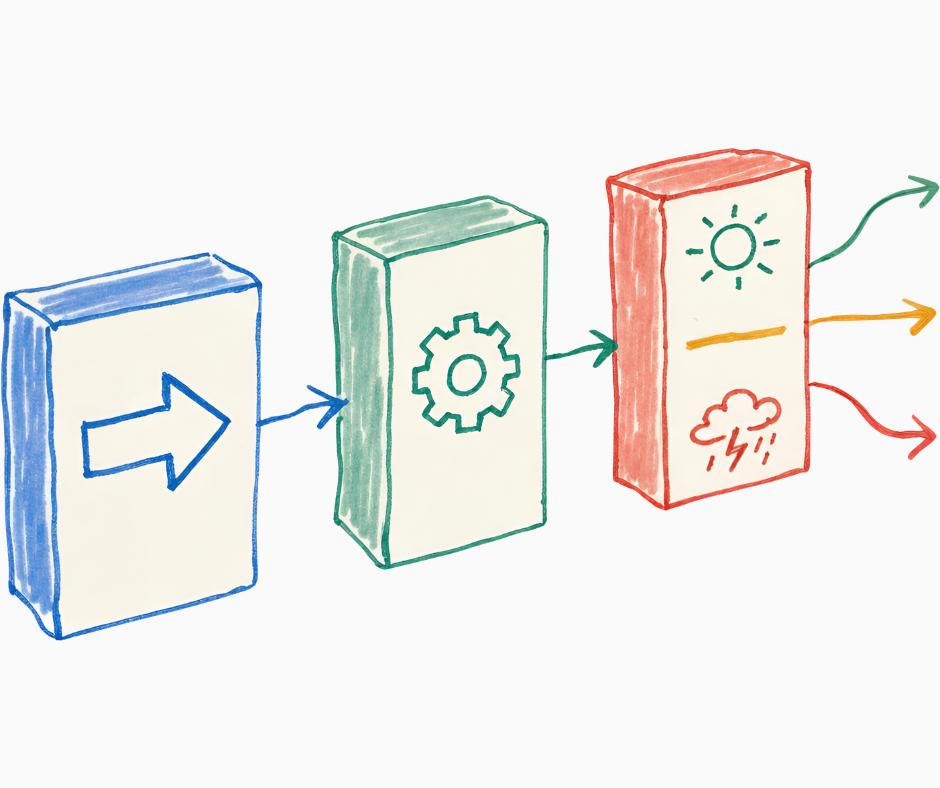
Use a fixed sequence:
source → timestamp → scope → method/incentive → market evidence → alternative explanation → invalidation → decision boundary
The order matters. If interpretation comes before source and chronology, the story can start steering the evidence.
Verification lab — topic-specific checks
- Identify the earliest traceable origin.
- Build a source tree and collapse reposts from the same origin.
- Copy the exact claim and note how later versions changed.
- Record event time, first-publication time and official-confirmation time.
- Classify the current status and what remains unverified.
- Define a no-action condition until the missing material fact is confirmed.
Build the source and chronology chain
For the item you are studying, complete this table:
| Layer | What to record |
|---|---|
| Original source | Closest primary or authoritative origin |
| Event time | When the underlying event or observation actually occurred |
| Publication / update time | When the source became public and when it changed |
| Scope | Asset, venue, user, jurisdiction, language or market covered |
| Method / incentive | How the measure was produced or who benefits from the claim |
| Market evidence | Price, liquidity, positioning, adoption or other relevant evidence |
| Alternative explanation | A different account of the same observation |
| Decision boundary | What remains unknown or means no action yet |
If several articles or posts depend on one original source, count them as one evidentiary origin.
Worked verification scenario
A rumour says a regulator has “approved” a crypto product. News sites repeat it, but each cites the same unnamed source. Later, an official document shows only that an application was received.
The learner changes status from unverified to partially confirmed, because the filing exists but approval does not. The original headline is not upgraded merely because a related fact became true.
The strongest acceptable conclusion is the strongest sentence the evidence supports—not the most interesting sentence that could be written.
What the evidence does not prove
Repeated reporting does not prove independent confirmation. A related official document does not prove the strongest version of the rumour.
Write this boundary explicitly. Academy 9 is designed to prevent plausible stories from becoming unsupported certainty.
Failure classification
- Source multiplication through reposts — record whether this failure is possible in the example.
- Certainty inflation — record whether this failure is possible in the example.
- Screenshot without provenance — record whether this failure is possible in the example.
- Chronology inversion — record whether this failure is possible in the example.
- Partial fact used to validate the whole claim — record whether this failure is possible in the example.
- Local applicability ignored — record whether this failure is possible in the example.
A useful review does not only ask whether the final direction was “right.” It asks which failure mode would have produced a misleading conclusion.
No-action conditions
“No action yet” is a valid analytical result when:
- Only anonymous or circular sources exist.
- The official source is silent and the claim is material.
- The wording changed materially between origin and reposts.
- Event timing cannot be established.
- The claim concerns a jurisdiction or product not yet identified.
- The market already moved so far that verification cannot support a disciplined plan.
A no-action condition protects the process from urgency. It does not mean the subject is unimportant.
Philippine and Asian applicability check

Before localizing a global claim, add:
- country / corridor;
- affected user or entity;
- local currency and practical outcome;
- actual provider / access route;
- effective date or local event time;
- local primary or authoritative source.
If those fields are missing, keep the regional conclusion narrow.
Information conclusion versus trading conclusion
A verified fact can still be a poor trading signal.
After verification, create two separate lines:
- Information conclusion: what is supported about the event, sentiment or narrative.
- Trading conclusion: whether the evidence changes a defined plan after considering price, liquidity, risk and execution.
Never merge the first into the second automatically.
A no-money review scorecard
Score one point for each item completed before the outcome is revealed:
| Check | 0/1 |
|---|---|
| Original source identified | |
| Chronology preserved | |
| Scope/applicability defined | |
| Method or incentive checked | |
| Independent market evidence added | |
| Alternative explanation written | |
| Invalidation written | |
| No-action condition written |
The score measures documentation discipline, not predictive accuracy.
One risk or limitation
The earliest public source may not be the true origin, and private communications cannot always be verified. Good process can classify uncertainty without pretending to solve it.
How this connects to market mastery
Fast markets reward speed, but durable skill comes from preserving a clean evidence trail. Market mastery can tolerate “unknown” long enough to avoid turning repetition into truth.
The mature skill is not reacting fastest. It is knowing which parts of the story are established, which are inferred, and which are still unknown.
Quick check — no money needed

Use a fictional or historical example and write:
- the original source;
- event and publication times;
- the strongest confirmed statement;
- one alternative explanation;
- one thing the evidence does not prove;
- one invalidation condition; and
- the condition that means no action yet.
If you can keep those layers separate, this lesson is complete.