Why you should know this
“A billion dollars moved to exchanges” sounds decisive. The common story is that deposits mean selling and withdrawals mean accumulation.
Sometimes that may be a useful hypothesis. It is never guaranteed intent.
Exchanges reorganise wallets, move collateral, support customers, change custodians and operate across chains. Data providers infer which addresses belong to them.
Understanding that construction helps us survive dramatic headlines without ignoring genuinely important capital movements.
The goal is not to collect reasons to like or dislike a project. It is to make the evidence, uncertainty and decision rule visible before a conclusion hardens.
The short answer
Turns this research topic into a repeatable evidence decision: what is supported, what remains uncertain, what must not be inferred and what would change the thesis.
A source-first research routine
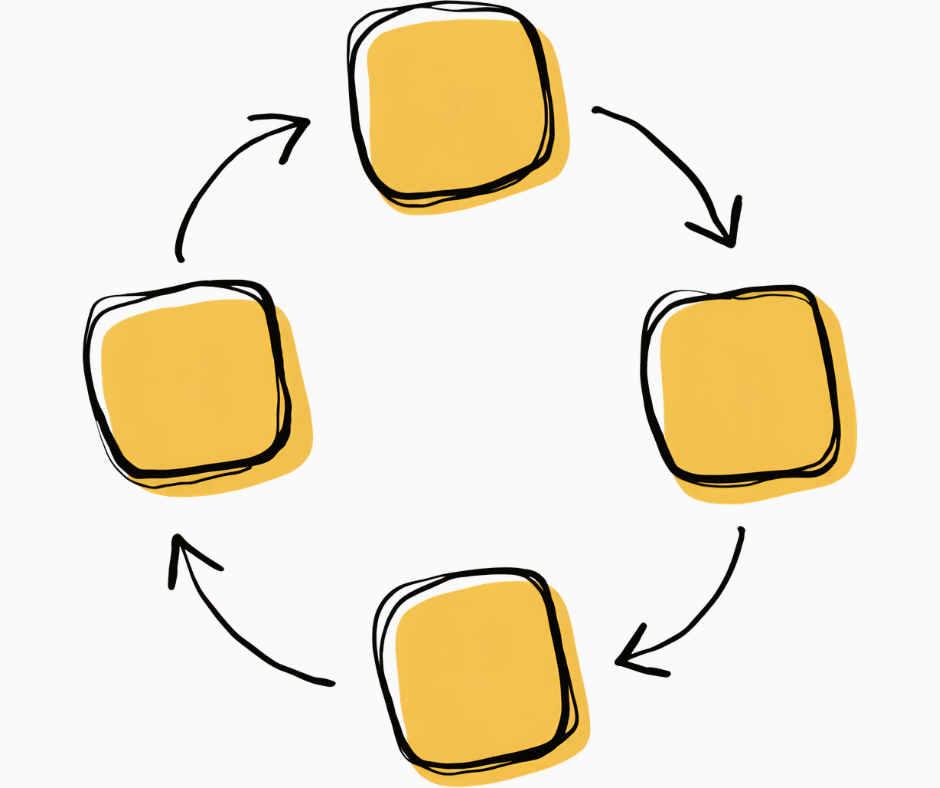
Use the checklist below before accepting the project’s claim or turning it into a market conclusion.
- Define the reserve or flow metric.
- Check address labels and methodology.
- Separate deposits from intended selling.
- Compare asset, venue and time zone.
- Join flows with price and liquidity.
- Avoid treating reserves as solvency proof.
Evidence workbench
Record the result before writing a conclusion. A blank or uncertain field is information; do not fill it with assumption.
| Check | Evidence to record | Status | Boundary |
|---|---|---|---|
| Define the reserve or flow metric. | Primary/authoritative source; as-of date; unit or method; relevant finding | Confirmed / Uncertain / Unsupported / N/A | Record only what the evidence supports; do not turn the check into a prediction or endorsement. |
| Check address labels and methodology. | Primary/authoritative source; as-of date; unit or method; relevant finding | Confirmed / Uncertain / Unsupported / N/A | Record only what the evidence supports; do not turn the check into a prediction or endorsement. |
| Separate deposits from intended selling. | Primary/authoritative source; as-of date; unit or method; relevant finding | Confirmed / Uncertain / Unsupported / N/A | Record only what the evidence supports; do not turn the check into a prediction or endorsement. |
| Compare asset, venue and time zone. | Primary/authoritative source; as-of date; unit or method; relevant finding | Confirmed / Uncertain / Unsupported / N/A | Record only what the evidence supports; do not turn the check into a prediction or endorsement. |
| Join flows with price and liquidity. | Primary/authoritative source; as-of date; unit or method; relevant finding | Confirmed / Uncertain / Unsupported / N/A | Record only what the evidence supports; do not turn the check into a prediction or endorsement. |
| Avoid treating reserves as solvency proof. | Primary/authoritative source; as-of date; unit or method; relevant finding | Confirmed / Uncertain / Unsupported / N/A | Record only what the evidence supports; do not turn the check into a prediction or endorsement. |
What this evidence does not prove
- A deposit to an exchange means the owner intends to sell.
- A labelled address is a certain and permanent identity.
- Address balances prove an exchange is solvent.
For every material inference, write at least one alternative explanation that could fit the same evidence.
Warning signs and common mistakes
- Treating labels as certain identities.
- Calling every deposit a sale.
- Ignoring exchange internal reshuffling.
- Comparing providers with different address sets.
- Using one large transfer without market confirmation.
- Calling address balances audited reserves or solvency proof.
- Inferring user nationality, purpose or compliance status.
A Philippine or Asian research example

A learner applies the checklist to a fictional project serving users in the Philippines and another Asian market. The learner records jurisdiction, unit, date, source and uncertainty. No token is purchased and no provider capability is assumed.
Regional relevance check: Do not infer Filipino, Japanese or other user nationality from an exchange flow unless the evidence specifically supports that attribution.
A no-money research lab
Diagnose five fictional events: a cold-wallet migration, stablecoin deposit, miner transfer, bridge movement and label update. For each, write:
- what the ledger proves;
- what the provider inferred;
- three possible motives;
- one confirming source;
- the strongest conclusion you can responsibly publish.
What would change the thesis?
Do not wait for price to prove the research wrong. Reopen the conclusion when:
- Address labels or provider methodology change.
- Internal exchange reshuffling explains the observed flow.
- Price, liquidity or other evidence fails to support the original flow interpretation.
Record the date, source and exact assumption that changed. If the evidence is only uncertain, downgrade confidence rather than forcing a yes/no conclusion.
One risk or limitation
Fundamental and on-chain evidence can be delayed, incomplete, method-dependent or changed by governance. A research checklist reduces avoidable error but does not create a guaranteed valuation or trade outcome.
How this connects to market mastery
Flow analysis trains you to separate observation, attribution and intention. That distinction is central to all on-chain research.
Advanced traders are not those who tell the fastest story; they are those who know which part of the story remains unproven.
Quick check — no money needed

Complete the six-step topic routine using a fictional or frozen historical example. For each line, record the source/date/method, mark Confirmed, Uncertain, Unsupported or N/A, and write one alternative explanation. Finish with the single evidence change that would make you reopen the thesis.
If another reader can reproduce the evidence trail and see where your inference could fail, this lesson is complete.