Maya is preparing for a potential initial public offering (IPO) in 2027, with PLDT Chairman and CEO Manuel V. Pangilinan confirming that the listing is “on track.”
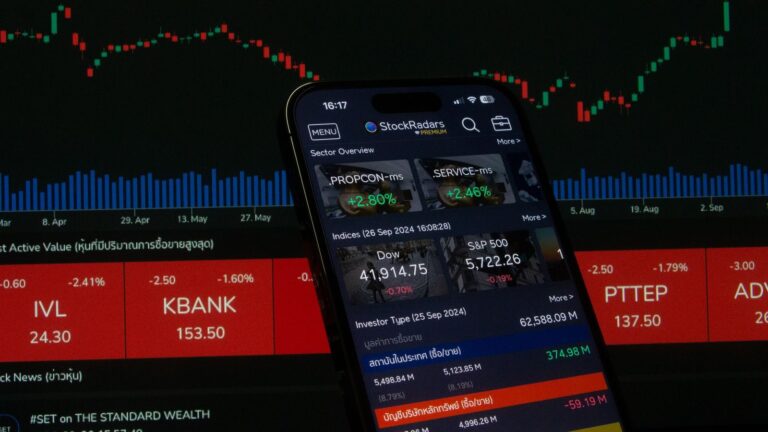
While rival GCash is expected to debut first, Maya’s entry into the Philippine Stock Exchange (PSE) would mark a remarkable turning point for the local tech and fintech sector.
Maya’s IPO Plans and FinTech’s Maturity
Maya, the digital bank and e‑wallet operator under PLDT’s umbrella, is actively preparing for an initial public offering (IPO) in 2027.
Chairman Manuel V. Pangilinan confirmed that the listing is underway, though he cautioned that “being public is not easy.” This statement symbolizes the complexity of transitioning from a privately held fintech to a publicly listed company, where transparency, governance, and investor scrutiny become paramount.
The digital bank’s IPO plans reflect both shareholder interests and strategic imperatives.
Foreign shareholders are pushing for a dual listing, with a U.S. market debut preceding its Philippine Stock Exchange (PSE) entry, to tap deeper capital markets and global investor appetite. Local stakeholders, however, emphasize the importance of a PSE listing to strengthen domestic participation and signal confidence in the Philippine capital market.
What Comes Next After Maya’s IPO
The IPO would provide Maya with fresh capital to expand services, enhance infrastructure, and compete more aggressively against rivals. It could fund investments in cybersecurity, product innovation, and regional expansion.
For a fintech that has already transformed from PayMaya into a full digital bank, the IPO represents the next logical step in scaling operations.
Going public also means greater transparency, accountability, and access to capital. Customers could benefit indirectly from improved services, expanded product offerings, and stronger governance.
IPO proceeds could be used to lower transaction costs, enhance app features, and broaden financial inclusion. However, IPOs also bring scrutiny.
Maya will need to balance profitability with consumer protection, ensuring that shareholder demands do not compromise service quality. Customers should not expect sudden fee hikes or service disruptions, but they may see improved innovation funded by IPO capital.
Race Between Maya and Gcash
GCash, operated by Globe Telecom’s Mynt, is widely expected to list first, giving it a first‑mover advantage.
The sequencing matters: GCash’s IPO could set valuation benchmarks and investor appetite for fintech listings. Maya’s later debut may benefit from lessons learned but risks being overshadowed if GCash captures market enthusiasm.
The rivalry between Maya and GCash is emblematic of the bigger competition in Philippine fintech as industry leaders. Both dominate the e‑wallet space, but their IPO strategies could differentiate them.
GCash’s earlier listing may emphasize scale and market leadership, while Maya’s later debut could accentuate innovation and digital banking capabilities.
Similar E‑Wallets That Have Gone Public
Globally, fintech IPOs have transformed companies into regional leaders.
PayPal went public in 2002, using IPO proceeds to expand globally. Square (now Block) listed in 2015, leveraging capital to diversify into crypto and broader financial services. In Asia, Sea Ltd. (Shopee/SeaMoney) leveraged its U.S. listing to expand aggressively across Southeast Asia.
These precedents show that IPOs can provide fintech firms with the capital and credibility needed to scale operations, innovate, and compete internationally. Maya’s IPO could similarly position it as a regional player, not just a domestic competitor.
These IPOs have had mixed but instructive impacts on customer experience. Sea Ltd., the Singapore‑based parent of Shopee and SeaMoney, raised billions through its U.S. listing in 2017. Customers benefited indirectly as the company expanded aggressively across Southeast Asia, offering more services and improving infrastructure.
Similarly, KakaoBank in South Korea went public in 2021, raising over $2 billion. Its IPO allowed it to scale digital banking services rapidly, but customers also saw the institution become more profit‑driven, with tighter lending standards introduced to satisfy investor expectations.
Supervisory Agencies for FinTech IPOs
The Securities and Exchange Commission (SEC) oversees IPO approvals, ensuring compliance with disclosure and investor protection rules.
The Bangko Sentral ng Pilipinas (BSP) continues to regulate Maya’s banking and e‑wallet operations, ensuring financial stability and consumer protection.
Combined, SEC and BSP provide a dual layer of oversight, balancing investor interests with depositor safety. This dual oversight is critical as IPOs bring investor scrutiny, but regulators ensure that consumer protection remains paramount.
Maya’s compliance with both SEC and BSP requirements will be essential to maintaining trust.
For Financial Customers, What to Expect After IPO?
To everyday financial customers, an IPO represents more than just a corporate milestone—it symbolizes a major change in how a financial institution is perceived and governed.
When a fintech like Maya goes public, it becomes subject to stricter disclosure requirements, quarterly reporting, and heightened scrutiny from regulators, investors, and analysts. The increased transparency can reassure customers that the company is operating with accountability and discipline.
From a practical standpoint, customers should not expect immediate changes in the services they use. Transaction fees, deposit rates, and app features remain driven by competition, regulatory oversight, and consumer demand.
However, IPO proceeds can fund innovation, infrastructure upgrades, and product diversification. Customers may eventually benefit from improved app performance, expanded financial services such as lending or insurance, and enhanced cybersecurity measures.
An IPO also creates opportunities for customers to become investors. Those who trust the brand may choose to buy shares, aligning their financial interests with the company’s growth. The dual role—as both customer and shareholder—can deepen loyalty and engagement.
Yet it also introduces new dynamics: customers may scrutinize the company’s profitability strategies more closely, especially if shareholder demands appear to conflict with consumer protection.
While IPOs can boost confidence by signaling maturity and compliance, they are not the sole determinant of trust. Customers ultimately judge financial institutions by their ability to deliver secure, reliable, and affordable services.
A public listing may reassure users that the company is financially sound, but confidence is equally shaped by regulatory compliance, strong cybersecurity, transparent governance, and consistent service quality.
For example, a listed fintech that suffers repeated outages or data breaches will quickly erode customer trust, regardless of its IPO status. Conversely, a privately held but well‑regulated institution that consistently delivers secure, low‑cost services can inspire confidence without tapping capital markets.
The distinction is critical as IPOs add credibility, but they must be complemented by operational excellence.
In the Philippine context, customer confidence is also tied to BSP oversight.
Consumers know that BSP‑licensed institutions are subject to stringent rules on liquidity, capital adequacy, and consumer protection. Regulatory frameworks provide a baseline of trust that IPOs can enhance but not replace.
DOPAY is an E-Wallet You Can Trust
As a BSP‑licensed Electronic Money Issuer (EMI) and Virtual Asset Service Provider (VASP), DOPAY provides secure e‑wallet and crypto wallet services without relying on public listings. DOPAY ensures low‑cost, compliant, and transparent digital transactions for OFWs and Filipinos.
In a financial landscape where IPOs highlight maturity, DOPAY demonstrates that regulatory trust and consumer protection are equally powerful drivers of customer confidence.
With DOPAY’s crypto wallet, you can gain crypto rewards for every trade under our Trade & Earn program. Not just that, with DOPAY’s Refer & Earn program, Filipinos can unlock new doors for earning possibilities with every successful referral.
Download the DOPAY app today!