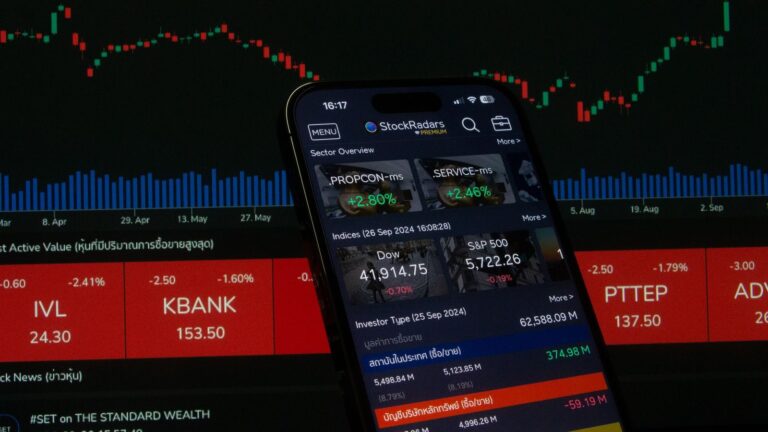
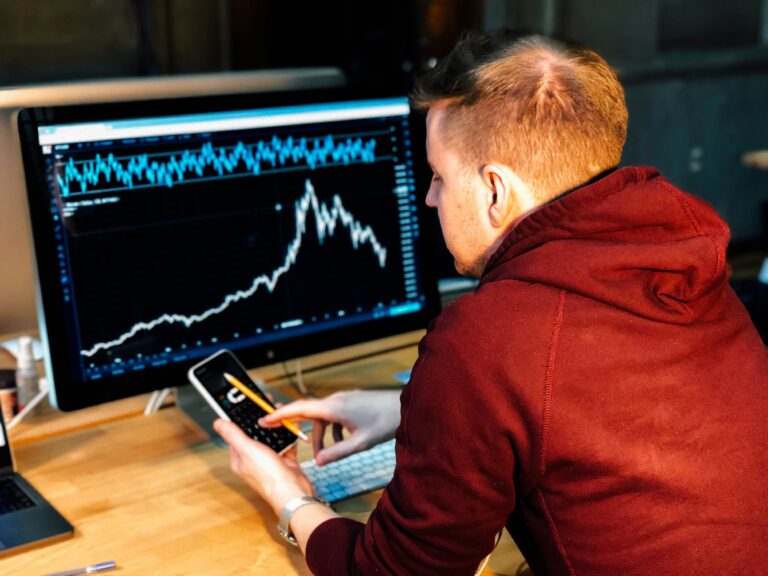
Foreign portfolio inflows into the Philippines fell sharply in June 2026, with net “hot money” inflows shrinking 27% to $170 million.
Bangko Sentral ng Pilipinas (BSP) data shows investors favoring government securities while accelerating stock sell‑offs, demonstrating global uncertainty and a flight to safety.
Data Says Investors are Being Cautious
The BSP’s June figures are not just numbers; they are signals of investor sentiment. A 27% drop in net inflows to $170 million, coupled with a first‑half net outflow of $4 billion, showing how fragile “hot money” can be.
Investors are clearly favoring government securities, which posted a net inflow of $540 million, while equities saw a net outflow of $370 million. This divergence implies that foreign investors are hedging against volatility by moving into safer assets.
The conclusion is that portfolio flows are highly sensitive to global and domestic conditions, and while they provide liquidity, they cannot be relied upon as a stable source of growth.
Policymakers are urged to double down on attracting more durable capital such as foreign direct investments (FDIs), which create jobs and infrastructure rather than chasing short‑term inflows.
Contributing Factors for the Drop
Several intertwined factors explain the decline.
Globally, the slowdown in growth, persistent geopolitical tensions, and uncertainty over U.S. monetary policy have made investors cautious. Rising interest rates in advanced economies often trigger capital flight from emerging markets, as investors seek higher yields with lower risk.
Domestically, inflationary pressures, though easing, continue to affect household consumption and corporate earnings. Political noise and regulatory uncertainty can also dampen investor confidence. The peso’s performance against the dollar adds another layer of risk, as currency depreciation erodes returns for foreign investors.
Taken together, these factors create a climate where equities are less attractive, and bonds—offering yields above 7%—become the preferred refuge.
Realistic Future Goals and Expectations
The BSP’s revised forecast of $1.8 billion net inflows for 2026 reflects a sober assessment of the situation. It recognizes that recovery will be gradual, not immediate.
Realistically, the Philippines cannot expect a sharp rebound until global conditions stabilize and domestic reforms take root.
The goal should be to build resilience rather than chase volatile inflows. This means focusing on structural reforms, improving corporate governance, and ensuring transparency in capital markets. Bond index inclusion in 2027 is expected to attract more stable investors, while sectoral investment pipelines could provide long‑term support.
The realistic expectation is not a surge in “hot money” but a steady rebuilding of confidence through fundamentals.
FPI (Hot Money) vs FDI (Cold Money): What’s the Difference?
Foreign portfolio inflows (FPIs), often referred to as “hot money,” are short‑term investments in liquid assets such as stocks and bonds. They are highly sensitive to market sentiment, interest rate changes, and currency fluctuations.
Because they can enter and exit quickly, FPIs provide liquidity and signal investor confidence but are volatile and unreliable as a foundation for long‑term growth. The June BSP data illustrates this volatility, with inflows shrinking by 27% in a single month.
By contrast, foreign direct investments (FDIs) are often described as “cold money.” These involve long‑term commitments such as building factories, infrastructure, or service centers.
FDIs are less reactive to short‑term market swings and provide stability, employment, and technology transfer. They represent patient capital that stays in the economy for years, embedding itself in productive sectors.
Both hot and cold money matter to the Philippine economy. Hot money affects liquidity and market confidence, while cold money builds the foundations of sustainable growth.
Policymakers must therefore balance the pursuit of portfolio inflows with strategies to secure FDIs, recognizing that while hot money can boost markets in the short run, cold money is what truly anchors economic resilience.
Overall Current Status of the Philippine Economy
The Philippine economy continues to grow, driven by resilient domestic consumption and strong remittances from overseas Filipinos. Government infrastructure spending under the “Build Better More” program also provides additional support.
However, external shocks—global trade uncertainties, capital outflows, and inflationary pressures—pose challenges. The peso’s volatility against the dollar affects import costs and investor confidence.
While fundamentals remain supportive, the economy is vulnerable to external risks, highlighting the need for stronger buffers and diversified sources of growth.
The BSP acknowledges the volatility but emphasizes that fundamentals remain sound. It expects gradual recovery in 2027, supported by bond index inclusion and sectoral investment pipelines.
Policy actions include maintaining prudent monetary policy, enhancing transparency in capital markets, and strengthening investor confidence through reforms.
The BSP also continues to push for digital finance interoperability, recognizing that inclusive financial systems can cushion volatility. By promoting QR Ph, Direct Debit PH, and other initiatives, the BSP aims to broaden participation in the financial system, ensuring that capital flows translate into real economic activity.
A Shared Duty Amongst Economy Players
Financial institutions remain central to stabilizing the economy, acting as intermediaries that channel capital into productive sectors, provide liquidity, and build investor confidence.
Banks and fintechs diversify investment products, support SMEs, and facilitate remittances, ensuring that capital inflows translate into real economic activity rather than speculative gains. Their role in expanding financial inclusion—through digital wallets, credit scoring, and interoperable payment systems—helps cushion households and businesses against volatility.
Even so, the responsibility of sustaining growth does not rest solely on financial institutions. Other industries play equally critical roles.
The manufacturing sector anchors long‑term investments by creating jobs and absorbing foreign direct investments, while agriculture benefits from capital and technology that improve food security and rural incomes.
The technology sector drives innovation, particularly in AI and digital platforms, which enhance productivity across industries. Infrastructure and construction projects, often funded through public‑private partnerships, provide the backbone for sustained growth, attracting both portfolio and direct investments.
Even the services sector, from business process outsourcing to tourism, generates foreign exchange and employment, reinforcing the economy’s resilience.
Hand in hand, these industries form a network of stabilizers. Financial institutions provide the capital and trust, while manufacturing, agriculture, technology, and services convert that capital into tangible growth.
In times of volatility, this synergy ensures that the economy does not rely solely on “hot money” but is supported by “cold money” and domestic capacity. The overall lesson is that resilience requires collaboration across sectors, with financial institutions enabling flows and other industries embedding them into sustainable development.
DOPAY’s Part in the Role
Whilst the Philippines navigates volatile capital flows, DOPAY contributes to resilience by offering BSP‑licensed e‑wallet and crypto wallet services. Through facilitation of secure, low‑cost remittances, DOPAY strengthens household consumption—a key driver of the economy.
DOPAY wallet ensures OFWs can send money home efficiently, supporting liquidity and stability in the domestic economy.
With DOPAY’s crypto wallet, you can gain crypto rewards for every trade under our Trade & Earn program. Not just that, with DOPAY’s Refer & Earn program, Filipinos can unlock new doors for earning possibilities with every successful referral.
Download the DOPAY app today!