The Filipino Financial Market Is Not Underdeveloped — It Is Under-Connected
The Philippines has one of the most interesting financial markets in Asia. On one side, millions of Filipinos still do not have full individual access to formal banking. On the other side, the same population is highly mobile-first, socially connected, familiar with e-wallets, and deeply dependent on global money movement through OFW remittances.
This creates a unique situation. The future of Filipino finance will not be shaped only by traditional banks, e-wallets, or cryptocurrency exchanges separately. It will be shaped by platforms that can connect these worlds safely: bank accounts, e-money wallets, crypto wallets, stablecoins, and global remittance channels.
For a brand like DOPAY, the opportunity is not simply to promote cryptocurrency as an investment trend. The stronger positioning is this: crypto and digital assets can become part of a broader financial access layer for Filipinos, especially for cross-border payments, wallet-based finance, and alternative value transfer.
1. Banking Penetration in the Philippines: Progress, but Still a Large Gap
The Philippines has made major progress in financial inclusion, but account ownership remains uneven. According to the Bangko Sentral ng Pilipinas’ 2025 Consumer Finance and Inclusion Survey, 50% of Filipino adults owned a formal financial account in 2025, down from 56% in 2021. The same survey notes that e-money account ownership remained at 36% and bank account ownership at 23%, while household-level access was much higher, with 85% of households owning at least one account.
That distinction is important. Many Filipino families may have access to at least one financial account, but not every adult has individual access. A household may rely on one person’s bank account, one e-wallet, or one remittance channel. This means the financial system reaches many families indirectly, but individual financial empowerment is still incomplete.
For DOPAY’s SEO positioning, this is the key message: the Philippines does not only need more banks. It needs more accessible financial interfaces. A mobile-first user may search for “banks in the Philippines,” “bank card numbers,” “foreign exchange rate today,” or “dollar rate today,” but the actual need behind the search is often simpler: “How do I receive, hold, send, convert, or use money safely?”
2. Digital Payments Are Already Mainstream
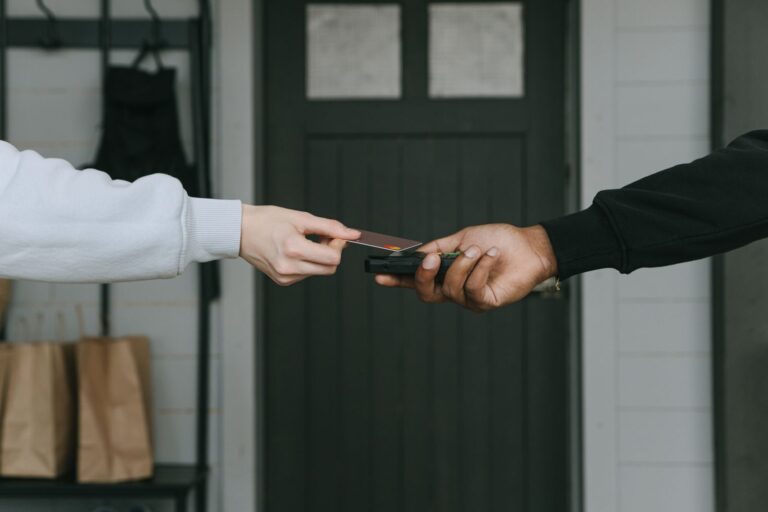
While formal account ownership still has room to grow, digital payment behavior is no longer a niche habit. BSP’s 2024 e-payments measurement found that digital retail payments accounted for 57.4% of total transaction volume and 59.0% of total transaction value in 2024. Person-to-business and person-to-person digital payment use has become increasingly normal, with person-made payments reaching a digital share of 72.2% by volume.
This matters because cryptocurrency adoption does not happen in a vacuum. Crypto adoption becomes easier when users already understand QR payments, mobile wallets, transaction history, app-based verification, digital receipts, and instant transfers.
The Philippines also has the digital infrastructure to support this transition. DataReportal’s Digital 2026 report estimates 98.0 million internet users in the Philippines, equal to 83.8% internet penetration, and 137 million cellular mobile connections, equivalent to 117% of the population because many people use more than one SIM or connection.
In plain terms, many Filipinos may be underbanked, but they are not offline. That is why mobile-first finance has such strong potential.
3. Cryptocurrency Penetration: From Speculation to Practical Use
The Philippines has consistently appeared as one of the more active cryptocurrency markets globally. Chainalysis ranked the Philippines 9th worldwide in its 2025 Global Crypto Adoption Index, with the country ranking 6th for retail centralized service value received, 9th for centralized service value received, 13th for DeFi value received, and 10th for institutional centralized service value received.
This shows that Filipino crypto activity is not limited to one category. Some users are traders watching bitcoin price today, BTCUSD, BTCUSDT, XRP price USD, or LTCUSDT price. Others are exploring a web3 wallet, non-custodial crypto wallet, or basic questions like “what is a wallet address?” Some users want to buy crypto with a card. Others are interested in stablecoins, international transfer, or simply having an alternative way to hold digital value.
Ownership estimates vary depending on methodology. Triple-A estimates that about 6.13% of Filipinos own cryptocurrency, equal to nearly 7 million people. Chainalysis, meanwhile, focuses more on transaction activity and places the Philippines in the global top ten. The exact percentage can be debated, but the direction is clear: crypto is already part of the Filipino financial conversation.
4. Why Remittance Is the Strongest Use Case
The Philippines is one of the world’s most remittance-dependent economies. In 2025, cash remittances from overseas Filipino workers reached a record USD35.63 billion, up 3.3% from USD34.49 billion in 2024. Including in-kind transfers and informal channels, personal remittances reached USD39.62 billion. The United States accounted for the largest share, followed by Singapore, Saudi Arabia, Japan, the United Kingdom, and the UAE.
This is where cryptocurrency has real-world potential beyond trading. A Filipino abroad may not care about complicated blockchain terminology. The real questions are practical:
How fast can I send money home?
How much will my family receive after fees and foreign exchange conversion?
Can my family cash out safely?
Can they keep part of the value in pesos, dollars, or stablecoins?
Can I see the final amount before sending?
Traditional remittance is reliable, but it can still be expensive, slow, or dependent on banking hours and cash-out networks. The World Bank notes that the UN Sustainable Development Goal target is to reduce average remittance transaction costs to below 3%, and estimates that meeting this target could save remittance-dependent families an additional USD20 billion annually worldwide.
Crypto, especially stablecoin-based settlement, can help reduce friction in some corridors. However, the user experience must be simple. Most users do not want to manage blockchain complexity. They want transparent fees, fast settlement, strong customer support, and safe conversion between fiat and digital assets.
5. Crypto Is Not a Replacement for Banking — It Is a Parallel Rail
A strong DOPAY message should avoid the extreme claim that cryptocurrency will replace banks. That is not realistic and may not be compliant from a consumer protection perspective. Banks remain important for salaries, loans, payroll, merchant settlement, government payments, compliance, credit records, and regulated deposit services.
The better framing is this: cryptocurrency can work as a parallel financial rail.
Banks are good at regulated fiat custody and credit. E-wallets are good at domestic convenience. Crypto wallets are good at programmable, borderless digital value transfer. Stablecoins may serve as a bridge between fiat currencies and blockchain settlement. A regulated digital finance platform can connect these layers in a way that ordinary users understand.
This is also consistent with the regulatory view in the Philippines. BSP Circular No. 1108 recognizes that virtual asset systems can support faster and more economical domestic and international fund transfers and may support financial inclusion, while also emphasizing risks such as money laundering, terrorist financing, cybersecurity, consumer protection, price volatility, and financial stability.
This balance is critical. Crypto has potential, but trust will decide adoption.
6. What Filipino Users Need Before Crypto Becomes Everyday Finance
For cryptocurrency to become a practical alternative for banking and remittance, the experience must solve five problems.
First, users need simple onboarding. If someone searches “how do I buy cryptocurrency” or “where do I buy bitcoins,” the answer should not require technical knowledge. The platform must explain identity verification, wallet address, crypto price, fees, risks, and transaction finality clearly.
Second, users need transparent pricing. Filipino remittance users are sensitive to exchange rates. A small difference in the USD/PHP conversion rate can matter to a household budget. Any crypto or remittance platform must show the estimated and final receive amount, conversion rate, network fee, platform fee, and timing.
Third, users need wallet safety education. Keywords like “cold wallet vs hot wallet,” “ledger vs trezor,” “non-custodial crypto wallet,” and “what is a wallet address” are not just SEO opportunities. They are educational needs. Users must understand the difference between custodial wallets, non-custodial wallets, private keys, recovery phrases, blockchain confirmations, and irreversible transfers.
Fourth, users need local cash-in and cash-out. Crypto becomes useful only when it connects back to real life: bills, family support, merchant payments, peso conversion, and bank or e-wallet withdrawal.
Fifth, users need regulated trust. The next phase of crypto adoption in the Philippines will not be won only by the app with the lowest fee. It will be won by platforms that combine convenience with KYC, AML controls, cybersecurity, transaction monitoring, customer support, and responsible disclosure.
7. Forecast and Outlook: What Comes Next for Filipino Banking and Crypto
Over the next three years, the Philippine market will likely move toward a hybrid financial model.
The first trend is that digital payments will continue to become the default for everyday transactions. With digital payments already above half of retail transaction volume, the remaining growth will come from merchant acceptance, government payments, small businesses, transport, cross-border use, and lower-value daily transactions.
The second trend is that remittance will become more wallet-centered. OFWs and their families will still use banks and traditional remittance providers, but more flows will move through app-based wallets. The future remittance experience may look less like “send cash to a pickup branch” and more like “send value to a verified wallet, convert when needed, and use it for payments.”
The third trend is that cryptocurrency demand will split into three separate user groups. One group will remain focused on trading and price discovery, searching for bitcoin price, XRP price, BTCUSD, or buying bitcoins. A second group will use crypto as a value-transfer and dollar-access tool, especially through stablecoins. A third group will explore web3 wallets, decentralized applications, tokenized assets, and non-custodial ownership.
The fourth trend is that regulation will become more important, not less. As crypto grows, users and regulators will demand stronger AML controls, clearer fee disclosures, custody safeguards, cybersecurity standards, complaint handling, and consumer education. Platforms that treat compliance as a brand advantage will likely earn more durable trust.
The fifth trend is that crypto will become more invisible. The average Filipino user may not care whether settlement happens through a blockchain, banking API, card network, or stablecoin rail. They will care whether the money arrives fast, safely, and at a fair rate. The winning platforms will hide complexity while preserving transparency.
8. The Strategic Opportunity for DOPAY
DOPAY can position itself around a practical message: financial access for Filipinos in a borderless economy.
That message fits the Philippine market. It speaks to underbanked users who need easier access. It speaks to OFWs who need global remittance. It speaks to crypto-curious users who want to buy crypto safely. It speaks to families who care about receiving value, not learning blockchain jargon. It also speaks to businesses that need faster digital settlement and better payment options.
For SEO, DOPAY should build content clusters around five themes:
Banking and e-wallet education: banking in the Philippines, BSP meaning, foreign exchange rate today, dollar rate today, digital wallet Philippines.
Crypto beginner education: how do I buy cryptocurrency, where do I buy bitcoins, buying bitcoins, buy crypto with credit card, what is a wallet address.
Wallet safety: cold wallet vs hot wallet, non-custodial crypto wallet, web3 wallet, ledger vs trezor.
Market awareness: bitcoin price today, XRP price USD, BTCUSD, BTCUSDT, ripple price dollar.
Remittance and global access: Filipino remittance, OFW remittance, global remittance, send money to the Philippines, stablecoin remittance.
The most important point is tone. The article strategy should not sound like hype. It should sound safe, practical, and useful. Filipino users do not need another platform telling them crypto will make them rich. They need a financial platform that explains how digital money works, what the risks are, and how to move value with confidence.
Conclusion: The Future Is Not Bank vs Crypto — It Is Connected Finance
The Philippine financial market is entering a new stage. Formal account ownership still leaves room for improvement, but digital payment behavior is already mainstream. Remittance remains a national economic pillar. Cryptocurrency adoption is already visible, especially among users who are mobile-first, globally connected, and open to alternative financial tools.
The next opportunity is not to replace banks. It is to connect banking, e-wallets, crypto wallets, stablecoins, and remittance into one safer and more understandable user experience.
For DOPAY, the strongest brand position is clear: help Filipinos move, hold, convert, and understand money in a digital world — whether that money starts from a bank, an e-wallet, a crypto wallet, or an overseas sender.
If DOPAY can combine transparent fees, compliant operations, user education, and simple wallet-based access, it can become part of the next generation of Filipino financial infrastructure.
References
- Bangko Sentral ng Pilipinas, 2025 Consumer Finance and Inclusion Survey, account ownership, e-money ownership, bank account ownership, and household access data.
- Bangko Sentral ng Pilipinas, 2024 Report on E-Payments Measurement, digital payments share by volume and value.
- DataReportal, Digital 2026: The Philippines, internet users, mobile connections, and social media adoption.
- Chainalysis, 2025 Global Crypto Adoption Index, Philippines ranking and crypto adoption indicators.
- Chainalysis, APAC Crypto Adoption Accelerates, regional crypto growth and on-chain value trends.
- Triple-A, Cryptocurrency Ownership Data: Philippines, estimated crypto ownership share and user count.
- Philippine News Agency, citing BSP data, OFW remittances reach record-high level in Dec 2025, cash and personal remittance figures.
- World Bank Blog, The cost of sending remittances is higher than 3% in 28 countries, SDG remittance cost target and potential savings.
- Bangko Sentral ng Pilipinas, Circular No. 1108, Guidelines for Virtual Asset Service Providers, virtual asset policy, benefits, risks, and VASP scope.
- World Bank, Philippines Country Overview, macroeconomic context and growth outlook.